

Prokaryotic gene expression is regulated by operons—functional units comprising a promoter, operator, and structural genes—that manage metabolic efficiency. Inducible operons (e.g., lac) are normally off, activated by inducers to break down nutrients. Repressible operons (e.g., trp) are normally on, deactivated by corepressors to halt synthesis when products accumulate.
Control of Gene Expression in Prokaryotes 1
Control of Gene Expression in Prokaryotes
How do prokaryotes use operons to control gene expression?
Why?
Houses usually have a light source in every room, but it would be a waste of energy to leave every light on
all the time, so there are switches to turn off the lights in rooms that are not in use. Sometimes one switch
controls several lights in the same room. Likewise, prokaryotic cells can turn genes on and off based on
environmental factors. Sometimes related genes are grouped together with one switch. This group of
genes, along with the sections of DNA that regulate them, is called an operon.
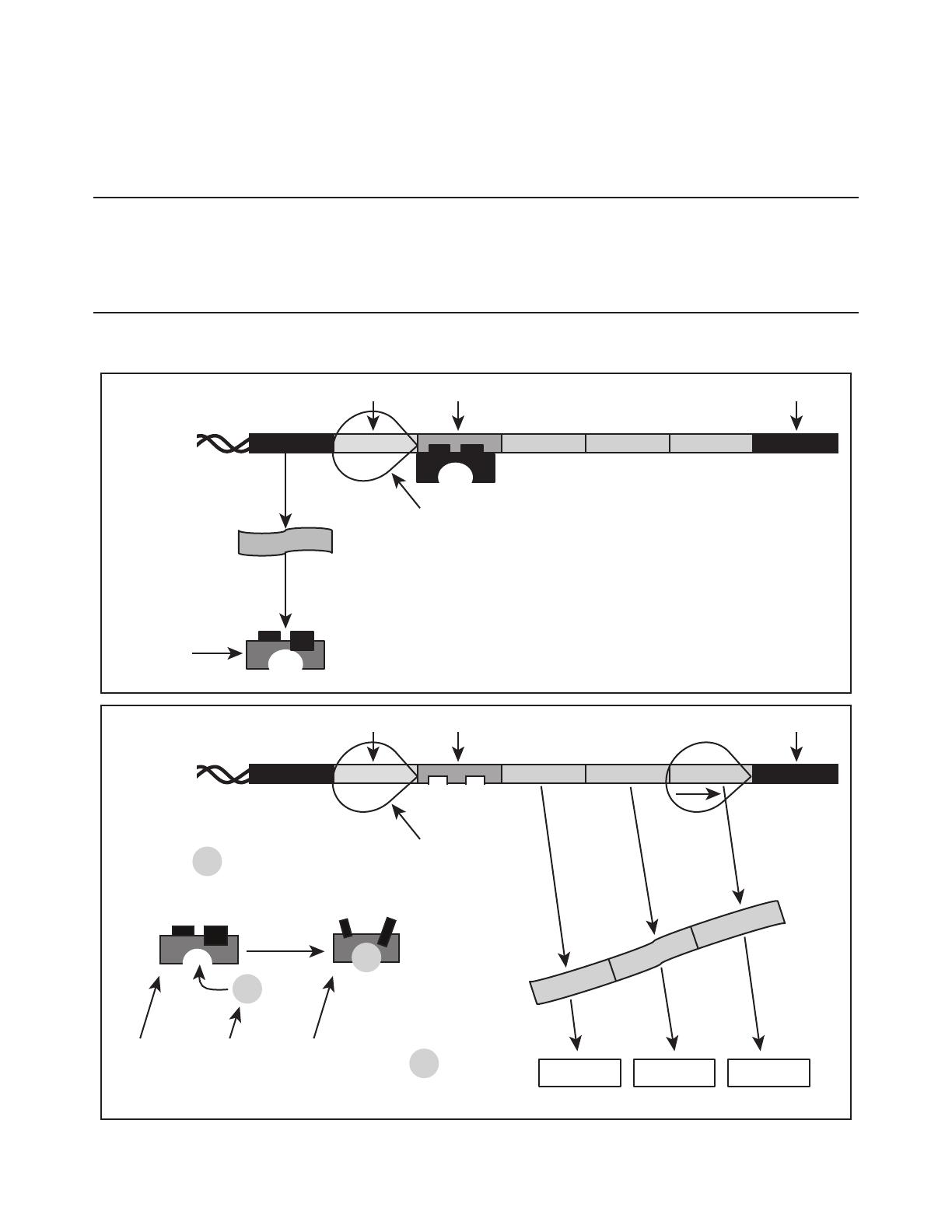
Model 1 – An Inducible Operon
Regulatory
Gene
RNA polymerase
mRNA
mRNA
Protein Y
5´
5´
3´
3´
Promoter Operator
Gene X Gene Y Gene Z
DNA
Diagram A
Diagram B
Repressor
protein
Terminator
Regulatory
Gene
RNA
polymerase
Promoter
Active
repressor
protein
Inducer
molecule
Inactive
repressor
protein
Operator
Gene X Gene Y Gene Z
DNA
Terminator
Protein X Protein Z

2 POGIL
™
Activities for AP* Biology
1. What type of operon is illustrated in Model 1?
2. Consider the operon in Model 1. Other than the gene that regulates the operon, how many
genes are contained within the operon?
3. In Model 1, where on the DNA strand does RNA polymerase bind to start transcription, the
promoter, the operator or the terminator?
4. Which direction is the RNA polymerase moving in Model 1?
5. In which diagram of Model 1 is transcription and translation occurring successfully, diagram A
or diagram B? Justify your answer with evidence from Model 1.
6. Consider the nonscience meaning of the following terms. Match the purpose with each of these
sections in the operon in terms of gene transcription.
Promoter Spot where transcription ends
Operator Spot where transcription begins
Terminator On/Off switch
7. Refer to diagram A in Model 1.
a. What protein does the regulatory gene in Model 1 produce?
b. To what section of the operon does this protein bind?
c. Propose an explanation for why transcription is not occurring in diagram A.

Control of Gene Expression in Prokaryotes 3
8. Refer to Diagram B in Model 1.
a. When an inducer molecule attaches to the repressor protein, what happens to the repressor
protein?
b. How does the change identified in part a allow transcription of the genes in the operon
to occur?
Read This!
The lac operon in E. coli is an example of an inducible operon. It codes for several genes that are necessary
to metabolize lactose when it is present in the cell’s environment. Allolactose, a naturally occurring isomer
of lactose, acts as the inducer. When lactose is present in large quantities (and some allolactose is present),
the lac operon is switched “on” and several proteins are produced that help move lactose into the cell and
break the lactose into its monomers, glucose and galactose.
9. Explain what would happen within the lac operon in each of the following scenarios:
a. Low lactose
b. High lactose