Daily Reading Practice for Grade 2 Students

Daily Reading Practice for Grade 2 Students

Daily Reading Practice for Grade 2 focuses on enhancing reading skills through engaging nonfiction and fiction texts. Students will explore various topics, including animals, historical figures, and imaginative stories, designed to foster comprehension and critical thinking. Each section includes questions that challenge students to think deeply about the material, making it ideal for classroom use or at-home learning. This resource is perfect for educators seeking to support second graders in developing their reading abilities and for parents looking to supplement their child's education.

Key Points

  • Features engaging nonfiction passages about animals and historical figures tailored for second graders.
  • Includes fiction stories that stimulate imagination and comprehension skills.
  • Provides comprehension questions to reinforce understanding of the reading material.
  • Designed for both classroom settings and home learning environments.
238
/ 27
Grade
2
www.teachercreated.com
©Teacher Created Resources, Inc. 9 #3488 Daily Warm-Ups: Reading
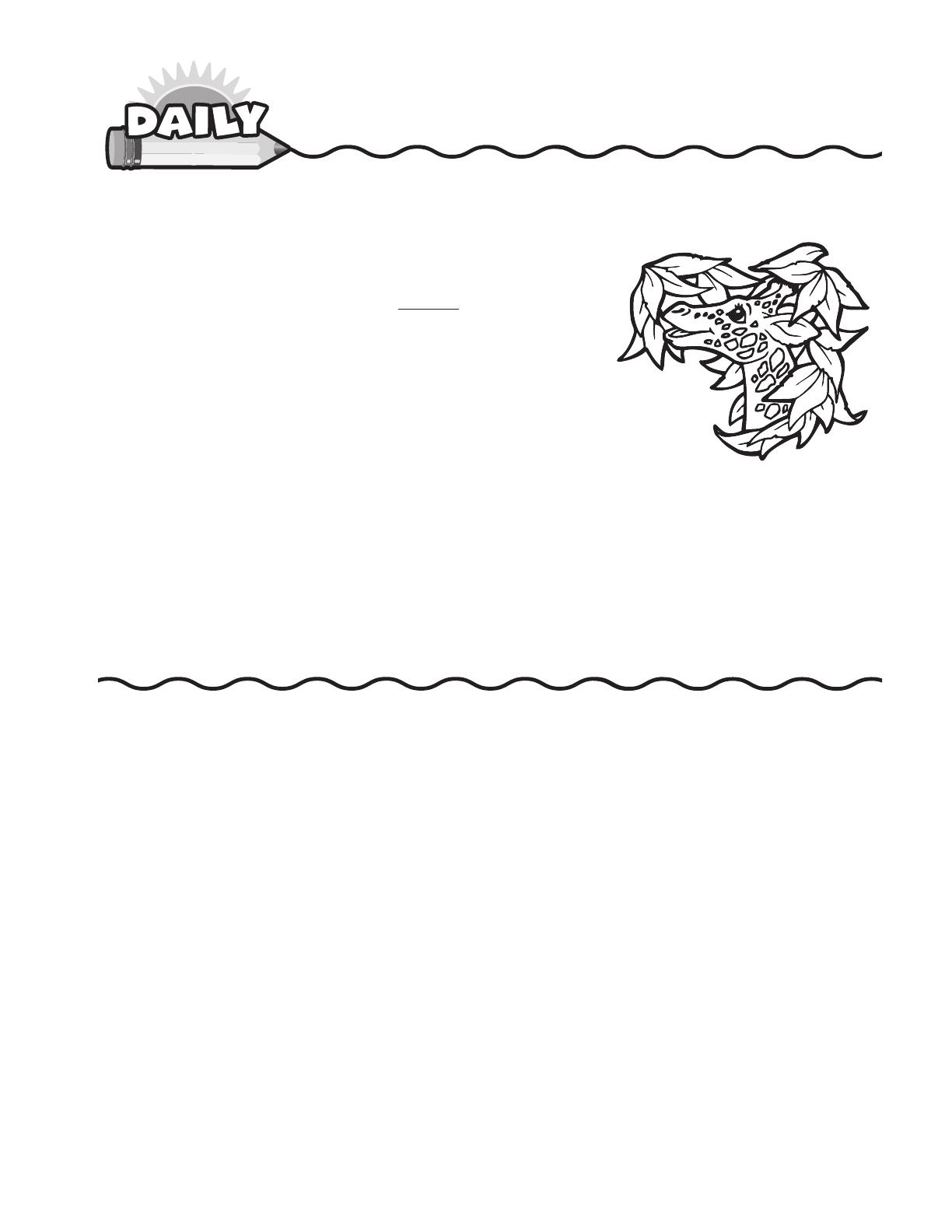
The Giraffe
The giraffe has a tall, long neck that helps the giraffe
get food from high places. The giraffe can bite leaves
off of the top of a tree, and it can munch flowers on a
roof.
A male will fight with his neck. This is called neck
fighting. Two males hit each other with their heads,
and they fight until they get tired. The giraffe that stops
the fight wins.
A giraffe also uses his neck to keep safe. His long
neck helps him to see danger when it is out in the grass. The giraffe watches for lions
and other dangerous animals. The mother giraffe can be eating far away and can still
keep an eye on her babies. She holds her head high and keeps looking around.
To stay alive, giraffes have to stand tall!
Warm-Up 1
Name _________________________ Date ________
Nonfiction: Animals
Story Questions
1. What body part helps the giraffe eat leaves on the tops of trees?
a. head c. feet
b. neck d. ears
2. This story is mostly about . . .
a. a lion.
b. a mother.
c. the giraffe.
d. a baby.
3. A synonym is a word that means the same thing. Munch means . . .
a. watch
b. eat
c. look
d. stand
©Teacher Created Resources, Inc. 11 #3488 Daily Warm-Ups: Reading
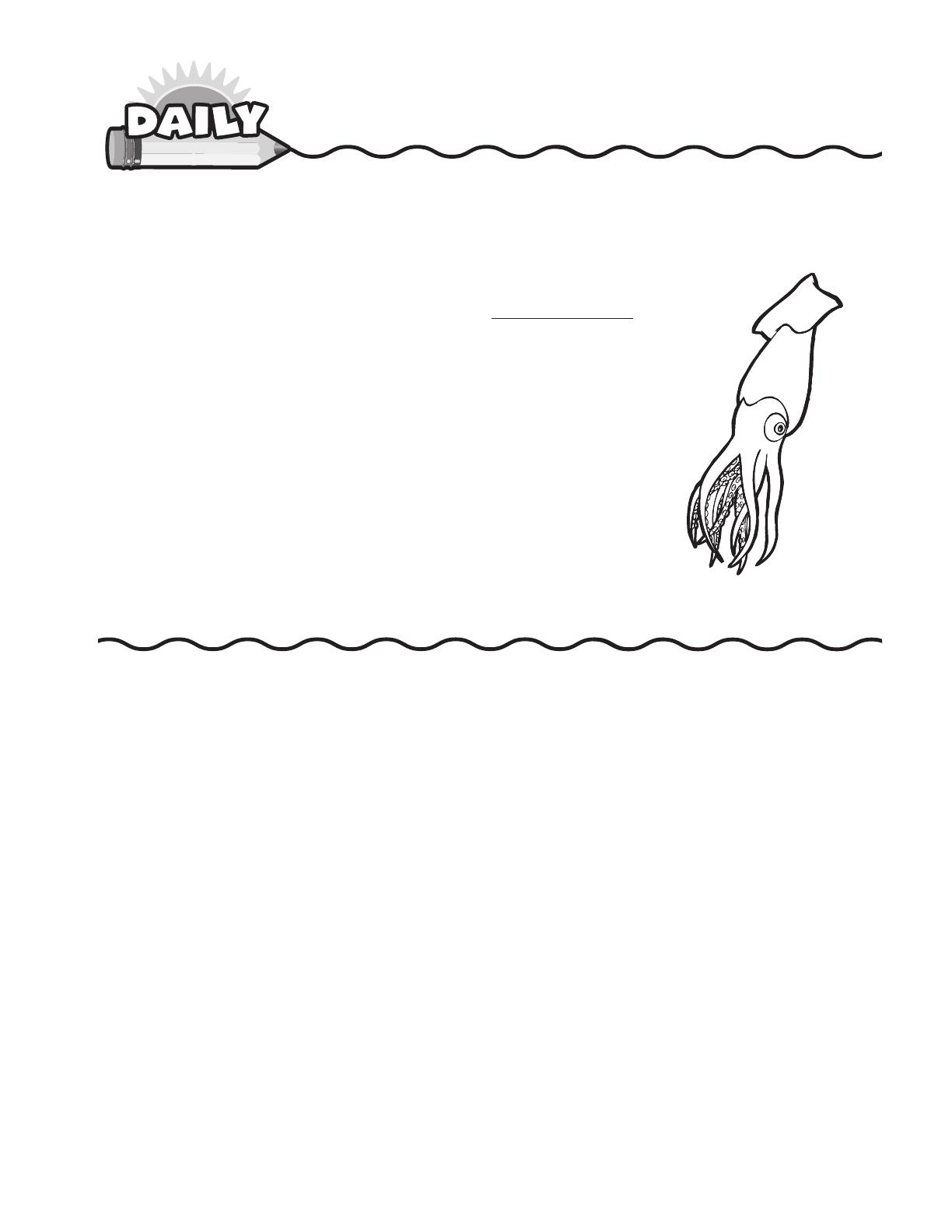
Squid
Do you know which is one of the biggest animals in the ocean?
It is the squid. A squid had eight arms. It has two longer
arms called tentacles. Its arms are as long as a school bus.
The squid also has eyes that are as big as a basketball.
Squid like to eat small fish and small squid. They use their
long arms to grab the fish. The eight arms help to keep the
fish from getting away. Last, they put the fish or small squid
in their mouths. Their beaks are sharp, and they cut the fish
to pieces.
There are still many things to learn about the squid. They live
so far down in the ocean that it makes it hard to learn about
them.
Warm-Up 3
Name _________________________ Date ________
Nonfiction: Animals
Story Questions
1. What is the name for the arms of the squid?
a. eight
b. mouth
c. tentacles
d. beak
2. In the text, “as long as a school bus” means . . .
a. the arms move in the water like a bus.
b. the arms have doors like a bus.
c. the arms look like a school bus.
d. the arms are very long like a school bus.
3. Why is it hard to learn much about the squid?
a. It lives so far down under the water.
b. It moves too fast.
c. It is hard to catch with all those arms.
d. Its beak is too sharp.
/ 27
End of Document
238
You May Also Like

FAQs of Daily Reading Practice for Grade 2 Students

What types of texts are included in Daily Reading Practice for Grade 2?
Daily Reading Practice for Grade 2 includes a mix of nonfiction and fiction texts. Nonfiction passages cover topics such as animals, notable historical figures, and scientific concepts, while fiction stories engage students with imaginative narratives. This variety helps to maintain student interest and caters to different learning styles.
How does Daily Reading Practice support reading comprehension?
Each reading passage in Daily Reading Practice is accompanied by comprehension questions that encourage students to think critically about the text. These questions are designed to assess understanding, promote discussion, and enhance retention of the material. By answering these questions, students practice key skills such as summarizing, inferring, and analyzing.
Is Daily Reading Practice suitable for classroom use?
Yes, Daily Reading Practice is specifically designed for classroom use, making it an excellent resource for teachers. It can be integrated into daily lesson plans to support reading instruction and can also be used for group activities or independent practice. The structured format allows educators to easily assess student progress.
What age group is Daily Reading Practice intended for?
Daily Reading Practice is intended for second-grade students, typically aged 7 to 8 years old. The content is tailored to their reading level, ensuring that the material is both accessible and challenging enough to promote growth in reading skills.
Can parents use Daily Reading Practice at home?
Absolutely! Daily Reading Practice is a valuable resource for parents looking to support their child's reading development at home. It provides engaging texts and questions that can be used for supplemental learning, helping children to reinforce what they learn in school and develop a love for reading.

Related of Daily Reading Practice for Grade 2 Students