

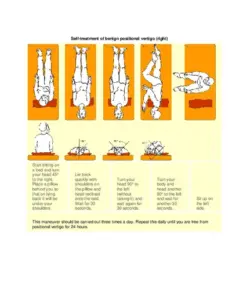
The Epley maneuver is a, often self-administered, series of head movements used to treat vertigo caused by BPPV (benign paroxysmal positional vertigo) by repositioning inner ear crystals. It involves moving from sitting to lying down with the head turned toward the affected ear, then rotating the head and body in 90-degree increments, holding each position for 30–60 seconds.
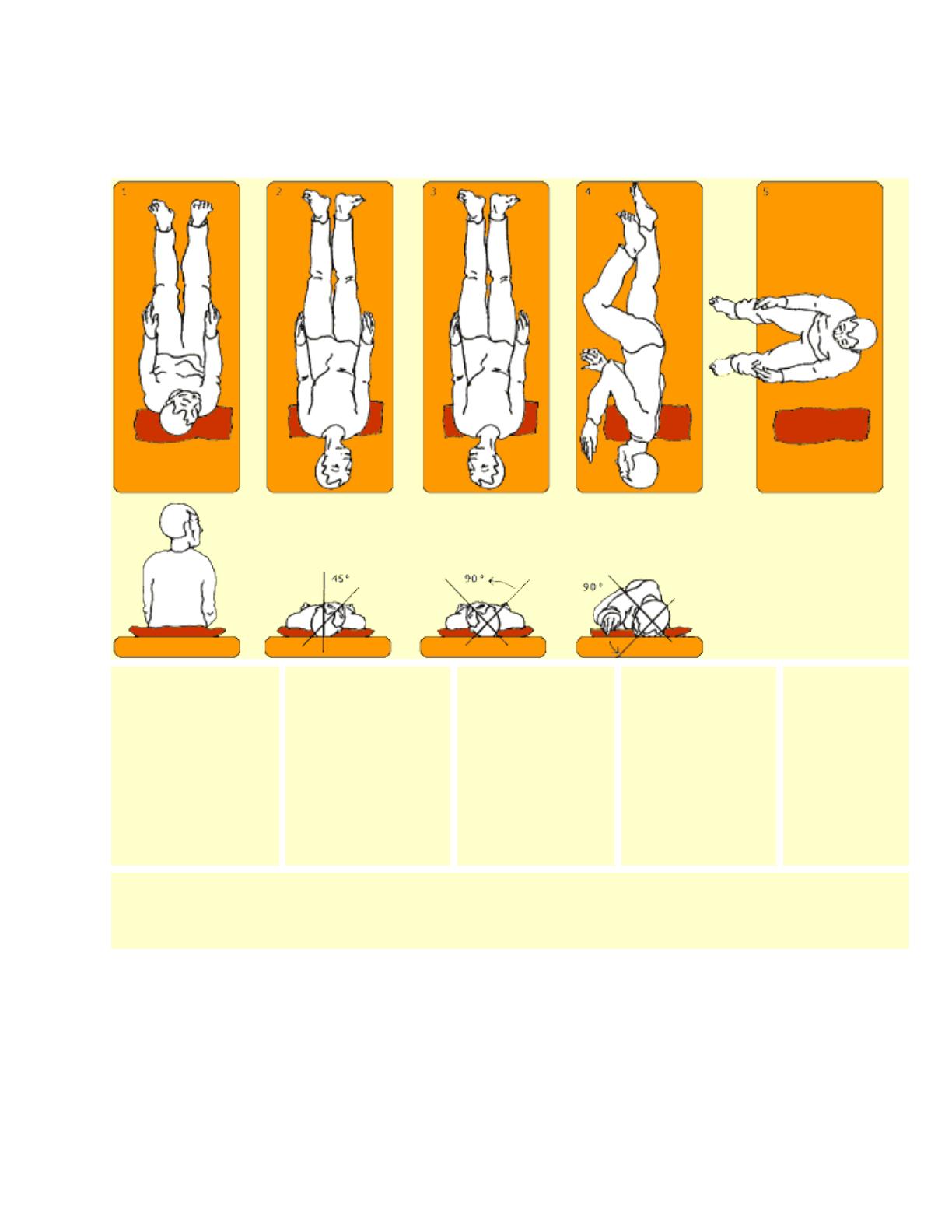
Self-treatment of benign positional vertigo (right)
Start sitting on
a bed and turn
your head 45°
to the right.
Place a pillow
behind you so
that on lying
back it will be
under your
shoulders.
Lie back
quickly with
shoulders on
the pillow and
head reclined
onto the bed.
Wait for 30
seconds.
Turn your
head 90° to
the left
(without
raising it) and
wait again for
30 seconds.
Turn your
body and
head another
90° to the left
and wait for
another 30
seconds.
Sit up on
the left
side.
This maneuver should be carried out three times a day. Repeat this daily until you are free from
positional vertigo for 24 hours.
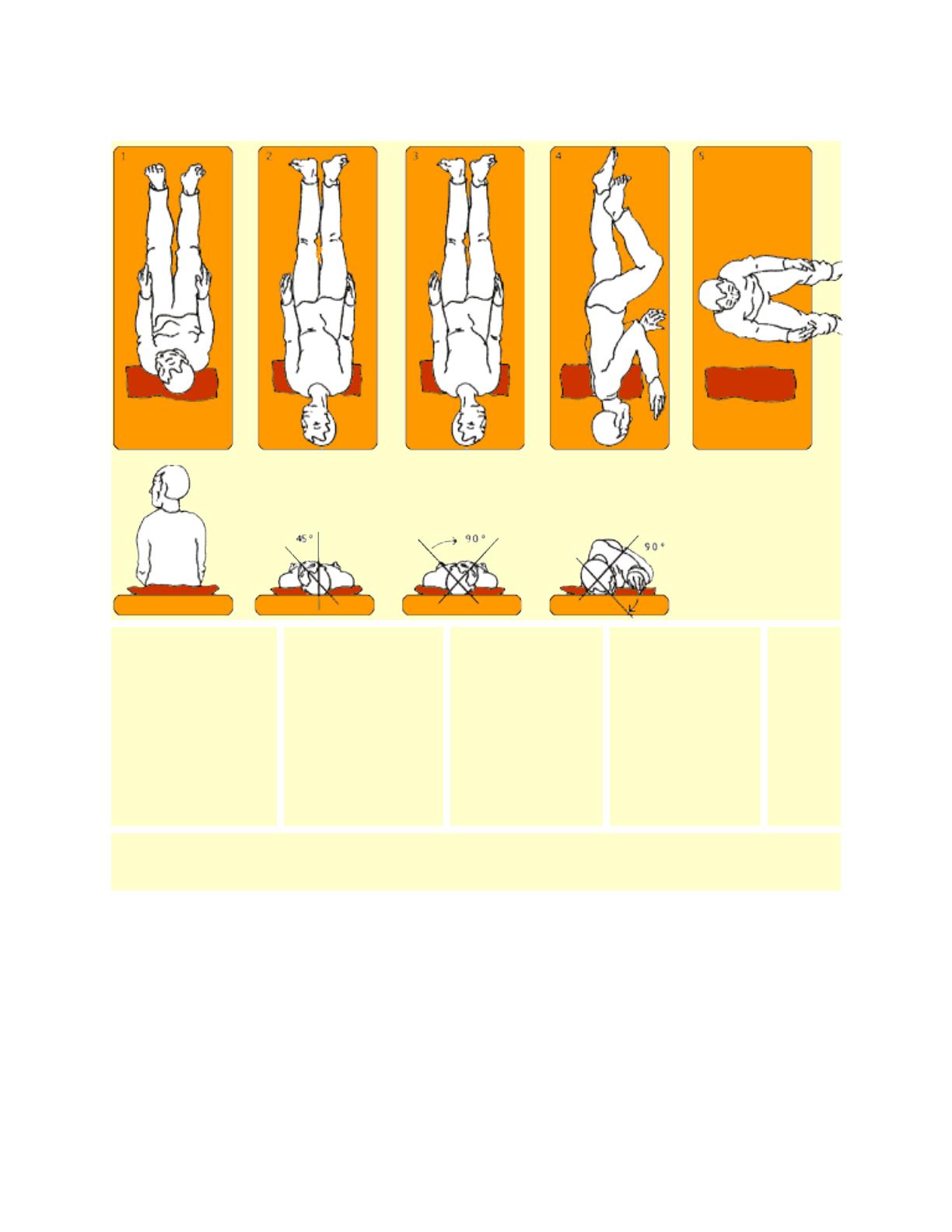
Self-treatment of benign positional vertigo (left)
Start sitting on
a bed and turn
your head 45°
to the left.
Place a pillow
behind you so
that on lying
back it will be
under your
shoulders.
Lie back
quickly with
shoulders on
the pillow and
head reclined
onto the bed.
Wait for 30
seconds.
Turn your
head 90° to
the right
(without
raising it) and
wait again for
30 seconds.
Turn your
body and
head another
90° to the
right and wait
for another 30
seconds.
Sit up on
the right
side.
This maneuver should be carried out three times a day. Repeat this daily until you are free
from positional vertigo for 24 hours.

INSTRUCTIONS FOR PATIENTS AFTER OFFICE TREATMENTS
(Epley or Semont maneuvers)
1. Wait for 10 minutes after the maneuver is performed before going home. This is to avoid
"quick spins," or brief bursts of vertigo as debris repositions itself immediately after the
maneuver. Don't drive yourself home.
2. Sleep semi-recumbent for the next night. This
means sleep with your head halfway between
being flat and upright (a 45 degree angle). This
is most easily done by using a recliner chair or
by using pillows arranged on a couch (see
figure 3). During the day, try to keep your head
vertical. You must not go to the hairdresser or
dentist. No exercise which requires head
movement. When men shave under their chins,
they should bend their bodies forward in order to keep their head vertical. If eye drops are
required, try to put them in without tilting the head back. Shampoo only under the shower.
Some authors suggest that no special sleeping positions are necessary (Cohen, 2004;
Massoud and Ireland, 1996). We, as do others, think that there is some value (Cakir et al,
2006)
3. For at least one week, avoid provoking head positions that might bring BPPV on again.
• Use two pillows when you sleep.
• Avoid sleeping on the "bad" side.
• Don't turn your head far up or far down.
Be careful to avoid head-extended position, in which you are lying on your back, especially with
your head turned towards the affected side. This means be cautious at the beauty parlor,
dentist's office, and while undergoing minor surgery. Try to stay as upright as possible.
Exercises for low-back pain should be stopped for a week. No "sit-ups" should be done for
at least one week and no "crawl" swimming. (Breast stroke is OK.) Also avoid far head-
forward positions such as might occur in certain exercises (i.e. touching the toes). Do not
start doing the Brandt-Daroff exercises immediately or 2 days after the Epley or Semont
maneuver, unless specifically instructed otherwise by your health care provider.
4. At one week after treatment, put yourself in the position that usually makes you dizzy.
Position yourself cautiously and under conditions in which you can't fall or hurt yourself. Let
your doctor know how you did.