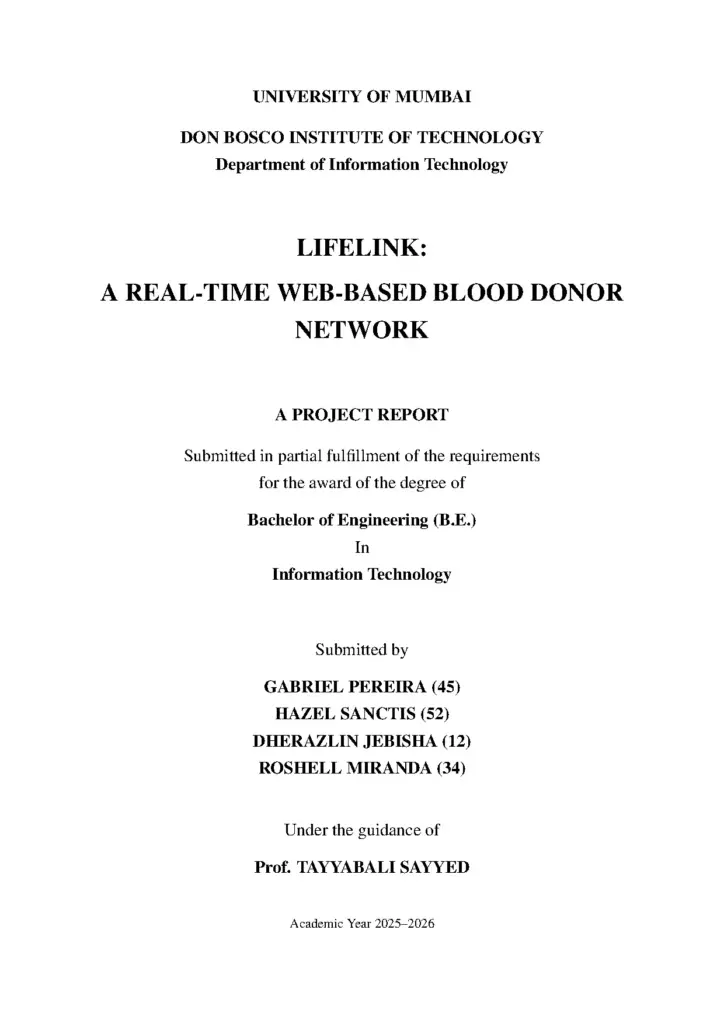
LifeLink: A Real-Time Blood Donor Network

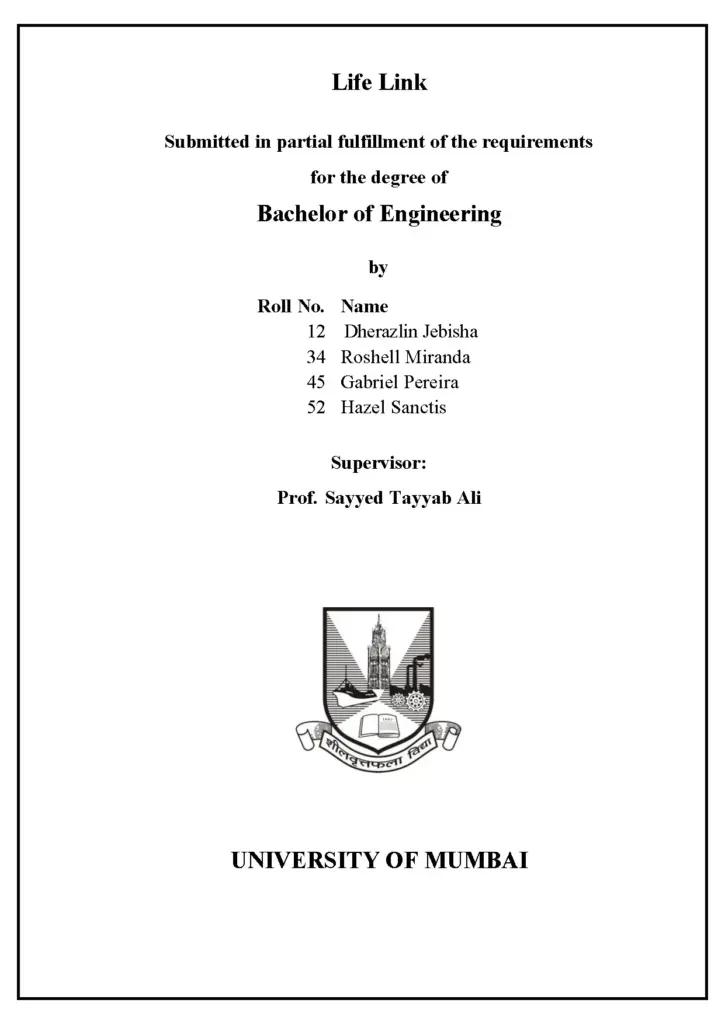
LifeLink: A Real-Time Blood Donor Network

LifeLink is a web-based blood donor network designed to improve the efficiency of blood donation processes. The platform connects blood donors, patients, and hospitals, enabling real-time requests and notifications based on blood group compatibility and geographic proximity. Developed by Gabriel Pereira, Hazel Sanctis, Dherazlin Jebisha, and Roshell Miranda, this project addresses the critical need for timely blood access in emergencies. It features an interactive map for visualizing nearby donors and hospitals, along with a messaging system for direct communication. Ideal for healthcare professionals and organizations seeking to streamline blood donation workflows.

Key Points

  • Integrates real-time notifications for blood requests and donor availability.
  • Features an interactive map displaying hospitals and active blood requests.
  • Includes a messaging module for direct communication between donors and requesters.
  • Utilizes a matching engine based on blood group compatibility and location.
104
/ 34
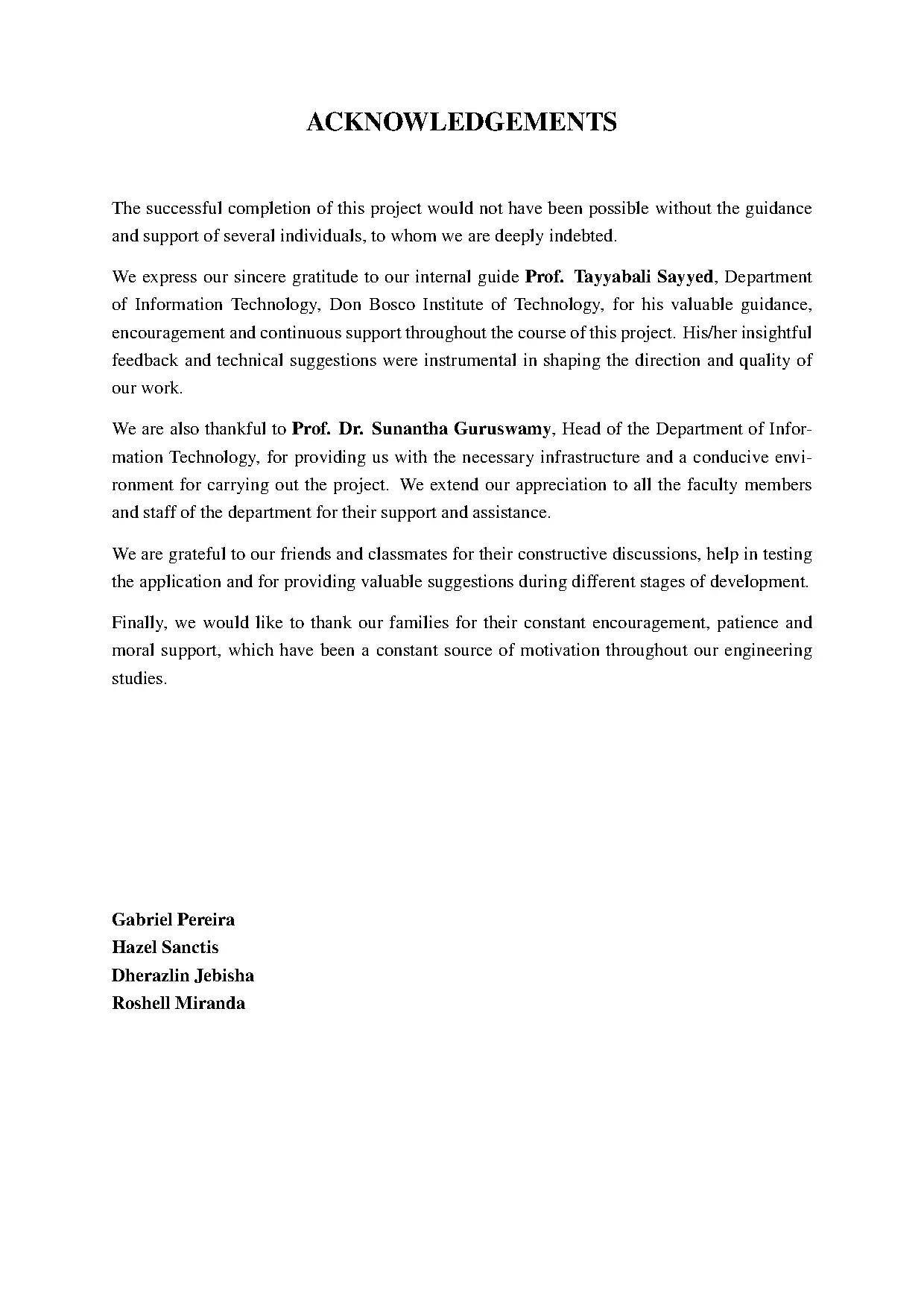
ACKNOWLEDGEMENTS
The successful completion of this project would not have been possible without the guidance
and support of several individuals, to whom we are deeply indebted.
We express our sincere gratitude to our internal guide Prof. Tayyabali Sayyed, Department
of Information Technology, Don Bosco Institute of Technology, for his valuable guidance,
encouragement and continuous support throughout the course of this project. His/her insightful
feedback and technical suggestions were instrumental in shaping the direction and quality of
our work.
We are also thankful to Prof. Dr. Sunantha Guruswamy, Head of the Department of Infor-
mation Technology, for providing us with the necessary infrastructure and a conducive envi-
ronment for carrying out the project. We extend our appreciation to all the faculty members
and staff of the department for their support and assistance.
We are grateful to our friends and classmates for their constructive discussions, help in testing
the application and for providing valuable suggestions during different stages of development.
Finally, we would like to thank our families for their constant encouragement, patience and
moral support, which have been a constant source of motivation throughout our engineering
studies.
Gabriel Pereira
Hazel Sanctis
Dherazlin Jebisha
Roshell Miranda
ABSTRACT
Access to safe blood in time-critical situations remains a major public health challenge, es-
pecially in dense urban regions where information about available donors is fragmented and
delayed. Traditional blood bank workflows rely heavily on manual phone calls, static registers
and informal messaging, which leads to slow response times and an increased risk of losing
potential donations.
This project, titled “LifeLink: A Real-Time Web-Based Blood Donor Network”, aims to de-
sign and implement a web application that connects blood donors, patients and hospitals on a
single platform. The system allows hospitals and patients to raise structured blood requests that
include blood group, urgency level, number of units and precise location. Registered donors
can maintain their profiles, update availability and receive targeted notifications when an ap-
propriate request is raised within their vicinity. The platform integrates an interactive map view
which visualises nearby hospitals, donors and active requests using latitude–longitude coordi-
nates, thereby enabling faster decision-making during emergencies.
The backend is implemented using a web framework with RESTful APIs, JSON-based data
exchange and a relational database for secure storage of donor and request records. A real-
time communications layer using WebSockets enables instant messaging between donors and
recipients, as well as push-style notifications for new requests and matches. The responsive
frontend is developed with modern HTML, CSS and JavaScript, providing modules for dash-
boards, messaging, donor discovery and live map visualisations.
The resulting system demonstrates how a location-aware, real-time web platform can stream-
line blood donation workflows by reducing manual coordination effort and response time. The
report documents the requirements analysis, system design, implementation details, testing
strategy and evaluation of the proposed solution, and concludes with recommendations for fu-
ture extensions such as mobile app integration, advanced analytics and integration with official
blood bank registries.

Contents
1 Introduction 8
1.1 Background and Motivation . . . . . . . . . . . . . . . . . . . . . . . . . . . 8
1.2 Problem Statement . . . . . . . . . . . . . . . . . . . . . . . . . . . . . . . . 8
1.3 Objectives . . . . . . . . . . . . . . . . . . . . . . . . . . . . . . . . . . . . . 9
1.4 Scope of the Project . . . . . . . . . . . . . . . . . . . . . . . . . . . . . . . . 9
1.5 Existing System and Limitations . . . . . . . . . . . . . . . . . . . . . . . . . 10
1.6 Proposed System . . . . . . . . . . . . . . . . . . . . . . . . . . . . . . . . . 10
1.7 Organisation of the Report . . . . . . . . . . . . . . . . . . . . . . . . . . . . 11
2 Literature Survey 12
2.1 Introduction . . . . . . . . . . . . . . . . . . . . . . . . . . . . . . . . . . . . 12
2.2 Blood Donation Management Systems . . . . . . . . . . . . . . . . . . . . . . 12
2.3 Web-Based Blood Management Platforms . . . . . . . . . . . . . . . . . . . . 12
2.4 Online Blood Donation Systems and Progressive Web Apps . . . . . . . . . . 13
2.5 Mobile Applications for Blood Donation . . . . . . . . . . . . . . . . . . . . . 13
2.6 Real-Time and Location-Aware Systems . . . . . . . . . . . . . . . . . . . . . 14
2.7 Comparative Analysis . . . . . . . . . . . . . . . . . . . . . . . . . . . . . . . 14
2.8 Gap Identification . . . . . . . . . . . . . . . . . . . . . . . . . . . . . . . . . 14
2.9 Summary . . . . . . . . . . . . . . . . . . . . . . . . . . . . . . . . . . . . . 15
3 System Analysis 16
3.1 Introduction . . . . . . . . . . . . . . . . . . . . . . . . . . . . . . . . . . . . 16
3.2 Problem Analysis . . . . . . . . . . . . . . . . . . . . . . . . . . . . . . . . . 16
3.3 Feasibility Study . . . . . . . . . . . . . . . . . . . . . . . . . . . . . . . . . 17
3.3.1 Technical Feasibility . . . . . . . . . . . . . . . . . . . . . . . . . . . 17
3.3.2 Operational Feasibility . . . . . . . . . . . . . . . . . . . . . . . . . . 17
3.3.3 Economic Feasibility . . . . . . . . . . . . . . . . . . . . . . . . . . . 17
3.4 User Types and Roles . . . . . . . . . . . . . . . . . . . . . . . . . . . . . . . 17
3.5 Functional Requirements . . . . . . . . . . . . . . . . . . . . . . . . . . . . . 18
3.6 Non-Functional Requirements . . . . . . . . . . . . . . . . . . . . . . . . . . 19
3.7 Use Case Overview . . . . . . . . . . . . . . . . . . . . . . . . . . . . . . . . 20
5
/ 34
End of Document
104
You May Also Like

FAQs of LifeLink: A Real-Time Blood Donor Network

How does LifeLink improve blood donation efficiency?
LifeLink enhances blood donation efficiency by centralizing donor and patient information on a single platform. It allows hospitals and patients to create structured blood requests that include essential details like blood group, urgency, and location. This integration reduces the reliance on manual communication methods, such as phone calls and social media posts, which often lead to delays. By using real-time notifications and an interactive map, the system ensures that donors are quickly informed of nearby requests, facilitating faster response times.
What technology stack is used in the LifeLink system?
LifeLink is built using a modern technology stack that includes a backend framework like Django or Spring Boot for handling RESTful APIs and database interactions. The frontend is developed with HTML, CSS, and JavaScript, ensuring a responsive user interface. For real-time communication, WebSockets are utilized, allowing instant messaging between donors and requesters. Additionally, the mapping functionality is implemented using the Leaflet.js library, which integrates with OpenStreetMap for visualizing donor locations and active requests.
What are the main user roles in LifeLink?
LifeLink features several key user roles, including donors, patients or requesters, hospital staff, and administrators. Donors can register, manage their profiles, and receive notifications for blood requests. Patients or hospital staff can create and track blood requests, ensuring that they are matched with available donors. Administrators oversee the platform, managing user accounts and monitoring system health. Each role is designed to streamline the blood donation process, facilitating better coordination among all stakeholders.
What challenges does LifeLink address in blood donation?
LifeLink addresses several challenges in the blood donation process, primarily the inefficiencies of manual coordination and fragmented communication. Traditional methods often result in delayed responses and under-utilization of willing donors. By providing a centralized platform for real-time matching of blood requests with suitable donors, LifeLink reduces these delays. It also ensures that donor eligibility and availability are verified systematically, improving the overall effectiveness of blood donation efforts.
What features does the interactive map provide?
The interactive map in LifeLink offers a visual representation of nearby hospitals, donors, and active blood requests. Users can zoom in and out, pan across the map, and click on markers to view detailed information about each location. The map color-codes markers based on urgency levels, such as normal, urgent, and critical, allowing users to quickly assess the situation. This feature enhances situational awareness for both donors and hospital staff, facilitating faster decision-making during emergencies.

Related of LifeLink: A Real-Time Blood Donor Network