Passive Construction Principles and Techniques Overview

Passive Construction Principles and Techniques Overview

Passive construction focuses on energy-efficient building techniques that minimize energy consumption and maximize comfort. This handout outlines the principles of Passivhaus design, emphasizing the importance of insulation, airtightness, and thermal bridging elimination. It details various passive foundation systems, including Integrated Energy's Strip Foundation and the Supergrund system, which are essential for achieving low U-values. The document serves as a comprehensive guide for architects, builders, and students interested in sustainable building practices and energy efficiency in construction.

Key Points

  • Explains the principles of Passivhaus design for energy-efficient buildings.
  • Describes various passive foundation systems like Integrated Energy's Strip Foundation.
  • Covers the importance of insulation and airtightness in passive construction.
  • Details U-value requirements for passive walls and roofs in comparison to traditional standards.
337
/ 17
PassiveDesign.org
Passive Construction
About:
This handout contains the information from the Passive
Construction” topic pages on passivedesign.org.
Name:...............................................
Passive Construction
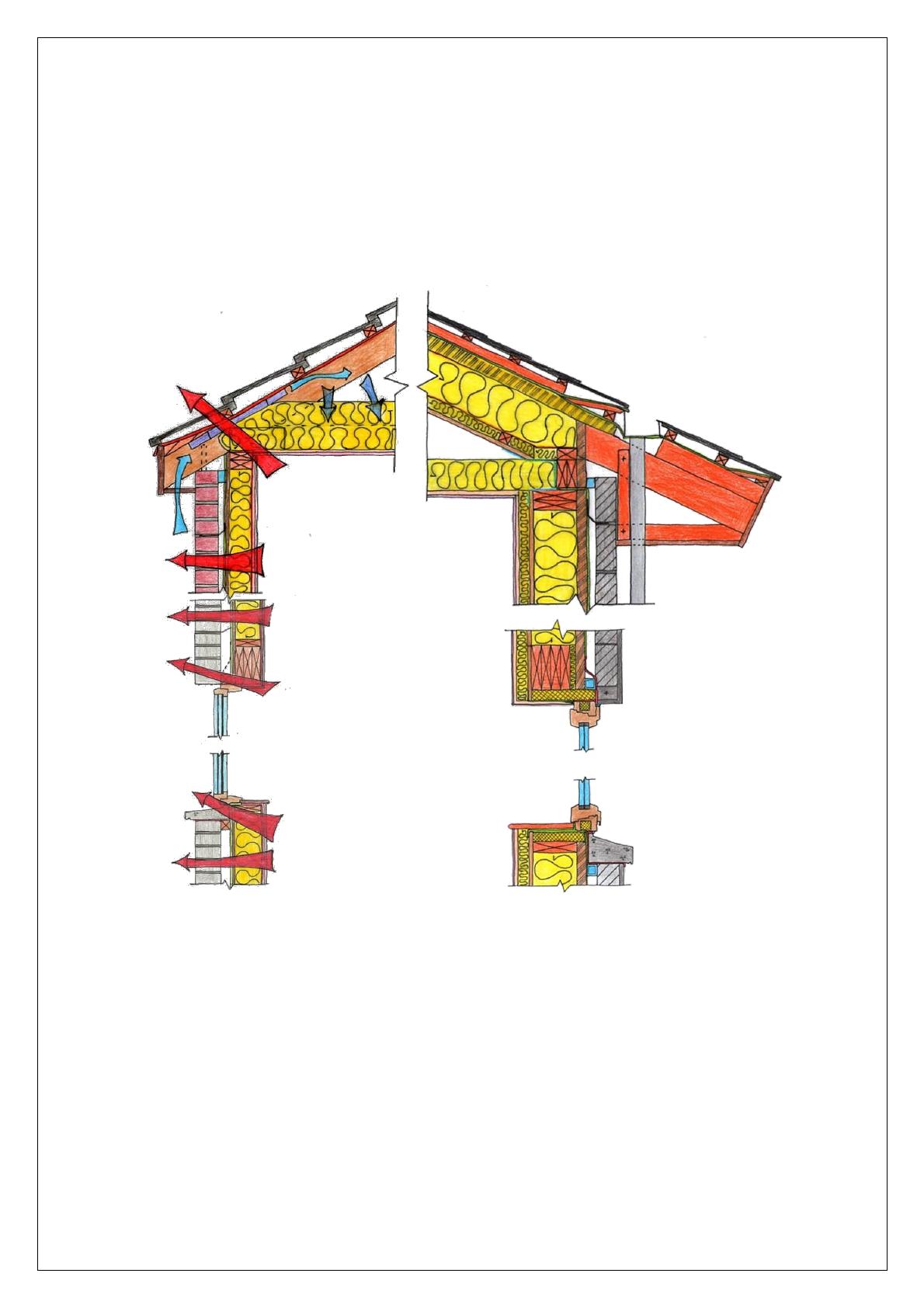
A Passivhaus is a super-insulated, virtually air-tight building that is
primarily heated by solar gain and by internal gains (e.g. people,
electrical equipment, etc...). It also minimises energy losses by eliminating
thermal bridging and using a MVHR which can save up to 90% on space
heating costs.
To begin it is crucial to understand that there is a huge difference
between a 'Passive House' and a 'Passivhaus'.
A Passive House is simply a house built using the principles of passive
design - it is not certified by the Passivhaus Institut. In comparison, a
Passivhaus has a stringent standard to abide by. To receive this
certification it must achieve the following performance characteristics:
Total energy demand for space heating and cooling must be less
than 15 kWh/m
2
per year.
Total energy demand for appliances, hot water, and space heating
and cooling must not exceed 120 kWh/m
2
per year.
Exterior Insulation must have a U value of less than 15 W/m
2
K per
year.
Windows must not exceed 0.80 W/m
2
K
Airtightness must be less than 0.6 air changes per hour when
subject to a force of 50Pa.
Ventilation must ensure over 80% heat recovery from ventilation
exhaust air.
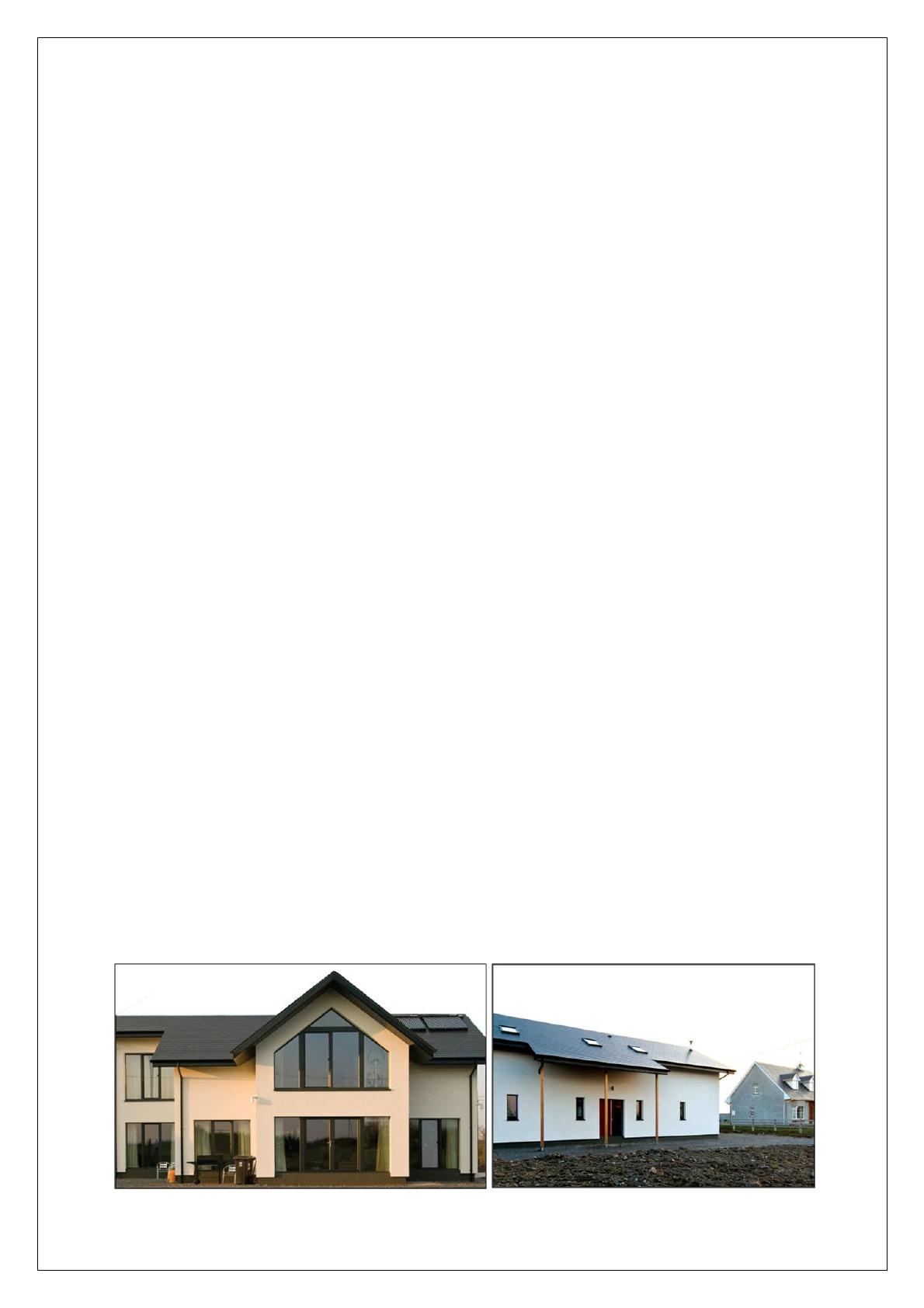
Athenry Passivhaus
Passive Foundations
When building a passive house the first thing you will have to choose is a
foundation. The Irish standard for a traditional foundation is a u value of
0.21 W/m
2
K whilst the Passivhaus standard is between 0.10 0.15
W/m
2
K. This simply means that there is less heat loss through the passive
foundation.
Below is a list of Passive Foundations that will be examined within the
handout:
1. Integrated Energy’s Passive Strip
2. Viking House (Insulated Ringbeam)
3. Supergrund (Insulated Ringbeam)
4. ISOQUICK (Insulated Raft)
Expanded Polystyrene (EPS)
Expanded Polystyrene or EPS comes in different strength grades; mainly
EPS300 and EPS100. EPS is of a much higher compressive strength
than traditional expanded polystyrene insulation; with EPS300 being
able to support loads of up to 120kN/m
2
. This is more than adequate
with typical loads from a two-storey dwelling being 45 55kN/m
2
.
/ 17
End of Document
337
You May Also Like

FAQs of Passive Construction Principles and Techniques Overview

What are the key features of a Passivhaus?
A Passivhaus is designed to be super-insulated and virtually air-tight, primarily relying on solar gain and internal heat sources for heating. It minimizes energy losses through thermal bridging and employs a Mechanical Ventilation with Heat Recovery (MVHR) system. To achieve certification, it must meet strict energy demand limits for heating, cooling, and appliances, ensuring a sustainable and efficient living environment.
What types of foundations are suitable for passive construction?
Passive construction can utilize various foundation types, including Integrated Energy's Passive Strip, Supergrund, Viking House, and ISOQUICK systems. Each of these foundations is designed to minimize heat loss and thermal bridging, with specific U-values that meet Passivhaus standards. For instance, the Supergrund system wraps the concrete slab in insulation, significantly reducing energy loss.
How do passive walls differ from traditional walls?
Passive walls require higher levels of insulation and airtightness compared to traditional walls. While the Irish standard for a traditional wall is a U-value of 0.21 W/m2K, passive walls aim for values between 0.10 and 0.15 W/m2K. This difference is achieved through careful design and construction techniques that eliminate thermal bridging and air leakage, ensuring energy efficiency.
What is the significance of airtightness in passive construction?
Airtightness is crucial in passive construction as it prevents heat loss and enhances energy efficiency. The Passivhaus standard requires an airtightness level of 0.6 m3/h.m2 at 50 Pa, significantly lower than the Irish standard of 7 m3/h.m2. Achieving this level of airtightness involves meticulous detailing and high-quality workmanship to seal all joints and potential leakage points.
What are the benefits of using the ISOQUICK foundation system?
The ISOQUICK foundation system is notable for its insulated raft design, which wraps the entire foundation in insulation to eliminate thermal bridges. Developed in Germany and approved for Passivhaus construction, it provides excellent thermal performance with U-values as low as 0.1 W/m2K. This system not only enhances energy efficiency but also protects the structure from moisture.

Related of Passive Construction Principles and Techniques Overview