The Physics 9702 Paper 5 Guidebook provides comprehensive guidance for students preparing for the Cambridge International AS and A Level Physics exams. It outlines essential strategies for tackling practical examination questions, including methods for data collection and analysis. This guide emphasizes the importance of understanding independent and dependent variables, control variables, and the significance of clear experimental design. Ideal for students aiming to excel in their physics coursework and exams, it includes practical examples and detailed explanations to enhance understanding of key concepts.

Key Points

  • Focuses on experimental design and data collection methods for Physics 9702
  • Explains independent, dependent, and control variables in experiments
  • Includes examples from past papers to illustrate key concepts
  • Provides strategies for analyzing experimental data and drawing conclusions

Sian Pahlowan Saad
28 pages
Language:English
Type:Guide
Sian Pahlowan Saad
28 pages
Language:English
Type:Guide
69
/ 28
Physics 9702 Paper 5 Guidebook:
General Recommendations:
30-35 minutes should be given to Question 1
40-45 minutes should be given to Question 2
Total time of Paper 5 is 1hr 15 minutes.
Total marks = 30.
Question 1:
Typical Question 1 will either require you to test a relationship. Question 1 requires you
to focus on 4 things:
1. Defining the problem (2 marks)
2. Methods of data collection (4 marks)
3. Method of Analysis (3 marks)
4. Additional details (6 marks)
Q1 can be written 3 paragraphs:
Paragraph 01 - Defining the problem
Paragraph 02 - Methods of data collection
Paragraph 03 - Method of Analysis
Additional details marks be scored by adding details to the three paragraphs.
Defining the Problem (2 marks)
1. Identify the independent variable:
An independent variable is the variable you change or vary in an experimental
study to explore its effects.
2. Identify the Dependent Variable:
A dependent variable is the variable that changes when the independent
variable changes.
3. Identify the control variables (or need to be kept constant)
Keeping all the other variables/conditions that will affect the dependent
variable constant.
How to identify the dependent and independent variables?
Look for words like “test the relationship between”
How to identify the control variables? (1-3 variables)
1) Look for variables other than the dependent and independent variables in the
formula that can be kept constant.
2) Imagine the experiment and think of variables that can affect the dependent
variable.
Note: Don’t mention things that are already constants.
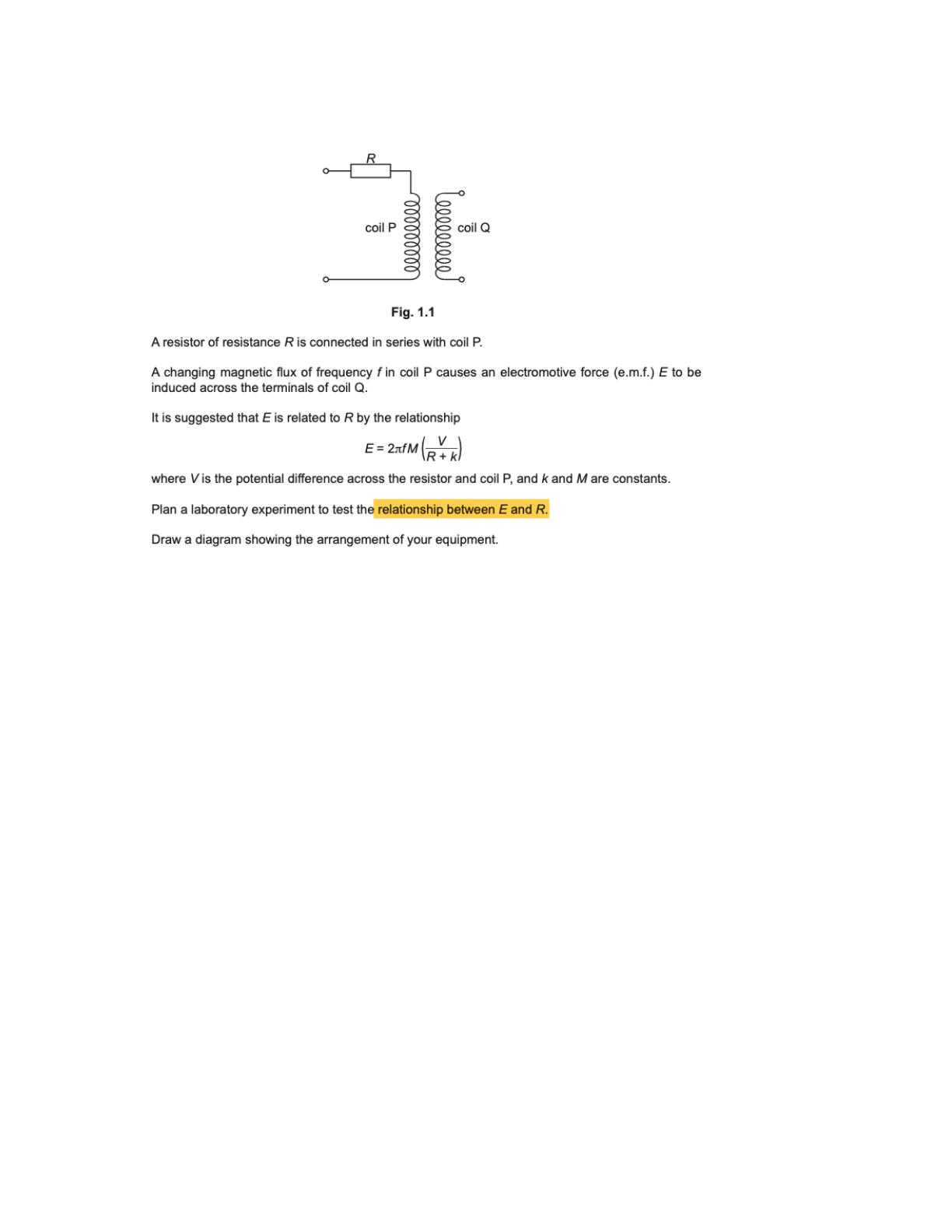
Example 1: May June 2023/52
Independent in this case = R
Dependent = E
Constant Variable = V
/ 28
End of Document
69
You May Also Like

FAQs of Physics 9702 Paper 5 Guidebook

What are the key components of experimental design in Physics 9702?
Key components of experimental design in Physics 9702 include defining the problem, identifying independent and dependent variables, and controlling other variables to ensure valid results. Students are encouraged to clearly outline their experimental setup and the methods used for data collection. Additionally, they should consider how to analyze the data effectively, including plotting graphs and determining relationships between variables.
How does the guide help with data analysis for Physics experiments?
The guide offers detailed methods for analyzing data collected during experiments, emphasizing the importance of plotting graphs to visualize relationships between variables. It instructs students on how to determine whether a graph passes through the origin or has a y-intercept, and how to calculate gradients and intercepts. This analytical approach helps students draw meaningful conclusions from their experimental results.
What types of questions can be expected in the Physics 9702 Paper 5 exam?
The Physics 9702 Paper 5 exam typically includes questions that require students to design experiments, analyze data, and interpret results. Students may be asked to identify variables, describe methods of data collection, and explain their reasoning behind experimental choices. Past paper examples included in the guide provide insight into the types of questions that may appear, helping students prepare effectively.
What strategies are recommended for collecting data in Physics experiments?
Recommended strategies for collecting data in Physics experiments include ensuring that the independent variable is varied sufficiently to observe changes in the dependent variable. Students should also use precise measuring instruments and maintain consistent control variables to minimize errors. The guide emphasizes the importance of careful planning and execution to achieve reliable results.
How can students benefit from the examples provided in the guide?
Students can benefit from the examples provided in the guide by gaining practical insights into how to approach experimental questions. These examples illustrate the application of theoretical concepts in real-world scenarios, enhancing understanding. By reviewing past paper questions and solutions, students can develop their problem-solving skills and become familiar with the exam format.

Related of Physics 9702 Paper 5 Guidebook