Research reactor core conversion guidebook Volume 2: Analysis (Appendices A-F)

Research reactor core conversion guidebook Volume 2: Analysis (Appendices A-F)

The Research Reactor Core Conversion Guidebook Volume 2 focuses on the analysis of reactor core conversion from highly enriched uranium (HEU) to low enriched uranium (LEU) fuel. This guidebook, published by the International Atomic Energy Agency (IAEA) in 1992, provides detailed appendices A-F that include safety analyses, radiological consequence assessments, and methods for preventing loss-of-coolant accidents. It serves as a critical resource for research reactor operators navigating safety and licensing issues related to core conversion. The volume also features example analyses comparing HEU and LEU fuels, highlighting the differences in safety parameters and potential radiological impacts. This guidebook is essential for professionals involved in reactor safety and regulatory compliance.

Key Points

  • Includes detailed appendices A-F on reactor core conversion safety analyses
  • Presents example analyses comparing HEU and LEU fuel safety parameters
  • Discusses methods for preventing loss-of-coolant accidents in reactors
  • Features licensing document examples related to core conversion processes
391
/ 367
IAEA-TECDOC-643
Research
reactor
core conversion
guidebook
Volume
2:
Analysis
(Appendices
A-F)
INTERNATIONAL
ATOMIC
ENERGY
AGENCY
A\
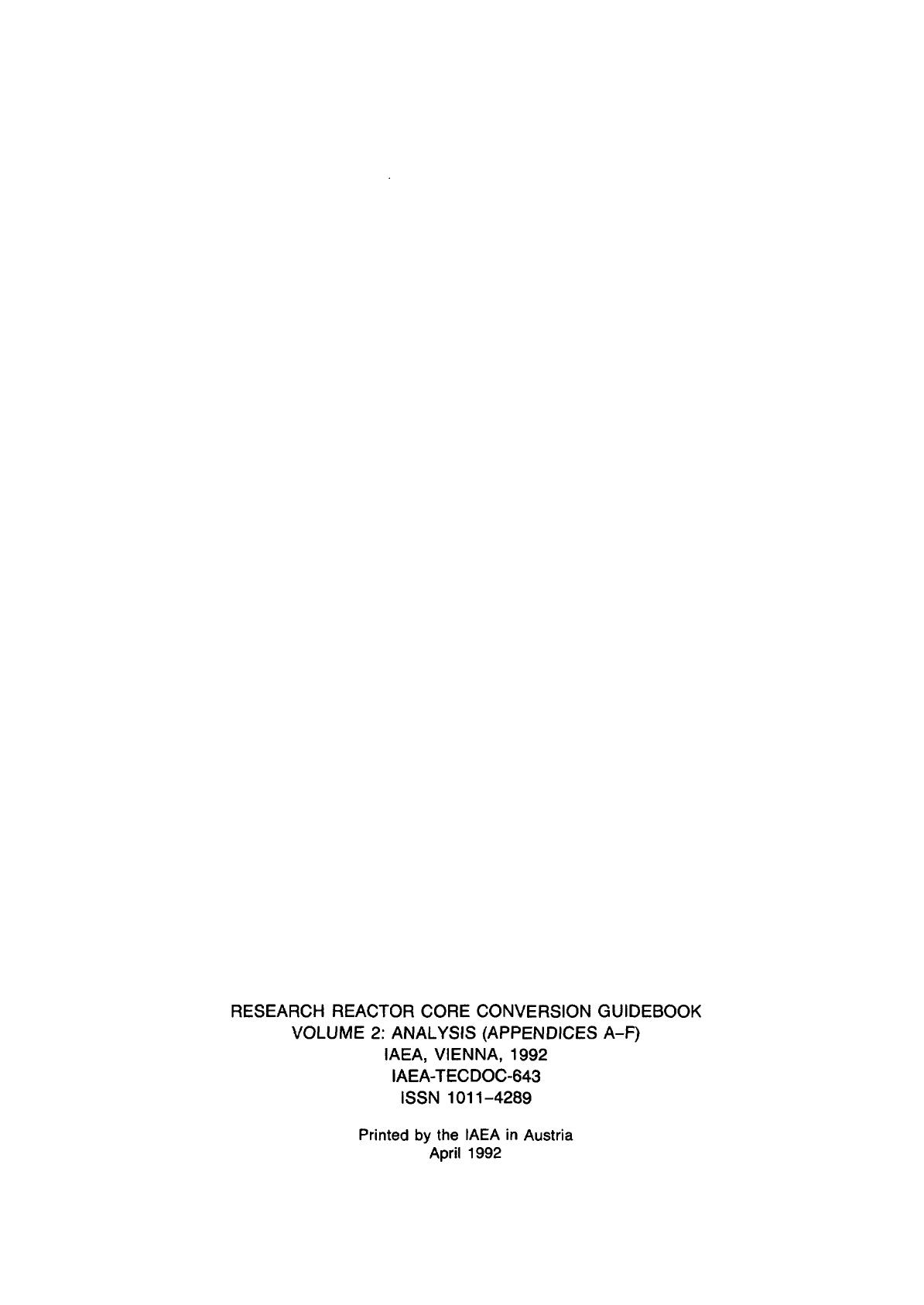
RESEARCH
REACTOR
CORE
CONVERSION
GUIDEBOOK
VOLUME
2:
ANALYSIS
(APPENDICES
A-F)
IAEA,
VIENNA,
1992
IAEA-TECDOC-643
ISSN
1011-4289
Printed
by the
IAEA
in
Austria
April
1992
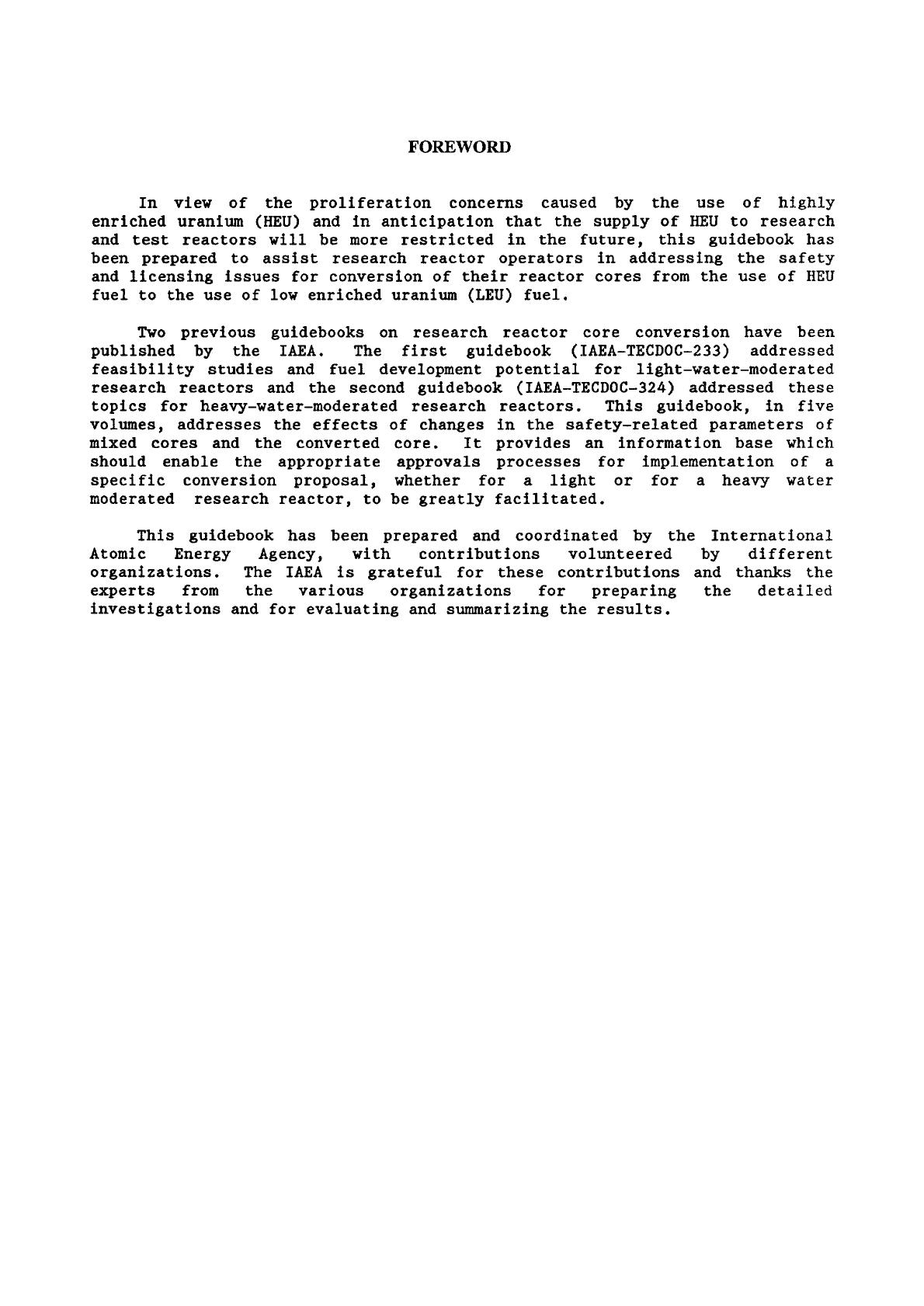
FOREWORD
In
view
of the
proliferation
concerns caused
by the use of
highly
enriched uranium
(HEU)
and in
anticipation
that
the
supply
of HEU to
research
and
test
reactors
will
be
more
restricted
in the
future, this
guidebook
has
been
prepared
to
assist
research
reactor
operators
in
addressing
the
safety
and
licensing issues
for
conversion
of
their
reactor
cores
from
the use of HEU
fuel
to the use of low
enriched
uranium
(LEU)
fuel.
Two
previous
guidebooks
on
research
reactor
core
conversion have
been
published
by the
IAEA.
The
first
guidebook
(IAEA-TECDOC-233)
addressed
feasibility
studies
and
fuel
development
potential
for
light-water-moderated
research
reactors
and the
second
guidebook
(IAEA-TECDOC-324)
addressed
these
topics
for
heavy-water-moderated research reactors.
This
guidebook,
in
five
volumes, addresses
the
effects
of
changes
in the
safety-related
parameters
of
mixed
cores
and the
converted
core.
It
provides
an
information base
which
should enable
the
appropriate
approvals
processes
for
implementation
of a
specific
conversion
proposal,
whether
for a
light
or for a
heavy
water
moderated
research
reactor,
to be
greatly facilitated.
This
guidebook
has
been
prepared
and
coordinated
by the
International
Atomic
Energy
Agency,
with contributions volunteered
by
different
organizations.
The
IAEA
is
grateful
for
these
contributions
and
thanks
the
experts
from
the
various
organizations
for
preparing
the
detailed
investigations
and for
evaluating
and
summarizing
the
results.
/ 367
End of Document
391
You May Also Like

FAQs of Research reactor core conversion guidebook Volume 2: Analysis (Appendices A-F)

What safety analyses are included in Volume 2 of the guidebook?
Volume 2 includes comprehensive safety analyses for generic 10 megawatt thermal (MWt) reactors, utilizing probabilistic methods to assess risks associated with core conversion. It evaluates the safety parameters of both highly enriched uranium (HEU) and low enriched uranium (LEU) fuels, providing insights into their respective radiological consequences during postulated accidents. This analysis is crucial for understanding the implications of transitioning to LEU fuel and ensuring reactor safety.
What methods are discussed for preventing loss-of-coolant accidents?
The guidebook outlines several methods aimed at preventing loss-of-coolant accidents (LOCAs) in research reactors. These methods include engineering controls, operational procedures, and design modifications that enhance the reactor's safety systems. By implementing these strategies, reactor operators can mitigate the risks associated with coolant loss, ensuring the integrity of the reactor core and the safety of the surrounding environment.
What are the key differences in safety parameters between HEU and LEU fuels?
The guidebook provides a detailed comparison of safety parameters between HEU and LEU fuels, highlighting differences in thermal performance, reactivity, and accident consequences. It discusses how the transition to LEU can reduce proliferation risks while maintaining reactor safety. The analyses presented in the appendices illustrate the expected changes in safety-related parameters, aiding operators in understanding the implications of fuel conversion.
What examples of licensing documents are included in Volume 2?
Volume 2 features seven examples of licensing documents that are pertinent to the core conversion process. These documents serve as templates and guidelines for regulatory compliance, helping reactor operators navigate the approval processes required for transitioning from HEU to LEU fuel. The inclusion of these examples is designed to facilitate the licensing journey and ensure adherence to safety standards.

Related of Research reactor core conversion guidebook Volume 2: Analysis (Appendices A-F)