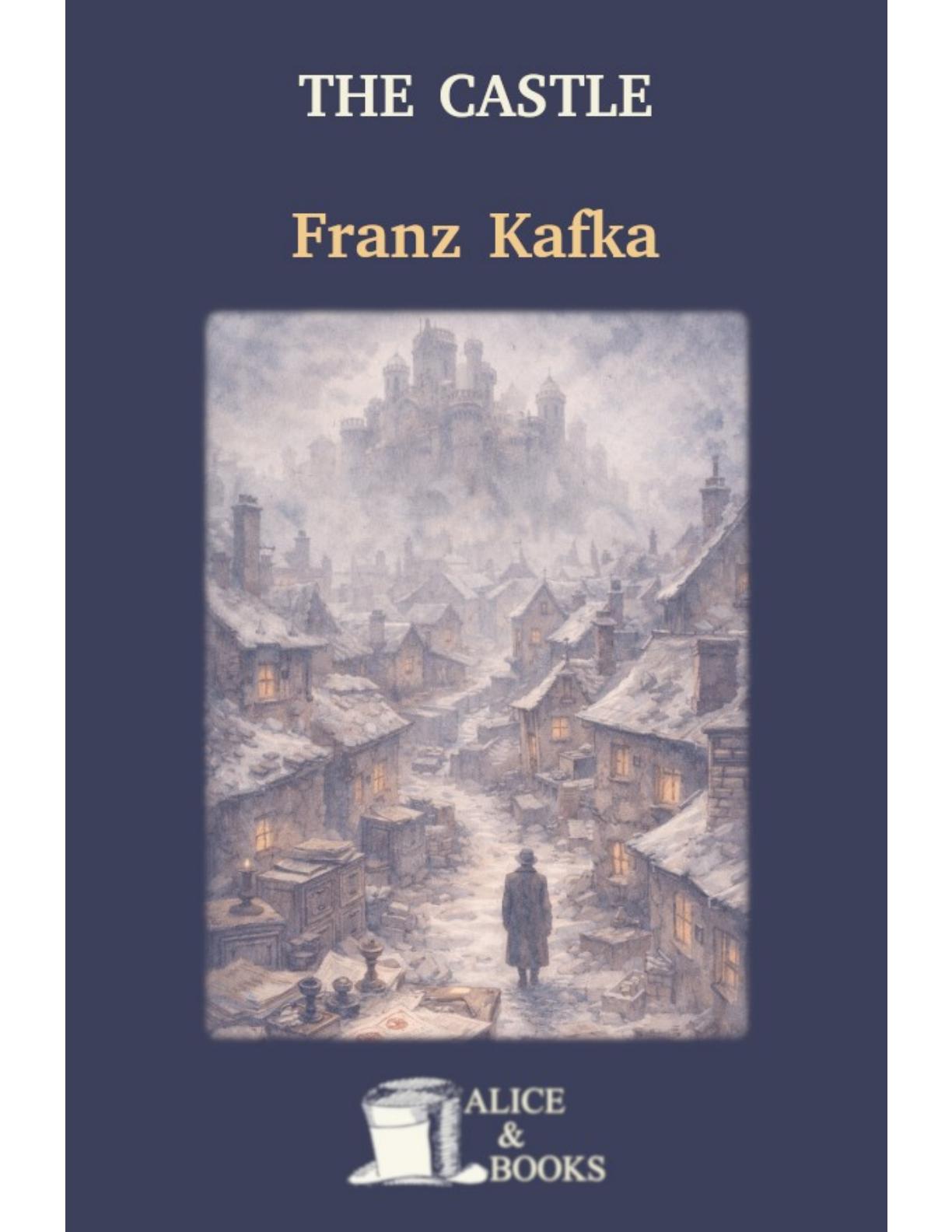
The Castle Novel by Franz Kafka

The Castle Novel by Franz Kafka

The Castle, a novel by Franz Kafka, explores the existential struggles of K., a land surveyor who arrives in a mysterious village governed by an elusive bureaucracy. Set against a backdrop of surrealism and absurdity, the narrative delves into themes of alienation, the search for meaning, and the complexities of human existence. Kafka's unique storytelling style challenges readers to confront the absurdities of life and the often unattainable nature of authority. This edition, translated by Willa Muir and Edwin Muir, provides an accessible entry point for readers interested in Kafka's profound insights into the human condition. Ideal for literature enthusiasts and students studying existentialism and modernist literature.

Key Points

  • Explores the existential themes of alienation and bureaucracy through the character K.
  • Set in a surreal village where K. struggles to gain access to the castle's authority.
  • Examines the complexities of human existence and the search for meaning in a seemingly indifferent world.
  • Translated by Willa Muir and Edwin Muir, offering an accessible version of Kafka's work.
99
/ 233
THE CASTLE
FRANZ KAFKA
PUBLISHED: 1926
SOURCE: STANDARD EBOOKS
TRANSLATED BY WILLA MUIR AND EDWIN MUIR
Downloaded from www.aliceandbooks.com. Explore more public-do-
main books on our website.
INTRODUCTORY NOTE
TO THE FIRST AMERICAN EDITION
Franz Kafka’s name, so far as I can discover, is almost unknown to English
readers. As he is considered by several of the best German critics to have
been perhaps the most interesting writer of his generation, and as he is in
some ways a strange and disconcerting genius, it has been suggested that a
short introductory note should be provided for this book, the first of his to
be translated into English.
Kafka died in 1924 of consumption at the early age of forty-one. During
his lifetime he published only a few volumes of short stories and novelettes,
all of them characterised by extreme perfection of form, and most of them
wrung out of him by the persuasion of his lifelong friend, Herr Max Brod,
the well-known novelist. Before he died he destroyed a great number of the
manuscripts he had been engaged on, but he left, among other things, in-
cluding a number of aphorisms on religion, three long unfinished novels,
America, The Trial and The Castle. He left explicit instructions as well,
however, that these, along with all his other papers, should be burnt. As his
executor, Herr Brod was in a very difficult position. In a note appended to
The Trial he has given in full Kafka’s dying instructions, and set out with
the utmost candour his reasons for not following them. These reasons are
entirely honourable, and his decision to publish the three novels has been
approved by every responsible critic in the German-speaking countries. The
novels themselves, however, provide the best data for judging the wisdom
of a choice so difficult; for they are the most important of Kafka’s writings,
and two of them are masterpieces of a unique kind.
Herr Brod’s courtesy has provided me with a few particulars about Kaf-
ka’s life. He was born in Prague in 1883 of well-to-do Jewish parents, stud-
ied law at the university there, and after receiving his doctorate took up a
post in an accident insurance office. After a love affair, which ended disas-
trously, he fell ill, symptoms of consumption appeared, and for some time
/ 233
End of Document
99
You May Also Like

FAQs of The Castle Novel by Franz Kafka

What is the main conflict in The Castle by Franz Kafka?
The main conflict in The Castle revolves around K., the protagonist, who arrives in a village seeking to fulfill his professional duties as a land surveyor. However, he encounters an impenetrable bureaucracy that prevents him from accessing the castle, which symbolizes authority and meaning. K.'s struggle to understand the rules of the village and the nature of his own existence creates a sense of frustration and alienation. Throughout the novel, K. grapples with his purpose and the often absurd obstacles that hinder his quest for acceptance and recognition.
How does The Castle reflect Kafka's views on authority?
The Castle serves as a critique of authority and the bureaucratic systems that govern human life. Kafka portrays the castle as an elusive entity that represents unattainable power and control, leaving K. in a state of confusion and helplessness. The novel illustrates how individuals often find themselves at the mercy of incomprehensible systems that dictate their lives, reflecting Kafka's belief in the absurdity of existence and the struggle against oppressive forces. This portrayal resonates with readers who recognize the challenges of navigating complex societal structures.
What themes are explored in The Castle?
The Castle explores several profound themes, including existentialism, alienation, and the search for meaning. Kafka delves into the nature of human existence, highlighting the struggles individuals face when confronted with bureaucratic indifference and the quest for personal significance. The novel also touches on the idea of isolation, as K. finds himself increasingly disconnected from the villagers and their customs. Ultimately, these themes invite readers to reflect on their own experiences with authority, purpose, and the human condition.
What is the significance of the castle in the novel?
In The Castle, the castle itself symbolizes the unattainable nature of authority and the complexities of human desire for acceptance. It represents a distant goal that K. strives to reach, yet it remains perpetually out of his grasp. The castle's elusive nature reflects Kafka's exploration of existential themes, as K. navigates a world filled with obstacles and uncertainties. This symbolism invites readers to contemplate the nature of power, the search for meaning, and the often frustrating journey of self-discovery.

Related of The Castle Novel by Franz Kafka