

This document is a student-facing instructional resource developed by the Iowa Reading Research Center that teaches learners how to write an objective summary — defined as a concise, fact-based account of a text’s most important information, written entirely in the student’s own words and free from personal opinions or judgments. It guides students through a seven-step process using a graphic organizer, beginning with identifying and recording only the most critical textual details, then crafting a topic sentence that captures the overall subject, numbering the details in a logical order, and connecting them using appropriate transition words drawn from categories such as time/sequence, addition, cause/effect, and compare/contrast. Students then combine all elements into a complete summary, evaluate it against a provided checklist covering criteria such as use of own words, inclusion of a topic sentence, and avoidance of opinions, and finally seek feedback from an adult to guide any necessary revisions, with the overall goal of improving both reading comprehension and writing skills.

Writing an Objective Summary
An objective summary tells what happened in a text without using any opinions or judgements. This
resource includes step-by-step instructions that students can use to fill out a graphic organizer and
eventaully develop and evaluate their own objective summary of a text.
Additional Resources
To learn more, read our previous blog post “Supporting Your Children’s and Teens’ Home Learning:
Writing an Objective Summary” by Leah Zimmerman, Ph.D.

Writing an Objective Summary
What is an Objective Summary?
A summary is a short, concise statement of the most important information in a text. In particular, a
summary identifies the topic and most important textual details of a text. When you write a summary,
you write the information in your own words.
An objective summary is a summary that does not include any opinions or judgments about what is
written in the text. Instead, it only includes information that comes from the text. Writing objective
summaries can help you understand texts that you read and identify the most important information in
the text. Moreover, writing objective summaries can help you improve your writing skills!
To write an objective summary, follow the instructions below. You can summarize a whole text, like a
book or news article, or just a portion of a text, like a book chapter. If you need any help, be sure to ask an
adult.
Directions
Use steps 1-4 to guide you in filling out this graphic organizer:
Transition Detail Number
Topic Sentence:
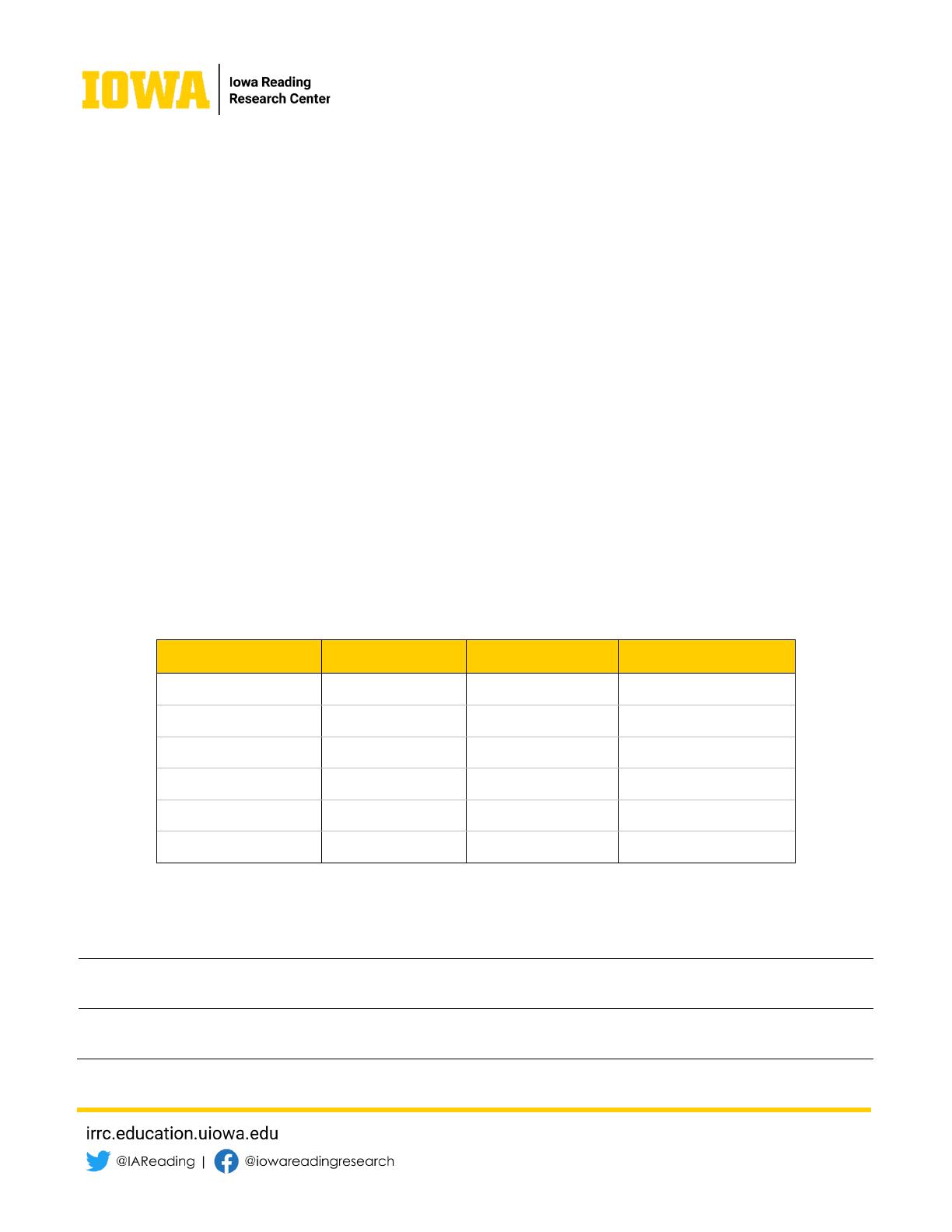
1. As you are reading, jot down the most important details from the text in the “Details” column on the
graphic organizer. Important details are those that are critical to understanding the text. If someone
could understand the text without knowing about a certain detail, then it is not important! In addition,
remember that textual details must be written in your own words, and should not contain any
opinions or judgments about the text!
*TIP: Don’t fall in love with interesting details! Even if a detail is interesting, strange, or exciting, it is not
necessarily important to your objective summary.
2. Write a topic sentence in the “Topic sentence” box. A topic sentence identifies the topic of the text, or
what the whole text is about. It captures all of the textual details you identified in Step 1.
3. Number each sentence in the “Number” column to show the order in which you will write these
details in your summary. Remember, the details will not always be written in the order in which they
occurred in the passage. Instead, they should be written in a logical order that helps the reader of
your summary understand what the text was about.
4. Add an appropriate transition word or phrase to the beginning of each detail in the “Transition”
column. Options for transition words and phrases are listed below. An appropriate transition word or
phrase accurately shows the relationship between details.
Time/Sequence Addition Cause/Effect Compare/Contrast
First In addition As a result Similarly
Initially Additionally Consequently Likewise
Next Furthermore Hence In the same way
Then Moreover Therefore In contrast
Last Also Thus Conversely
Finally For this reason However
5. Combine your topic sentence, transitions, and details to write your summary: