A Guide to Eating After Gallbladder Surgery

A Guide to Eating After Gallbladder Surgery

Eating after gallbladder surgery requires careful dietary adjustments to aid digestion and prevent discomfort. This guide outlines essential tips for managing your diet post-surgery, emphasizing low-fat food choices and smaller, more frequent meals. It includes a comprehensive chart categorizing foods to avoid, foods to eat occasionally, and those to include regularly for optimal recovery. Ideal for patients seeking to understand how to adapt their eating habits after gallbladder removal, this resource provides practical advice for maintaining digestive health. Consult with a nutritionist for personalized guidance based on individual tolerance levels.

Key Points

  • Advises on low-fat food choices to aid digestion after gallbladder surgery.
  • Recommends smaller, more frequent meals to manage hunger and discomfort.
  • Includes a chart categorizing foods to avoid and foods to include in the diet.
  • Suggests staying active and incorporating a plant-based diet for better recovery.
70
/ 2
A Guide to Eating After Gallbladder Surgery
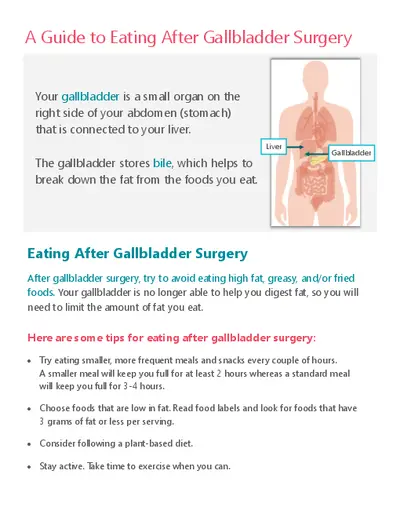
Your gallbladder is a small organ on the
right side of your abdomen (stomach)
that is connected to your liver.
The gallbladder stores bile, which helps to
break down the fat from the foods you eat.
Gallbladder
Liver
Eating After Gallbladder Surgery
After gallbladder surgery, try to avoid eating high fat, greasy, and/or fried
foods. Your gallbladder is no longer able to help you digest fat, so you will
need to limit the amount of fat you eat.
Here are some tips for eating after gallbladder surgery:
Try eating smaller, more frequent meals and snacks every couple of hours.
A smaller meal will keep you full for at least 2 hours whereas a standard meal
will keep you full for 3-4 hours.
Choose foods that are low in fat. Read food labels and look for foods that have
3 grams of fat or less per serving.
Consider following a plant-based diet.
Stay active. Take time to exercise when you can.
Healthcare for All. 866.246.8259 www.chnnyc.org
Use this chart for examples of foods to avoid, foods to
have sometimes, and foods to include in your diet.
It takes some time to find which foods your body can and can’t handle after
surgery. Cut back on foods that cause diarrhea, gas, or discomfort. Continue
to eat foods that do not cause increased pain or discomfort. Talk to your CHN
nutritionist if you have more questions!
Foods to Avoid:
Foods to Eat Sometimes:
Foods to Include in Your Diet:
Fatty meats: Steak, beef, sausage, pork, bacon.
Some dairy products: Full-fat yogurt & cheese,
whole milk, sour cream, butter.
Processed foods: Sugary cereals, white bread,
foods cooked in hydrogenated oil, like potato chips.
Sugary foods: Cakes, pies, cookies, ice cream.
Caffeine and alcohol: Coffee, tea, beer, wine.
Fried and fast foods. Foods that cause excess gas.
Nuts, nut butters: Peanut butter, almond butter.
High fat sauces made with butter, oil, and/or
cream: Gravy, alfredo sauce, Hollandaise sauce.
Oils: Olive oil, coconut oil, avocado oil.
High fiber foods to help with digestion: Lentils,
potatoes, barley, oats, whole grains, beans, peas,
raw nuts, fruits and veggies.
Nutrient dense foods: Spinach, kale, cauliflower,
broccoli, legumes, avocados, berries, citrus fruits.
Lean meats or meat substitutes: Chicken, turkey,
salmon, tuna, white fish, tofu.
Low-fat or fat-free foods: Low-fat salad dressings
and mayo, skim milk, avocados.
/ 2
End of Document
70
You May Also Like

FAQs of A Guide to Eating After Gallbladder Surgery

What foods should be avoided after gallbladder surgery?
Foods high in fat, such as fatty meats, full-fat dairy products, and fried foods, should be avoided after gallbladder surgery. These foods can lead to digestive discomfort since the gallbladder is no longer present to help digest fats. Additionally, processed foods high in sugar and caffeine can also cause issues. It's important to monitor how your body reacts to different foods and adjust your diet accordingly to minimize discomfort.
What are some recommended foods to include in the diet after gallbladder surgery?
After gallbladder surgery, it's beneficial to include high-fiber foods in your diet, such as lentils, whole grains, fruits, and vegetables. Lean proteins like chicken, turkey, and fish are also recommended, along with healthy fats from sources like avocados and olive oil. These foods can help support digestion and provide essential nutrients while minimizing discomfort. Staying hydrated and maintaining a balanced diet will aid in recovery.
How can exercise help after gallbladder surgery?
Staying active after gallbladder surgery can significantly aid in recovery by promoting digestive health and overall well-being. Gentle exercises, such as walking or stretching, can help stimulate digestion and prevent complications like constipation. Regular physical activity also supports emotional health, which is important during the recovery process. It's advisable to consult with a healthcare provider before starting any exercise regimen post-surgery.
What dietary changes are necessary after gallbladder removal?
After gallbladder removal, individuals need to make significant dietary changes to accommodate the body's new way of digesting fats. This includes avoiding high-fat and greasy foods, as the body may struggle to digest them without the gallbladder. Instead, focusing on low-fat, nutrient-dense foods and smaller meal portions can help manage symptoms and improve digestion. It's essential to listen to your body and adjust your diet based on what foods cause discomfort.

Related of A Guide to Eating After Gallbladder Surgery