Fundamental Unit of Life: Cell by Prashant Kirad

Fundamental Unit of Life: Cell by Prashant Kirad

Fundamental Unit of Life: Cell by Prashant Kirad explores the essential concepts of cellular biology, focusing on the structure and function of cells. It covers key topics including cell theory, types of cells, and the roles of various organelles such as the nucleus, mitochondria, and chloroplasts. This resource is tailored for students studying biology at the 9th-grade level, providing a comprehensive overview of cellular processes and components. Key themes include the differences between prokaryotic and eukaryotic cells, cell division, and the importance of the plasma membrane. Ideal for learners preparing for exams or seeking to deepen their understanding of cell biology.

Key Points

  • Explains cell theory and its historical significance in biology.
  • Covers the structure and function of prokaryotic and eukaryotic cells.
  • Details the roles of organelles like mitochondria and chloroplasts.
  • Discusses the process of cell division, including mitosis and meiosis.

136
/ 17
CLASS 9th NOTES
SCIENCE
FUNDAMENTAL UNIT OF LIFE:CELL
PRASHANT KIRAD
Cell:
It is known as the structural and fundamental unit of life because it
is the basic building unit of an organism and is capable to perform
basic functions of all living organisms.
Cytology is the scientific study dedicated to understanding the
structure and composition of cells.
In 1665, Robert Hooke first observed cells in a thin slice of cork,
marking the beginning of our understanding of cellular existence.
A. V. Leeuwenhoek, in 1674, made the groundbreaking discovery of
the first free-living cell.
Protoplasm, the essential substance within cells, comprises water,
ions, salts, organic molecules, cell organelles, and a nucleus, existing
in sol-gel states.
Discovery of Living Cell Anton Van Leeuwenhock (1674)
Discovery of Nucleus Robert Brown (1831)
Discovery of Protoplasm J. E. Purkinje (1839)
Cell Theory:
The cell theory was given by Schleiden and Schwann, in 1838 which
states that:
All living things are made up of cells.1.
The cell is the basic unit of structure and function in living
organisms.
2.
Cells come from pre-existing cells through the process of cell
division.
3.
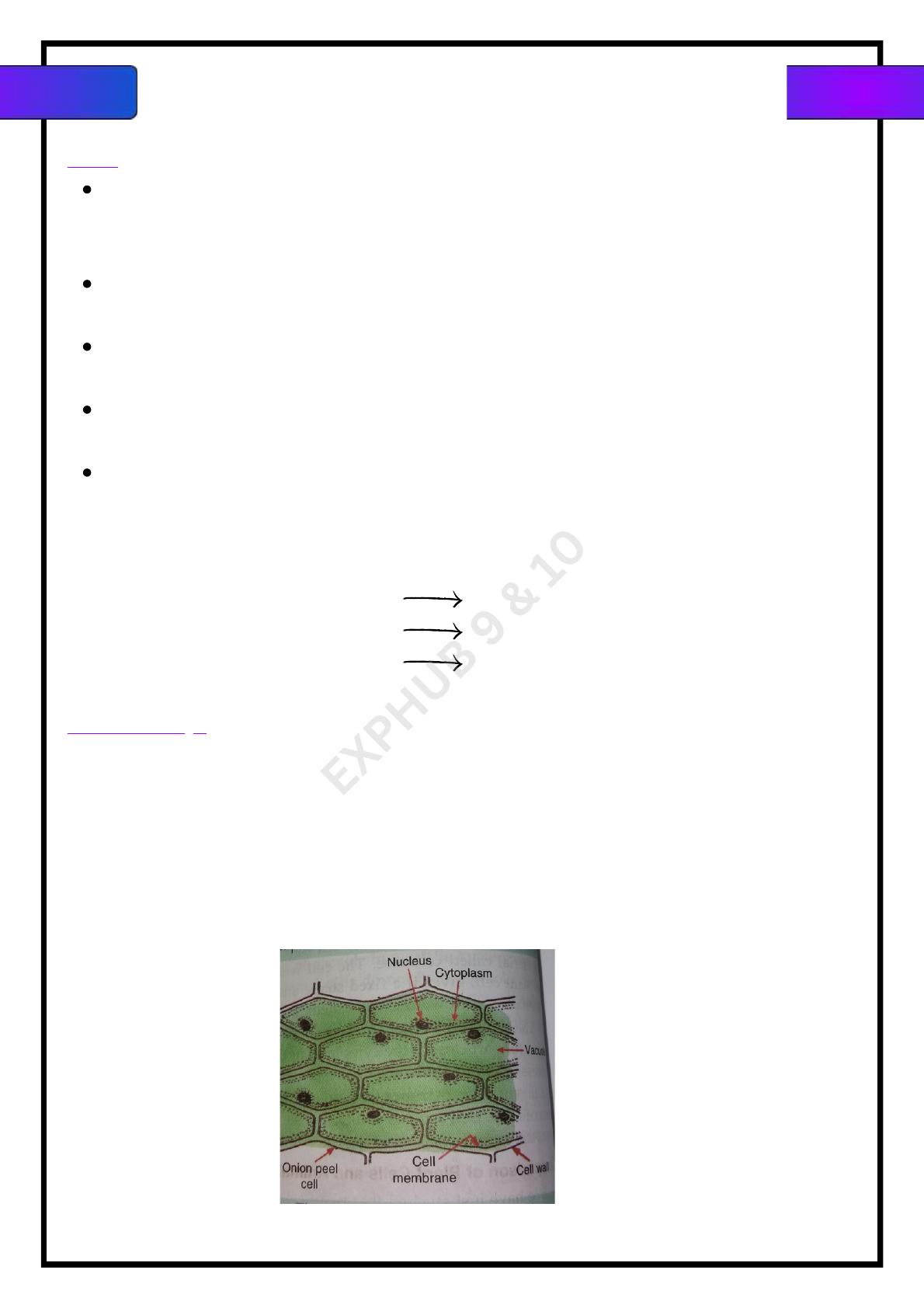
onion peel cell
PRASHANT KIRAD
FUNDAMENTAL UNIT OF LIFE: CELL
EXPHUB 9 & 10
Types of Cells and Organisms
On basis of number of cells:
On the basis of number of cells, organisms are divided into two
categories:
On the basis of type of organizational cells:
1. Prokaryotic Cells
2. Eukaryotic Cells
PRASHANT KIRAD
EXPHUB 9 & 10
/ 17
End of Document
136
You May Also Like

FAQs of Fundamental Unit of Life: Cell by Prashant Kirad

What is cell theory and who proposed it?
Cell theory is a fundamental concept in biology stating that all living organisms are composed of cells, which are the basic unit of life. It was proposed by scientists Matthias Schleiden and Theodor Schwann in 1838. According to this theory, cells arise from pre-existing cells through cell division. This framework laid the groundwork for modern cellular biology, emphasizing the importance of cells in the structure and function of all living things.
What are the main differences between prokaryotic and eukaryotic cells?
Prokaryotic cells are generally smaller, simpler, and lack a nucleus, with their genetic material floating freely in the cytoplasm. In contrast, eukaryotic cells are larger, more complex, and contain a nucleus that houses their DNA. Eukaryotic cells also have membrane-bound organelles, such as mitochondria and the endoplasmic reticulum, which perform specific functions. This distinction is crucial for understanding the diversity of life forms and their cellular organization.
What roles do mitochondria play in the cell?
Mitochondria are often referred to as the 'powerhouses of the cell' because they generate adenosine triphosphate (ATP) through cellular respiration. This process converts nutrients into usable energy for cellular functions. Mitochondria also play a role in metabolic processes, including the breakdown of fatty acids and amino acids. Additionally, they are involved in signaling pathways that regulate cell growth and apoptosis, highlighting their importance in maintaining cellular health.
How does the plasma membrane regulate cellular activities?
The plasma membrane serves as a selective barrier that regulates the entry and exit of substances in and out of the cell. Its structure, described by the fluid mosaic model, consists of a lipid bilayer with embedded proteins that facilitate communication and transport. This selective permeability is essential for maintaining homeostasis, allowing cells to control their internal environment and respond to external changes. The plasma membrane's integrity is vital for overall cell function.
What is the significance of lysosomes in cellular digestion?
Lysosomes are membrane-bound organelles that contain digestive enzymes responsible for breaking down unwanted materials within the cell. They play a crucial role in cellular digestion by recycling damaged organelles and digesting foreign substances, such as bacteria. This process, known as autophagy, helps maintain cellular health and homeostasis. Lysosomes are often referred to as the 'suicidal bags' of the cell due to their involvement in programmed cell death, which is essential for eliminating dysfunctional cells.

Related of Fundamental Unit of Life: Cell by Prashant Kirad