Liceria & Co.
Liceria & Co.
Liceria & Co.
Liceria & Co.
Liceria & Co.
Liceria & Co.
Pioneering Sustainable Solutions in Fauget City
We believe in a sustainable future for our community
and our planet. Our commitment to environmental
stewardship is reflected in our innovative programs
designed to reduce waste, offset carbon emissions, and
promote sustainable production practices.
Join us in making a positive impact and beyond!
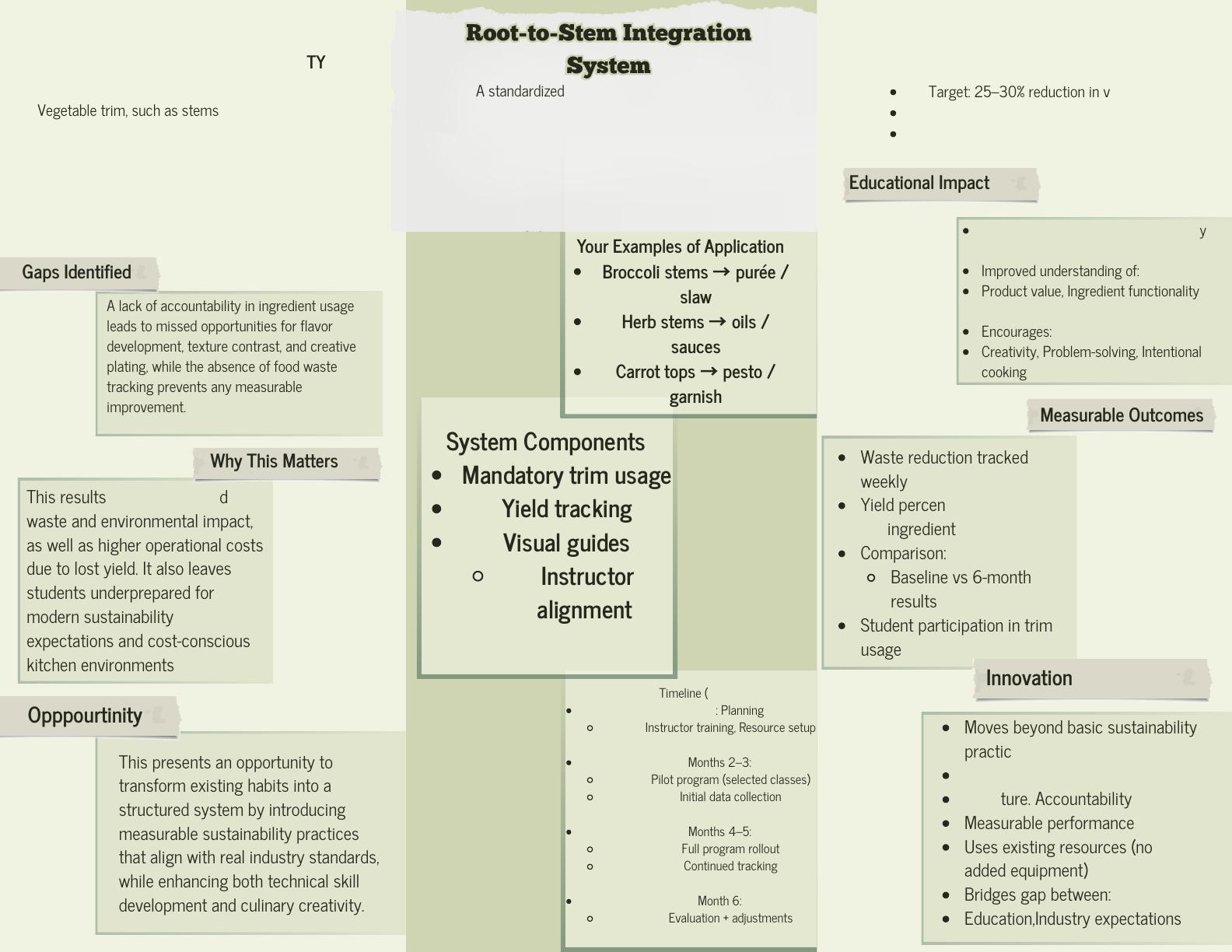
Why This Matters
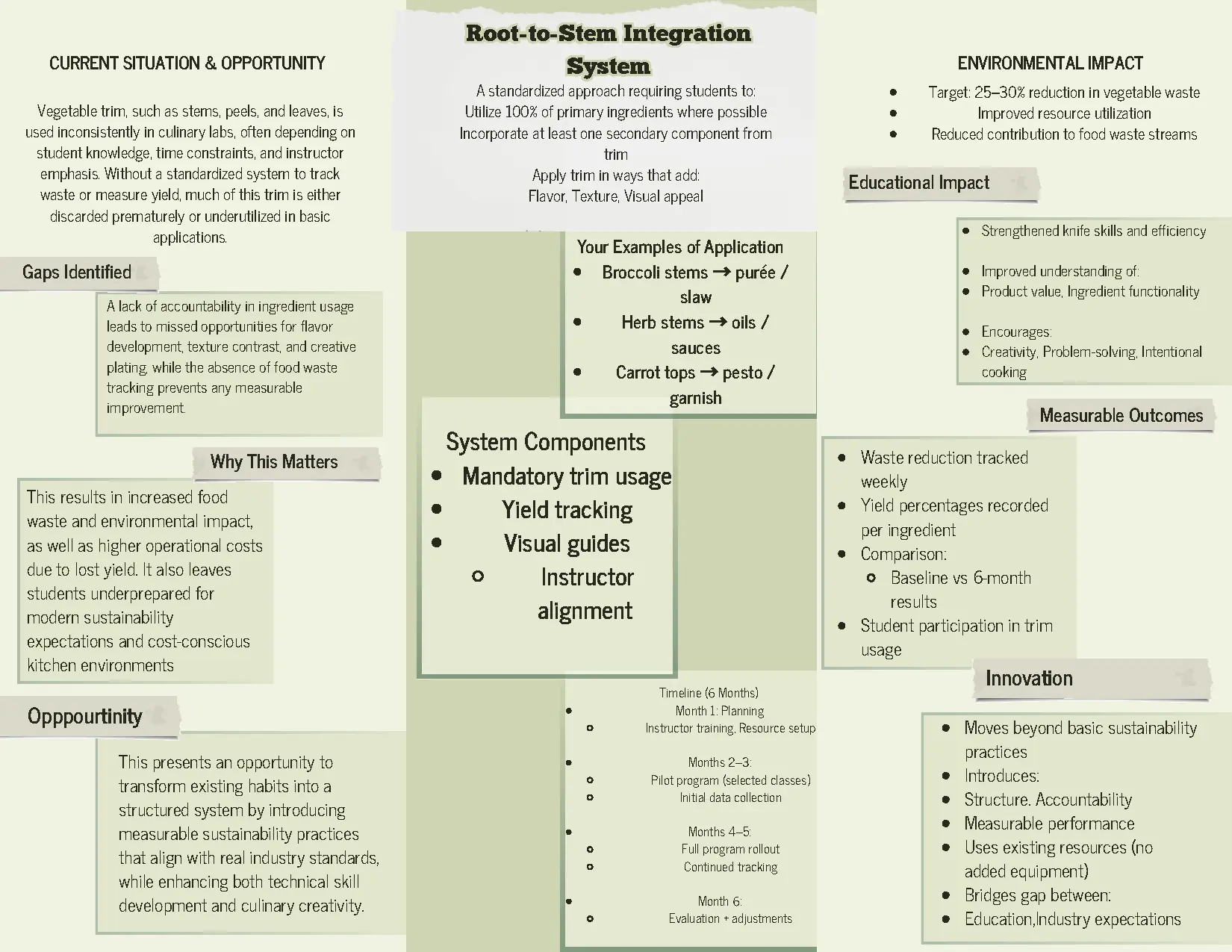
Timeline (6 Months)
Month 1: Planning
Instructor training, Resource setup
Months 2–3:
Pilot program (selected classes)
Initial data collection
Months 4–5:
Full program rollout
Continued tracking
Month 6:
Evaluation + adjustments
Your Examples of Application
Broccoli stems
→
purée /
slaw
Herb stems
→
oils /
sauces
Carrot tops
→
pesto /
garnish
System Components
Mandatory trim usage
Yield tracking
Visual guides
Instructor
alignment
Vegetable trim, such as stems, peels, and leaves, is
used inconsistently in culinary labs, often depending on
student knowledge, time constraints, and instructor
emphasis. Without a standardized system to track
waste or measure yield, much of this trim is either
discarded prematurely or underutilized in basic
applications.
CURRENT SITUATION & OPPORTUNITY
A lack of accountability in ingredient usage
leads to missed opportunities for flavor
development, texture contrast, and creative
plating, while the absence of food waste
tracking prevents any measurable
improvement.
This results in increased food
waste and environmental impact,
as well as higher operational costs
due to lost yield. It also leaves
students underprepared for
modern sustainability
expectations and cost-conscious
kitchen environments
This presents an opportunity to
transform existing habits into a
structured system by introducing
measurable sustainability practices
that align with real industry standards,
while enhancing both technical skill
development and culinary creativity.
Opppourtinity
A standardized approach requiring students to:
Utilize 100% of primary ingredients where possible
Incorporate at least one secondary component from
trim
Apply trim in ways that add:
Flavor, Texture, Visual appeal
Root-to-Stem Integration
Root-to-Stem Integration
System
System
Root-to-Stem Integration
System
Target: 25–30% reduction in vegetable waste
Improved resource utilization
Reduced contribution to food waste streams
Strengthened knife skills and efficiency
Improved understanding of:
Product value, Ingredient functionality
Encourages:
Creativity, Problem-solving, Intentional
cooking
Waste reduction tracked
weekly
Yield percentages recorded
per ingredient
Comparison:
Baseline vs 6-month
results
Student participation in trim
usage
Moves beyond basic sustainability
practices
Introduces:
Structure. Accountability
Measurable performance
Uses existing resources (no
added equipment)
Bridges gap between:
Education,Industry expectations