Life Processes by Prashant Kirad

Life Processes by Prashant Kirad

Life Processes by Prashant Kirad explores essential biological functions necessary for sustaining life in organisms. This comprehensive guide covers topics such as nutrition, respiration, transportation, and excretion, providing detailed insights into both autotrophic and heterotrophic nutrition. The text delves into human digestive processes, cellular respiration, and the roles of various organs in the excretory system. Ideal for students studying biology at the Class 10 level, this resource aids in understanding complex life processes through clear explanations and diagrams. Key concepts include the functioning of the circulatory and respiratory systems, as well as the mechanisms of nutrient absorption and waste elimination.

Key Points

  • Explains autotrophic and heterotrophic nutrition processes in detail.
  • Covers human digestive system functions, including the role of the stomach and intestines.
  • Describes cellular respiration and its importance for energy production.
  • Details the structure and function of the human excretory system, including kidneys and nephrons.
390
/ 14
CLASS 10 NOTES
SCIENCE
PRASHANT KIRAD
Life Processes
es
Life processes are the basic processes in living organisms which are necessary for
maintaining their life
Nutrition.
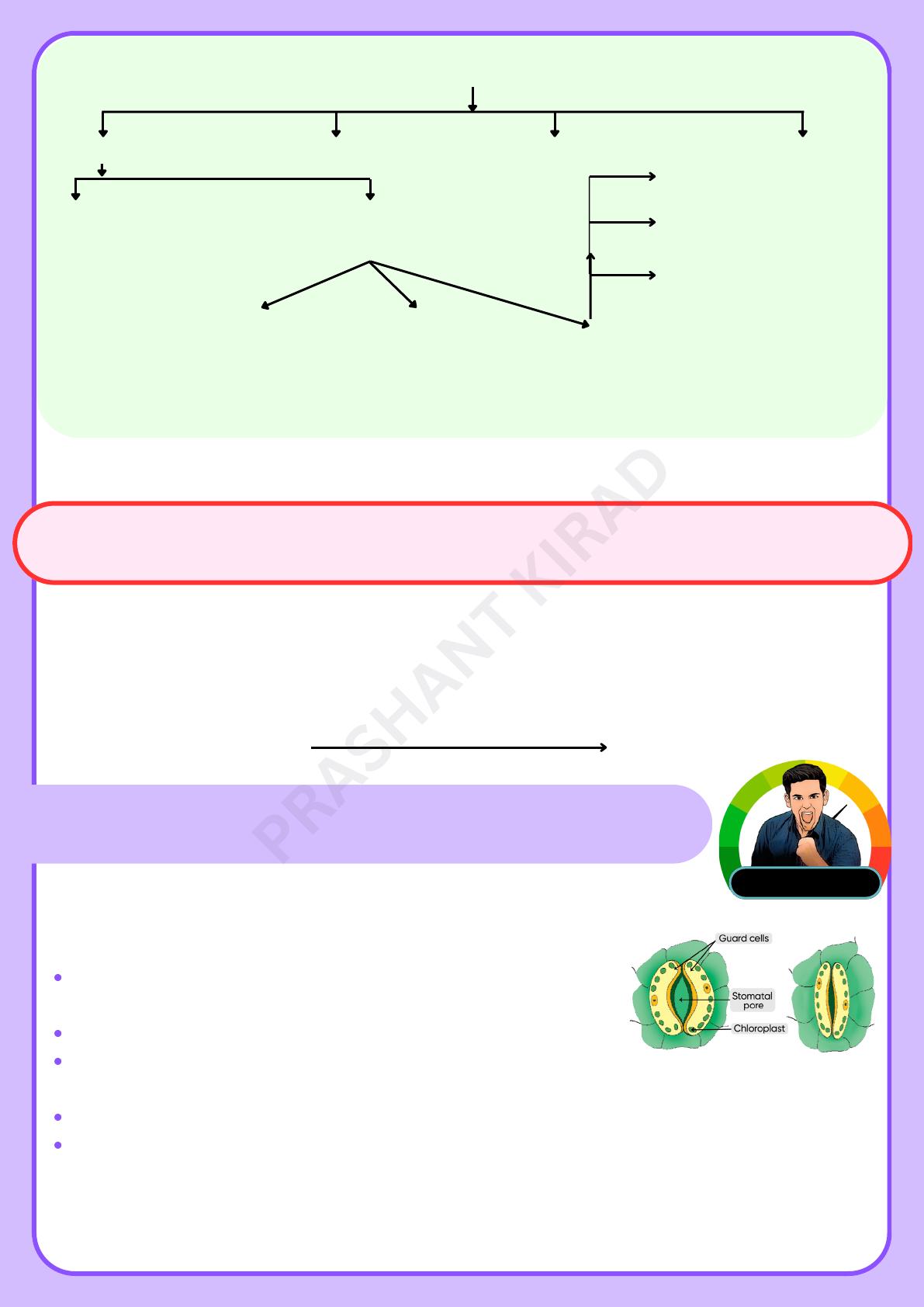
Autotrophic Nutrition:
Photosynthesis: process by which green plants and certain other organisms transform
light energy into chemical energy.
(i) Light absorption by chlorophyll
(ii) Light energy converts to chemical energy; water splits into hydrogen and oxygen
(iii) Carbon dioxide reduces to carbohydrates.
6CO₂ + 12H₂O C₆H₁₂O₆ + O₂.
PRASHANT KIRAD
*Organisms use enzymes to break down complex substances into simpler ones for
growth and maintenance*
Heterotrophic Nutrition
Respiration
Transportation Excretion
Autotrophic Nutrition
prepare their own food depend on other sources for their food
Nutrition: taking in food and converting it into energy and other vital nutrients required
for life.
plants, algae, plankton
and bacteria
Dogs, birds, fish, and humans
Carbon dioxide (CO₂) + Water (H₂O) + Light energy Glucose (C₆H₁₂O₆)+ Oxygen (O₂).
Sunlight
Chlorophyll
Unused carbohydrates - stored as starch in plants (energy reserve)
Humans - energy is stored as glycogen.
Stomata: CO₂ is taken ,tiny pores on leaves for gas
exchange.
Guard Cells: Control opening and closing of stomata.
Water Loss: Stomata close to prevent water loss, stomata close when carbon
dioxide isn't needed
Plants absorb water and essential nutrients (nitrogen, phosphorus, etc.) from soil.
Nitrogen: Vital for proteins, absorbed as nitrates/nitrites or organic compounds
from bacteria.
Saprophytic Nutrition
Parasitic Nutrition
Holozoic Nutrition
dead and decaying bodies,
e.g. yeasts, mushrooms.
feeds on other living
organisms e.g. lice ()
and tapeworm
ingest solid or liquid food
particles and then digest, e.g.
humans, dogs
Paramecium: Has a definite shape, Takes in food at a specific spot and Cilia move food
to this spot.
Herbivores
Carnivores
Omnivores
eat only plant
grass, e.g. cow, goat.
eat other
animals. e.g. lion, tiger.
feed on both
plants & animals. e.g. humans
JOSH METER?
PRASHANT KIRAD
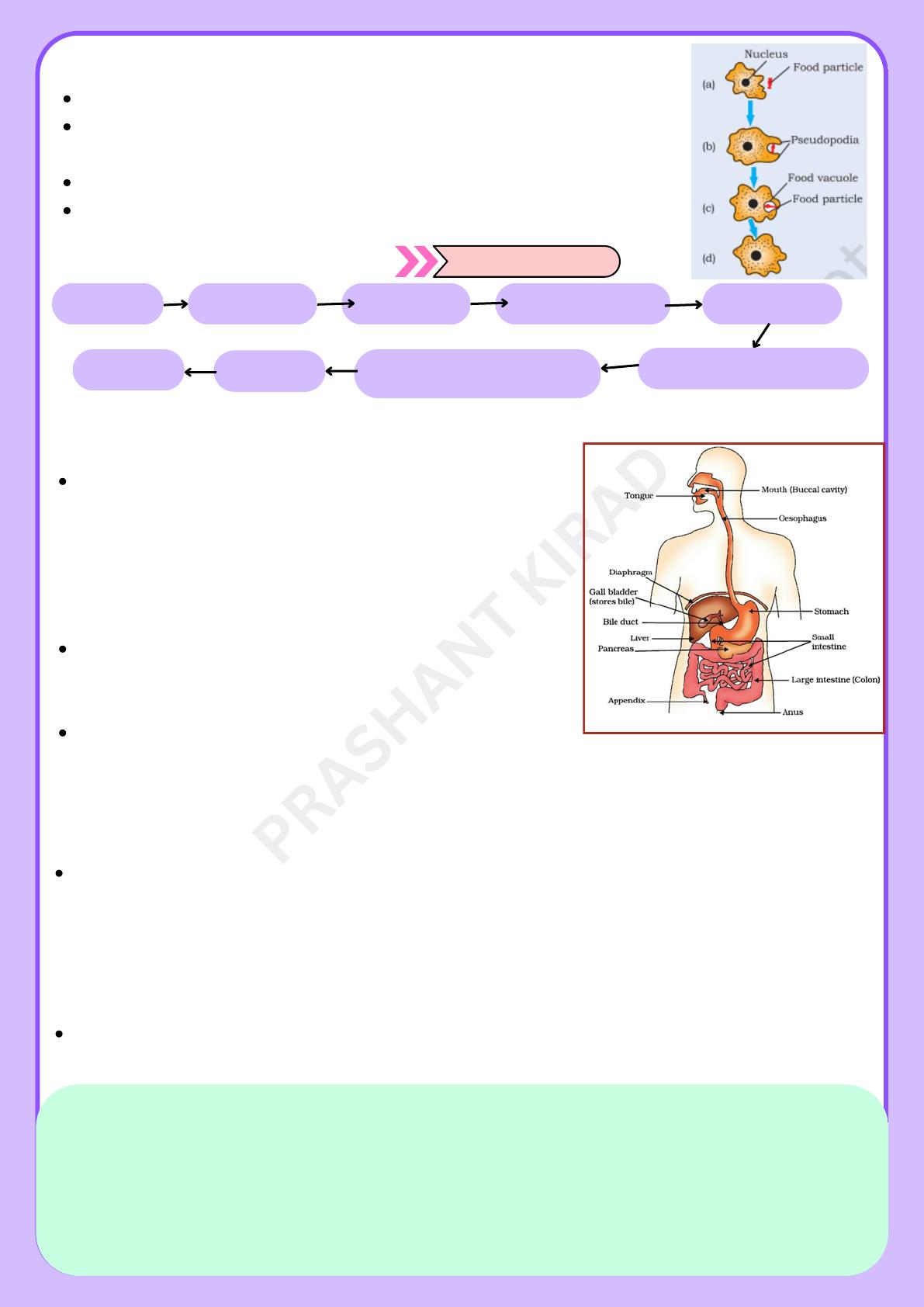
Amoeba feeding:
Uses finger-like extensions to engulf food.
Forms a food vacuole where complex substances are broken
down.
Nutrients diffuse into the cytoplasm.
Undigested material is expelled from the cell.
Nutrition in human being:
Alimentary canal: long tube extending from the mouth
to the anus.
Mouth: (Ingestion)
Teeth - chewing and breaking down of food in
smaller pieces
1.
Tongue - wet the food & mixes it with saliva2.
Salivary glands - secretes saliva3.
- saliva contains salivary amylase, digestion of starch.
Oesophagus: (food pipe) muscular tube - moves food
from the mouth to the stomach through rhythmic
contractions (peristaltic movement).
Stomach: J shaped large organ, food is mixed with
gastric juices:
FOOD
MOUTH
TONGUE
OESOPHAGUS
STOMACH
SMALL INTESTINE
ANUS
WASTE
1. hydrochloric acid : kills bacteria, make gastric juice acidic in nature
2. pepsin : protein digestion starts
3. mucus: protects stomach lining from HCl effect
Small Intestine: main site for digestion and absorption of nutrients. Receives bile
from the liver which breakdown fats and also receive pancreatic juices from the
pancreas - amylase (breaks down starch), trypsin (digest protein) and lipase (breaks
down emulsified fats)
Villi- finger like projections, increases surface area of small intestine , i.e. increases
absorption rate.
Large Intestine: Absorbs water from undigested food, forming solid waste, which
is then excreted through the anus.
Respiration: Respiration is a process by which living organisms, including
humans, take in oxygen from the environment and use it to produce energy.
During respiration, the body breaks down food molecules (like glucose) in the
presence of oxygen to release energy, carbon dioxide, and water. This energy is
used for various functions such as growth, movement, and repair.
Flow mantra
PRASHANT KIRAD
PRASHANT KIRAD
/ 14
End of Document
390
You May Also Like

FAQs of Life Processes by Prashant Kirad

What are the main types of nutrition discussed in Life Processes?
Life Processes outlines two primary types of nutrition: autotrophic and heterotrophic. Autotrophic nutrition involves organisms like plants that synthesize their own food through photosynthesis, utilizing sunlight, carbon dioxide, and water. In contrast, heterotrophic nutrition refers to organisms that rely on consuming other living beings for energy, such as animals and humans. The document further elaborates on various subcategories, including saprophytic and parasitic nutrition, highlighting their significance in ecosystems.
How does the human respiratory system function according to Life Processes?
The human respiratory system is crucial for gas exchange, allowing oxygen intake and carbon dioxide expulsion. It involves several key structures, including the nose, trachea, bronchi, and alveoli. Air enters through the nostrils, travels down the trachea, and reaches the alveoli, where oxygen diffuses into the bloodstream. The diaphragm plays a vital role in inhalation and exhalation by changing the volume of the thoracic cavity, facilitating efficient breathing.
What is the process of excretion in humans as described in Life Processes?
Excretion in humans involves the removal of waste products to maintain homeostasis. The primary organs responsible for this process are the kidneys, which filter blood to produce urine. The document explains how nephrons, the functional units of the kidneys, perform filtration and reabsorption of essential substances. Waste is then transported via ureters to the urinary bladder, where it is stored until excretion through the urethra.
What role do stomata play in plant nutrition and respiration?
Stomata are tiny openings on plant leaves that facilitate gas exchange, allowing carbon dioxide to enter for photosynthesis and oxygen to exit as a byproduct. The document emphasizes the importance of stomata in regulating water loss through transpiration, which also aids in nutrient uptake from the soil. Guard cells surrounding the stomata control their opening and closing, ensuring that plants maintain optimal conditions for both respiration and photosynthesis.
What is the significance of ATP in cellular respiration?
ATP, or adenosine triphosphate, is the primary energy currency in cells, produced during cellular respiration. The document details how glucose is broken down in the presence of oxygen to generate ATP, which powers various cellular activities. It highlights the differences between aerobic and anaerobic respiration, noting that aerobic respiration yields more ATP. This energy is crucial for processes such as muscle contraction, protein synthesis, and overall cellular function.
How does the circulatory system support life processes in humans?
The circulatory system is essential for transporting oxygen, nutrients, and waste products throughout the body. According to Life Processes, it consists of the heart, blood vessels, and blood. The heart pumps oxygenated blood from the lungs to the body's tissues while returning deoxygenated blood for reoxygenation. This system not only facilitates nutrient delivery but also plays a critical role in immune response and temperature regulation.

Related of Life Processes by Prashant Kirad