water
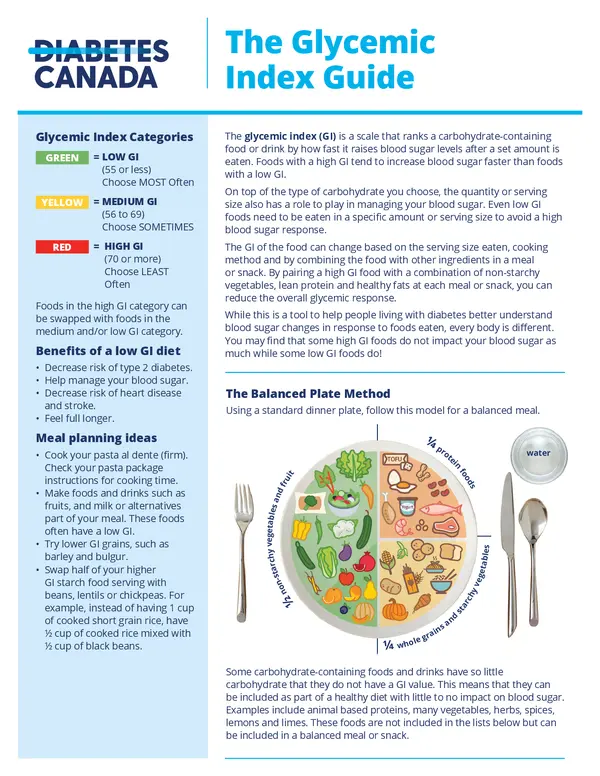
½
n
o
n
-
s
t
a
r
c
h
y
v
e
g
e
t
a
b
l
e
s
a
n
d
f
r
u
i
t
¼
w
h
o
l
e
g
r
a
i
n
s
a
n
d
s
t
a
r
c
h
y
v
e
g
e
t
a
b
l
e
s
¼
p
r
o
t
e
i
n
f
o
o
d
s
Y
TOFU
Glycemic Index Categories
GREEN
=
(55 or less)
Choose MOST Often
YELLOW
= MEDIUM GI
(56 to 69)
Choose SOMETIMES
RED
=
(70 or more)
Choose LEAST
Often
Foods in the high GI category can
be swapped with foods in the
medium and/or low GI category.
Benefits of a low GI diet
• Decrease risk of type 2 diabetes.
• Help manage your blood sugar.
• Decrease risk of heart disease
and stroke.
• Feel full longer.
Meal planning ideas
• Cook your pasta al dente (firm).
Check your pasta package
instructions for cooking time.
• Make foods and drinks such as
fruits, and milk or alternatives
part of your meal. These foods
often have a low GI.
• Try lower GI grains, such as
barley and bulgur.
• Swap half of your higher
GI starch food serving with
beans, lentils or chickpeas. For
example, instead of having 1 cup
of cooked short grain rice, have
½ cup of cooked rice mixed with
½ cup of black beans.
The glycemic index (GI) is a scale that ranks a carbohydrate-containing
food or drink by how fast it raises blood sugar levels after a set amount is
eaten. Foods with a high GI tend to increase blood sugar faster than foods
with a low GI.
On top of the type of carbohydrate you choose, the quantity or serving
size also has a role to play in managing your blood sugar. Even low GI
foods need to be eaten in a specific amount or serving size to avoid a high
blood sugar response.
The GI of the food can change based on the serving size eaten, cooking
method and by combining the food with other ingredients in a meal
or snack. By pairing a high GI food with a combination of non-starchy
vegetables, lean protein and healthy fats at each meal or snack, you can
reduce the overall glycemic response.
While this is a tool to help people living with diabetes better understand
blood sugar changes in response to foods eaten, every body is different.
You may find that some high GI foods do not impact your blood sugar as
much while some low GI foods do!
The Glycemic
Index Guide
The Balanced Plate Method
Using a standard dinner plate, follow this model for a balanced meal.
Some carbohydrate-containing foods and drinks have so little
carbohydrate that they do not have a GI value. This means that they can
be included as part of a healthy diet with little to no impact on blood sugar.
Examples include animal based proteins, many vegetables, herbs, spices,
lemons and limes. These foods are not included in the lists below but can
be included in a balanced meal or snack.