Activity 2.1.2 Student Response Sheet
Part I: Answers
Example 1:
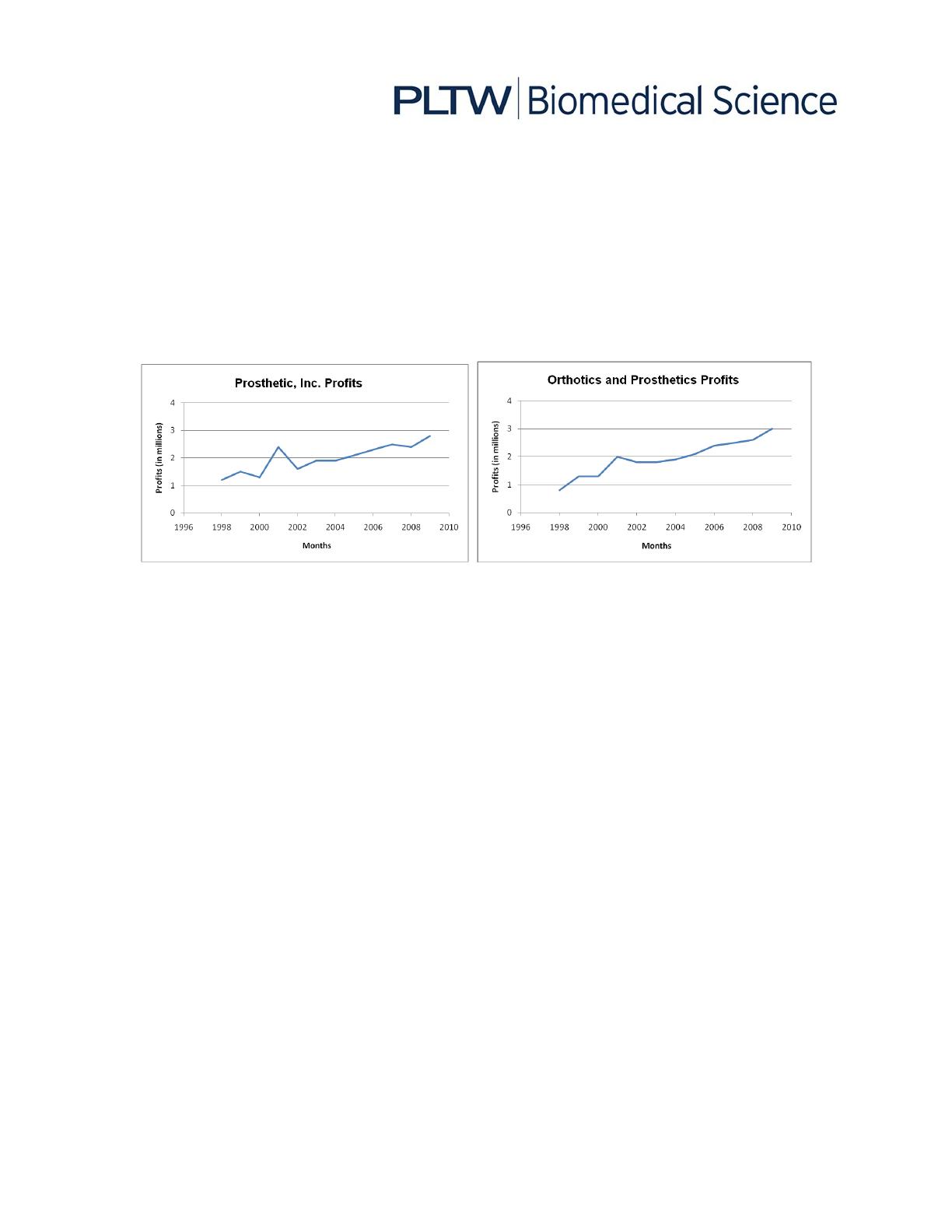
Prosthetic, Inc. and Orthotics and Prosthetics had almost identical profit increases
between the years 1998 and 2009. The y-a is on Orthotics and Prosthetics’ graph
has been altered to have a larger range than the range used for the y-a is on
Prosthetic, Inc.’s graph. If the same range was used for both graphs, they would look
as follows:
Example 2:
ABC.com presented that the average blood sugar level before meals for Americans
is 142 mg/dL but did not specify how the average was calculated. What they did not
share was that the mean, or arithmetic average, was calculated from a sample size
of only four people. Of these four people, all of the blood sugar levels (before meals)
were in normal ranges and one person had a blood sugar level of 240 mg/dL,
causing the entire group’s average to be skewed. Therefore, 75% of the blood sugar
levels of the people in the study were actually far below this average. A better
average to use would have been the median blood sugar level (i.e., the blood sugar
level in the middle of the data range). The website should have reported how many
people were included in the study. Four people do not accurately represent the
entire population.
Example 3:
The data presented was biased as it did not present all of the pertinent information.
The number of motorcycles on the road is significantly less than the number of
passenger cars on the road, so simply using the number of vehicles involved in fatal
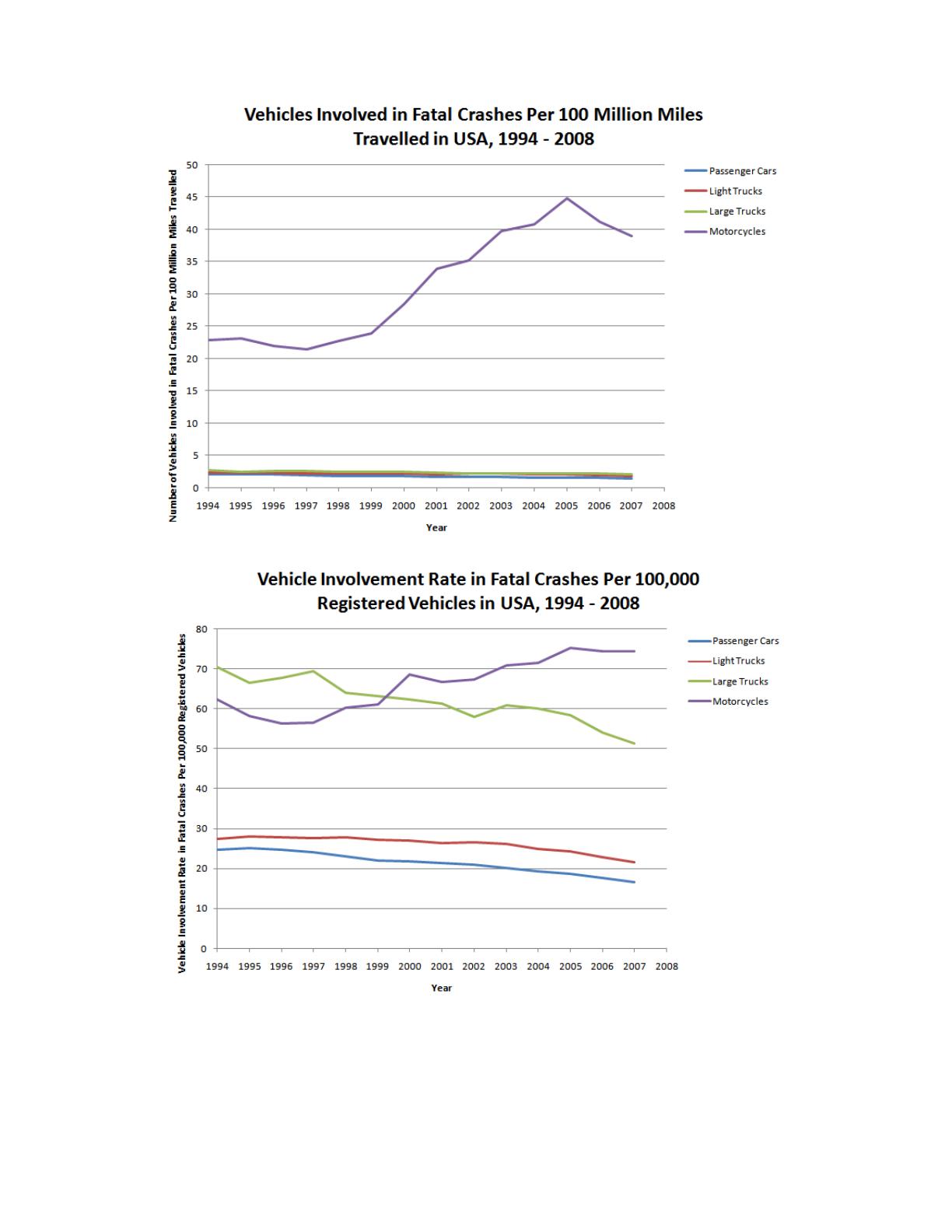
crashes is not enough to illustrate which vehicle is the safest. The following two
graphs, which show the rate of vehicles involved in fatal crashes per 100 million
miles travelled and the rate of vehicles involved in fatal crashes per 100,000
registered vehicles, represent the data more accurately. Using all of the data as a
whole, passenger cars are actually involved in fewer fatal crashes than the other
vehicles.
© 2011 Project Lead The Way, Inc.
Biomedical Innovation Activity 2.1.2 Student Response Sheet – Page 1