Checklist of Communicative Functions and Means

Checklist of Communicative Functions and Means

The Checklist of Communicative Functions and Means serves as a valuable tool for assessing how mostly nonverbal children communicate. It categorizes communicative functions into behavior regulation, social interaction, and joint attention, providing a framework for understanding children's needs. This checklist is particularly useful for educators and caregivers working with children who may have communication challenges. It includes both pre-verbal and verbal communicative means, offering a comprehensive approach to evaluating a child's expressive capabilities. By identifying the most frequently used communicative means, caregivers can tailor interventions to support the child's development effectively.

Key Points

  • Categorizes communicative functions into behavior regulation, social interaction, and joint attention.
  • Includes pre-verbal means like pointing, showing, and physical manipulation.
  • Outlines verbal means such as immediate and delayed echo, as well as creative one-word and multi-word usage.
  • Designed for educators and caregivers to assess nonverbal children's communication skills.

100
/ 3
SUPPORTED INCLUSION
CITY OF TORONTO | EARLY CHILDHOOD SERVICES TEAM: COMMUNITY LIVING TORONTO | SURREY PLACE CENTRE
Supported Inclusion - Checklist of Communicative Functions and Means page 1 of 3
This checklist is useful to determine the ways
in which a mostly nonverbal child commu-
nicates. Each Communicative Function or
reason for communicating may be expressed
using any number of Communicative Means
or ways to communicate through actions and
behaviour.
Communicative Functions
The Communicative Functions are divided into
the following categories:
Behaviour Regulation: communicative ac-
tions used to regulate behaviour for obtaining
or restricting environmental goals.
Social Interaction: communicative actions
used to direct anothers attention to oneself
for social purposes.
Joint Attention: actions used to direct anoth-
ers attention for purposes of sharing the focus
on an activity or event.
Communicative Means
The Communicative Means are divided into
two sections called Pre-verbal and Verbal. The
following is a brief description of each mean or
action listed in the checklist.
Pre-verbal
Physical Manipulation – touching, trying to
operate a toy
Giving – giving an item to another person for a
specific purpose (e.g., to request help with acti-
vating the item or to express an interest in it)
Pointing – pointing to an item for a specific
purpose
Showing – showing the item but not releasing
it
Gaze Shift – looking briefly in the direction of
an item out of interest
Proximity – moving closer to the item out of
interest or away from it in protest
Head Nod/Head Shake – indicating interest
in an object through nodding or protesting by
shaking head
Facial Expression – smiling, frowning, etc.
Self-Injury – hitting, biting, banging self
Aggression – hitting, biting, punching, kick-
ing, scratching others
Tantrum – screaming, throwing self down on
floor
Checklist of Communicative
Functions and Means
HOW TO USE AMY M. WETHERBY’S
Supported Inclusion - Checklist of Communicative Functions and Means page 2 of 3
Checklist of Communicative Functions and Means, continued
Crying/Whining – to make needs known
Vocalizing – any speech-like sounds that are not
full words
Other – word approximations such as “bu-bu” for
“bubble”
Verbal
Immediate Echo – child repeats what is heard im-
mediately after hearing it
Delayed Echo – child repeats what was heard
earlier in the day or on a previous day
Creative One-word – spontaneously uses a single
word, (e.g., saying the word “milk” can be to
request it, to comment on seeing or having it, or to
ask if that is what is in a cup)
Creative Multi-word – spontaneously uses two or
more words
How to use the checklist
To use the checklist, simply go through each Communicative Function and check off the Communica-
tive Means that apply. For example, if a child requests objects by pointing, looking, and moving closer
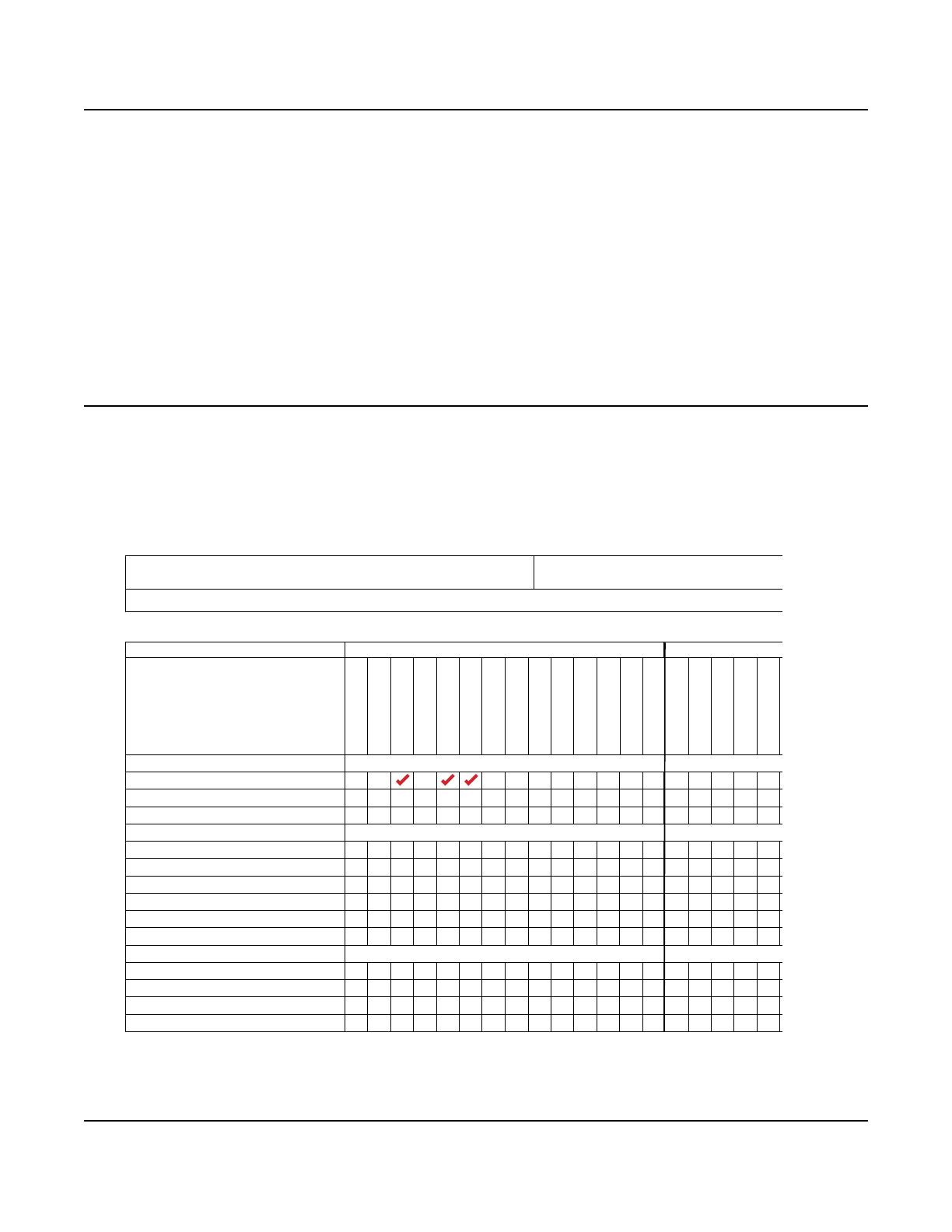
to them, you would check off all three of these pre-verbal means in the “request object” row.
CHECKLIST OF COMMUNICATIVE FUNCTIONS AND MEANS
Child’s Name: Date of Sample:
(mm/dd/year)
Context:
COMMUNICATIVE MEANS
Pre-verbal Verbal
COMMUNICATIVE FUNCTIONS
Behavioural Regulation
Request Object
Request Action
Protest
Social Interaction
Request Social Routine
Request Comfort
Greeting
Calling
Request Permission
Showing off
Joint Attention
Comment
Request Information
Provide Information
Other Functions
Physical Manipulation
Giving
Pointing
Showing
Gaze Shift
Proximity
Head Nod/Head Shake
Facial Expression
Self-injury
Aggression
Tantrum
Crying/Whining
Vocalizing
Other
Immediate Echo
Delayed Echo
Creative One-word
Creative Multi-word
Other:
Wetherby, 199
Once you have completed the checklist, you will see which means are most often used by the child and
which functions need work. For example, if a child communicates most functions gesturally except for
commenting, then you can examine ways of teaching her to use gestures to comment as well.
Benjamin
Child Care
09/25/05
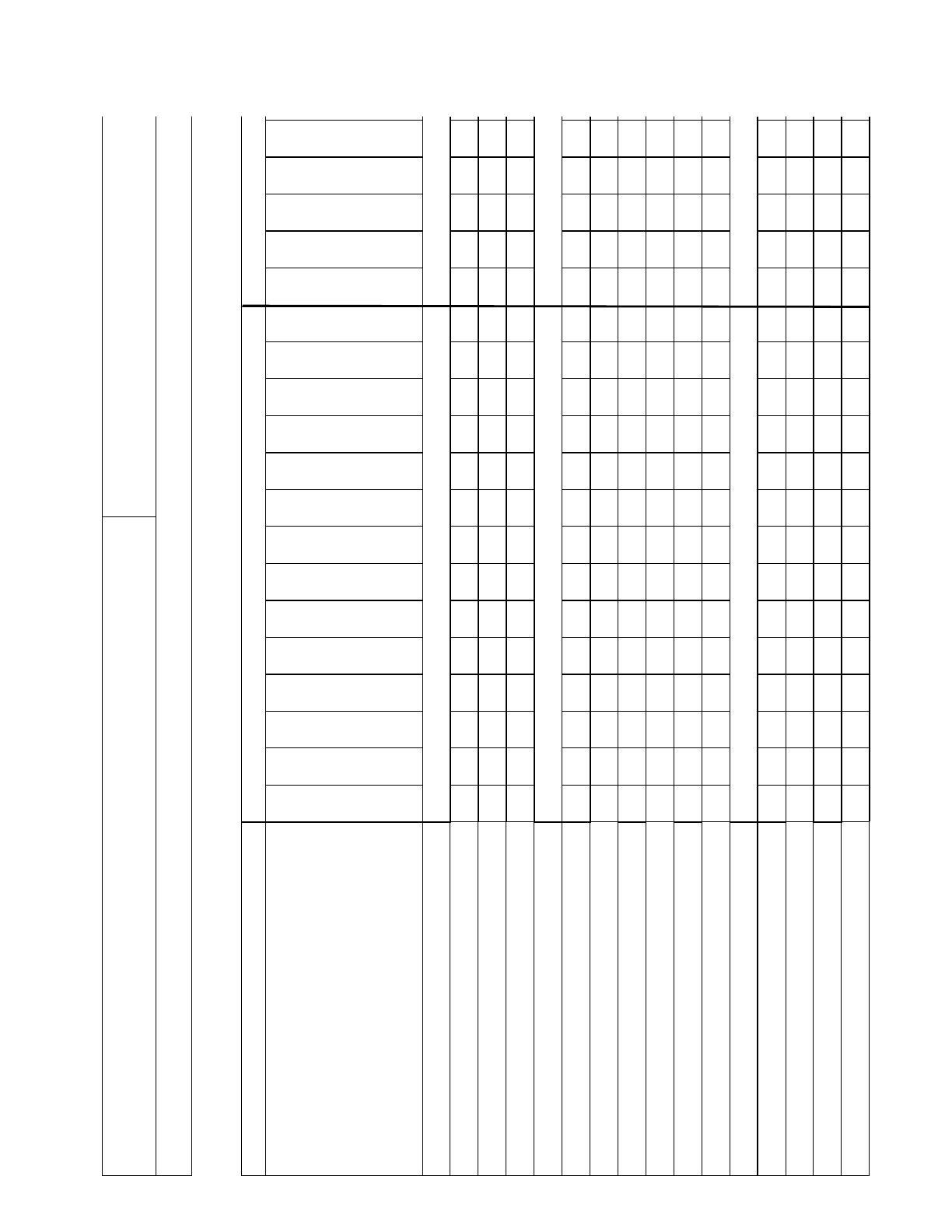
CHECKLIST OF COMMUNICATIVE FUNCTIONS AND MEANS
Child’s Name: Date of Sample:
(mm/dd/year)
Context:
COMMUNICATIVE MEANS
Pre-verbal Verbal
COMMUNICATIVE FUNCTIONS
Behavioural Regulation
Request Object
Request Action
Protest
Social Interaction
Request Social Routine
Request Comfort
Greeting
Calling
Request Permission
Showing off
Joint Attention
Comment
Request Information
Provide Information
Other Functions
Physical Manipulation
Giving
Pointing
Showing
Gaze Shift
Proximity
Head Nod/Head Shake
Facial Expression
Self-injury
Aggression
Tantrum
Crying/Whining
Vocalizing
Other
Immediate Echo
Delayed Echo
Creative One-word
Creative Multi-word
Other:
Wetherby, 199
/ 3
End of Document
100
You May Also Like

FAQs of Checklist of Communicative Functions and Means

What are the main categories of communicative functions?
The main categories of communicative functions include behavior regulation, social interaction, and joint attention. Behavior regulation involves actions used to obtain or restrict environmental goals, while social interaction focuses on directing attention for social purposes. Joint attention is about sharing focus on an activity or event, which is crucial for social development.
What are some examples of pre-verbal communicative means?
Pre-verbal communicative means include physical manipulation, such as touching or trying to operate a toy, and giving an item to another person to request help. Other examples are pointing to an item, showing it without releasing it, and using gaze shifts to indicate interest. These actions help assess how a child communicates before developing verbal skills.
How can the checklist be used to support children's communication?
The checklist can be used by educators and caregivers to identify which communicative means a child uses most frequently. By checking off the communicative functions and means, caregivers can determine areas where the child excels and where they may need additional support. This targeted approach allows for tailored interventions that can enhance the child's communication skills.
What is the significance of understanding communicative functions in children?
Understanding communicative functions in children is crucial for fostering effective communication and social interaction. By recognizing how children express their needs and emotions, caregivers can respond appropriately and encourage further development. This understanding also aids in identifying potential communication challenges early, allowing for timely interventions that can significantly improve a child's ability to communicate.

Related of Checklist of Communicative Functions and Means