Essential Drawing Instruments and Their Uses

Essential Drawing Instruments and Their Uses

Drawing instruments are crucial for creating precise and accurate technical drawings. This guide details essential tools such as drawing boards, T-squares, set squares, and protractors, explaining their functions and applications in engineering and design. Ideal for students and professionals in drafting and engineering, it covers standard sizes and materials for each instrument. The document also includes recommendations for drawing sheets and pencils, ensuring high-quality results in technical illustrations.

Key Points

  • Explains the functions of essential drawing instruments like T-squares and protractors.
  • Details standard sizes of drawing boards and sheets as per Bureau of Indian Standards.
  • Covers the use of set squares for marking angles in technical drawings.
  • Describes the importance of using quality drawing pencils for accurate results.
97
/ 5
Chapter - 1A
DRAWING INSTRUMENTS
AND THEIR USES
Drawing Instruments are used to prepare neat and accurate Drawings. To a greater extent, the ac-
curacy of the Drawings depend on the quality of instruments used to prepare them. The following is the list
of Drawing Instruments and other materials required.
a) Drawing Board
b) T-square or Drafter (Drafting machine)
c) Set Squares
d) Protractor
e) Drawing Instrument Box
f) Drawing Sheet
g) Drawing Pencils
h) Drawing Pins/Clips
a) Drawing Board :
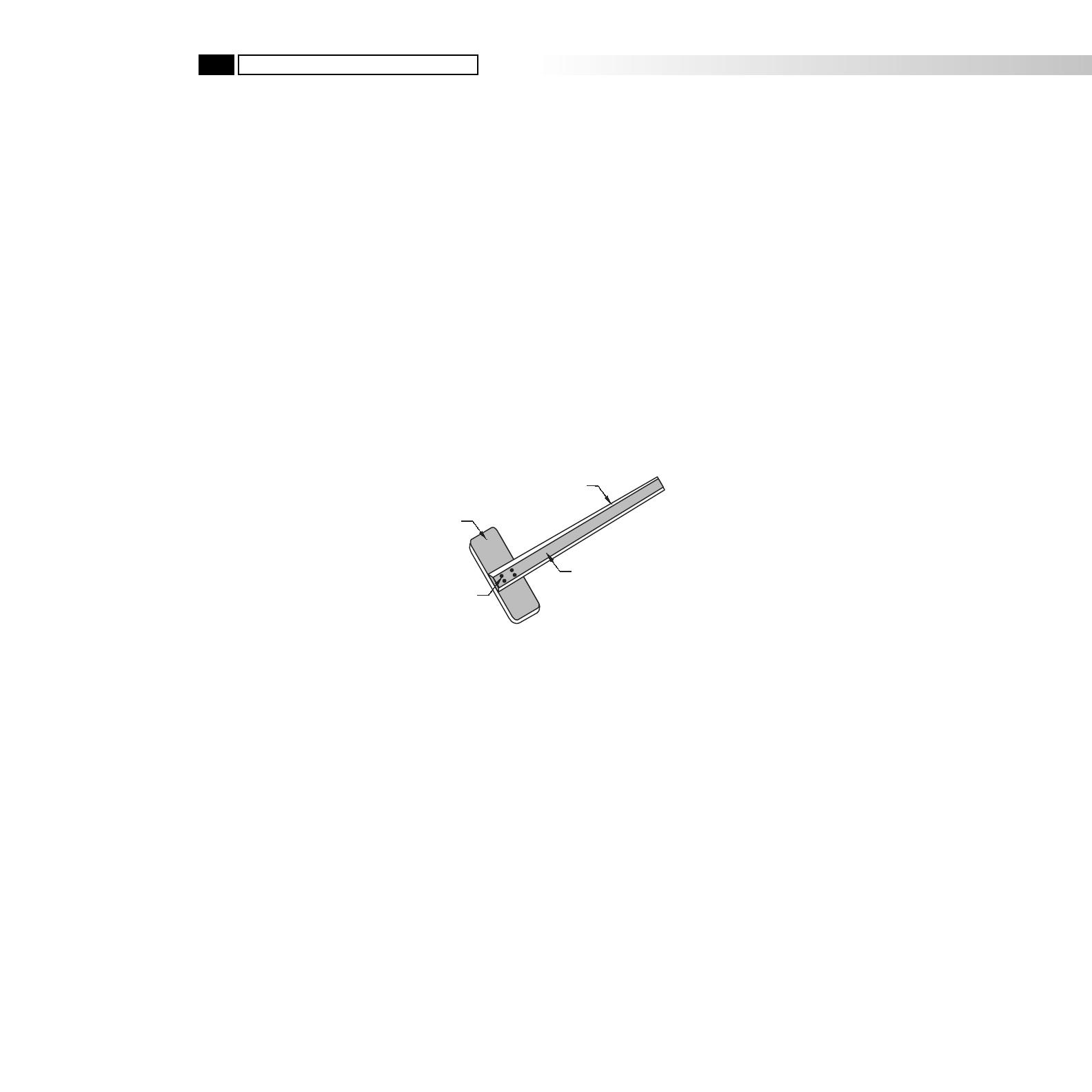
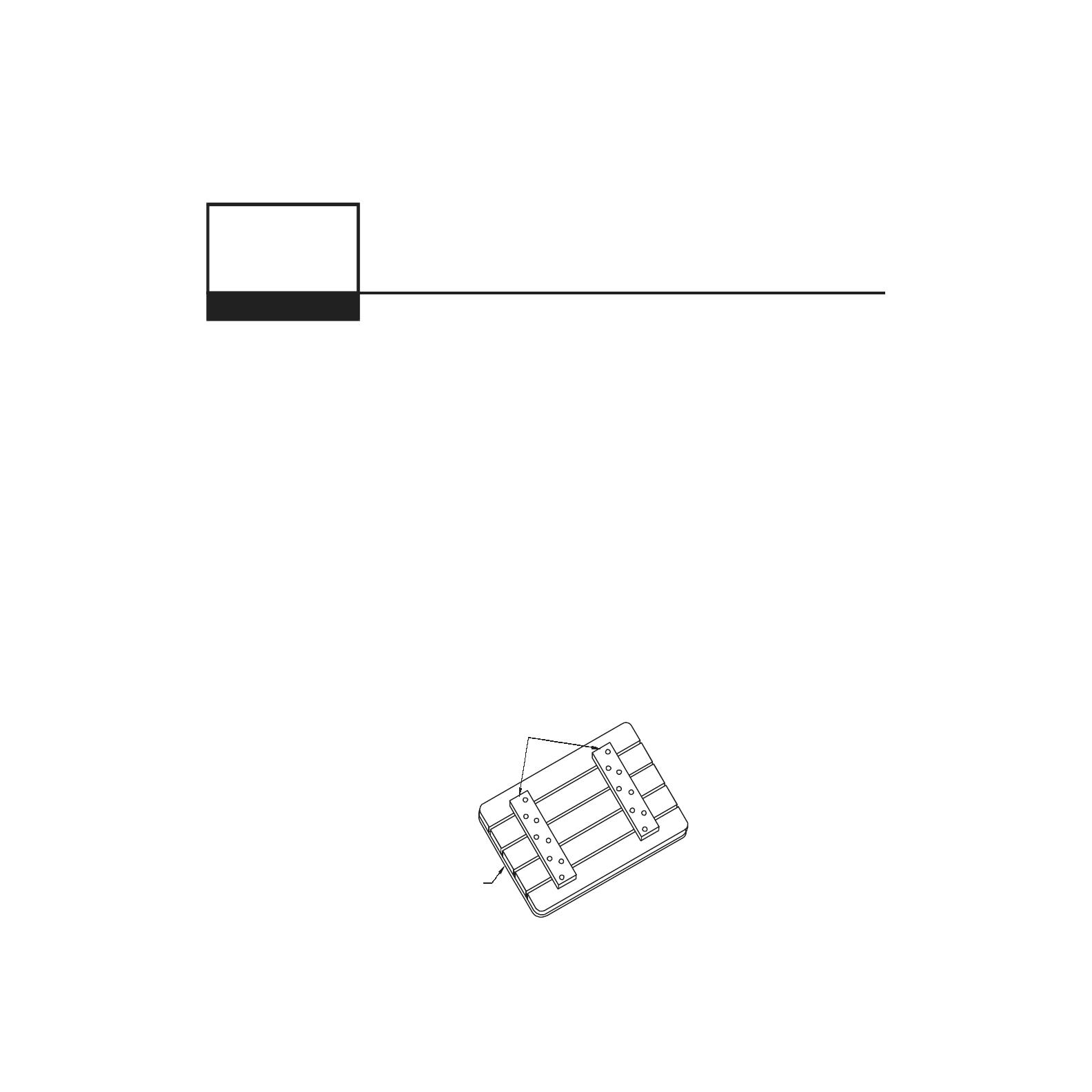
Drawing board is made from strips of well seasoned soft wood generally 25 mm thick. It is cleated
at the back by two battens to prevent warping. One of the shorter edges of the rectangular board is pro-
vided with perfectly straight ebony edge which is used as working edge on which the T-square is moved
while making Drawings.
Battens
Working edge
(ebony)
Fig. 1A.1
Note: When Minidrafter (Drafting machine) is used to prepare Drawings, the working edge is not
used.
2
Computer Aided Engineering Drawing
Drawing board size:
Drawing boards are made in various sizes. The selection of Drawing board depends on the size of
drawing paper used. The sizes of Drawing board recommended by Bureau of Indian Standards (B.I.S) is given
below
Standard size of Drawing boards
Designation Size (mm) Designation Size (mm)
B0 1500 × 1000 B3 500 × 350
B1 1000 × 700 B4 250 × 350
B2 700 × 500
b) T-square :
T-squares are made from hard wood. A T-square consists of two parts namely the stock and the
blade joined together at right angles to each other by means of screws and Pins as shown in figure 1A.2. The
stock is made to slide along the working edge and the Blade moves on the Drawing board.
Working edge
Blade
Stock
Screws
Fig. 1A.2
The working edge of T-square is used to draw parallel lines, vertical lines or inclined lines at 30
°
, 60
o
to the horizontal using set squares.
Drafting machine (or Drafter):
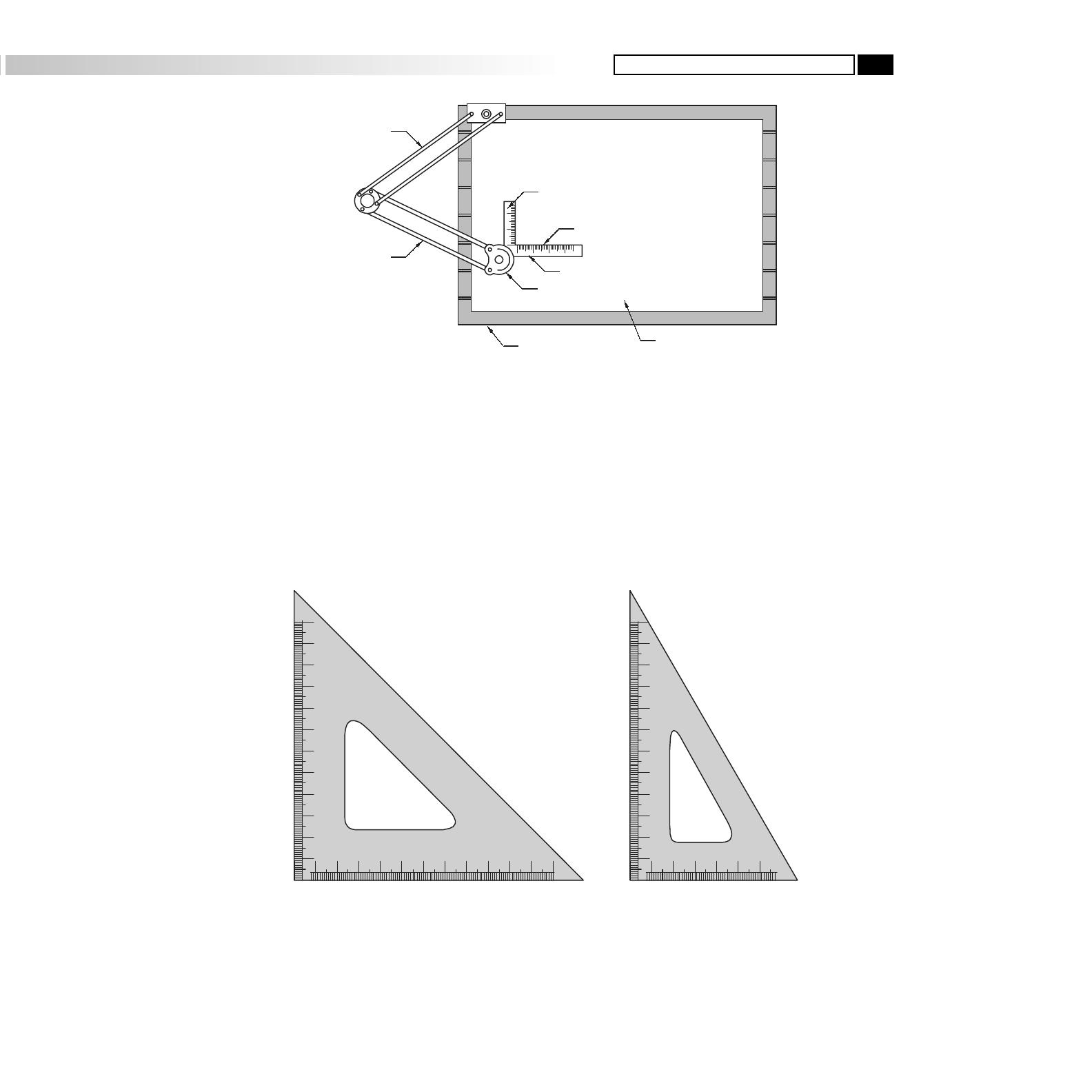
In a Drafting machine, the uses and advantages of T-square, set square, scales, protractors are
combined. One end of the Drafter is clamped at the left top end of the Drawing board by a screw provided
in the drafter.
An adjustable head with a Protractor is fitted at the other end of the Drafter. Two blades made of
transparent celluloid material are fitted to the adjustable head and are perfectly perpendicular to each other.
These blades are used to draw parallel, horizontal, vertical and inclined lines. The blades always move parallel
to the edges of the board. Use of Drafting machine helps in reducing the time required to prepare Drawing.
Drawing Instruments and their Uses
3
Scale
Scale
Potractor
Angle
Drawing sheet
Drawing board
Parallel bar arm
Parallel bar arm
Fig. 1A.3
c) Set Squares :
Set squares are generally made from Plastic or celluloid material. They are triangular in shape with
one corner, a right angle triangle. A pair of set squares (30
°
–60
°
) and 45
°
(45
°
set square are generally pro-
vided with Protractor) facilitate marking of angles as shown in figures 1A.4 and 1A.5.
They are used to draw lines at 30
°
, 60
°
and 45
°
to the vertical and horizontal.
mm
1234567891011
mm
1234567891011
mm
1234567891011
mm
123456
Fi
g
. 1A.4. 45 Set Square
0
Fi
g
. 1A.5. 30 60 Set Square
00
−
/ 5
End of Document
97
You May Also Like

FAQs of Essential Drawing Instruments and Their Uses

What are the main types of drawing instruments used in engineering?
The main types of drawing instruments include drawing boards, T-squares, set squares, protractors, and compasses. Each instrument serves a specific purpose; for example, T-squares help draw parallel lines, while set squares are used for marking angles. Protractors are essential for measuring angles, and compasses are used for drawing circles. Understanding these tools is vital for anyone involved in technical drawing or engineering.
How do you use a T-square in technical drawing?
A T-square consists of a stock and a blade, allowing it to slide along the working edge of a drawing board. It is primarily used to draw horizontal lines and to guide set squares for creating vertical and inclined lines. By aligning the stock with the edge of the board, users can ensure precision in their drawings. This tool is fundamental for achieving accuracy in technical illustrations.
What is the significance of using quality drawing pencils?
Quality drawing pencils are essential for achieving accuracy and clarity in technical drawings. The hardness of the pencil lead affects the darkness and precision of the lines; for instance, H and 2H pencils are ideal for fine lines, while B pencils are used for darker, softer lines. Selecting the right pencil grade is crucial for different drawing tasks, including lettering and dimensioning, ensuring that the final product meets professional standards.
What materials are recommended for drawing sheets?
Drawing sheets should be made from high-quality paper with a smooth surface to facilitate clean lines and detailed illustrations. The Bureau of Indian Standards recommends various sizes for drawing sheets, including A0, A1, A2, A3, and A4, catering to different drawing needs. Choosing the right size and quality of paper is important for preserving drawings over time and ensuring they remain legible.
How do set squares assist in drawing angles?
Set squares are triangular tools that help in drawing precise angles, typically 30°, 45°, and 60°. They are used in conjunction with a T-square or directly on the drawing board to create accurate lines at specified angles. The right-angle triangle set square is particularly useful for ensuring that lines are perpendicular. Mastering the use of set squares is essential for anyone engaged in technical drawing or architectural design.

Related of Essential Drawing Instruments and Their Uses