GC Lecture Solutions for Chapter 13 Chemistry Concepts

GC Lecture Solutions for Chapter 13 Chemistry Concepts

Chapter 13 solutions focus on key chemistry concepts, including the definition of solutions, solubility, and the energetics of solution formation. This content is essential for chemistry students studying solution dynamics, particularly the interactions between solute and solvent. The chapter discusses factors influencing solubility, such as intermolecular forces and entropy, and provides detailed explanations of water-soluble and fat-soluble vitamins. It also covers the energetics involved in forming solutions, including endothermic and exothermic processes, making it a valuable resource for those preparing for exams in general chemistry.

Key Points

  • Explains the concept of solutions as homogeneous mixtures of solute and solvent.
  • Describes solubility and factors affecting it, including intermolecular forces.
  • Discusses the energetics of solution formation, including endothermic and exothermic processes.
  • Covers the differences between water-soluble and fat-soluble vitamins in terms of storage and excretion.
116
/ 10
Solutions - A Review
Solution = homogenous mixture
Composed of a solute dissolved in a solvent
Solvent is a major component of the solution, and solute is a minor component
Uniform and consistent composition throughout the sample
Solution can be gaseous, liquid, or solid
Solubility
Solubility = the amount of a substance that dissolves in a given amount of solvent
Soluble = when one substance (solute) dissolves in another (solvent)
NaCl in water, oil in gasoline
“Miscible” used when both solute and solvent are liquids
Insoluble = when one substance doesn't dissolve in another
Oil in water
“Immiscible” used when both solute and solvent are liquids
Whether a substance is soluble in another depends largely on the intermolecular forces that occur
between solute and solvent particles
“Like dissolves like”
Polar and ionic solutes dissolve in polar solvents
Nonpolar solvents dissolve in nonpolar solvents
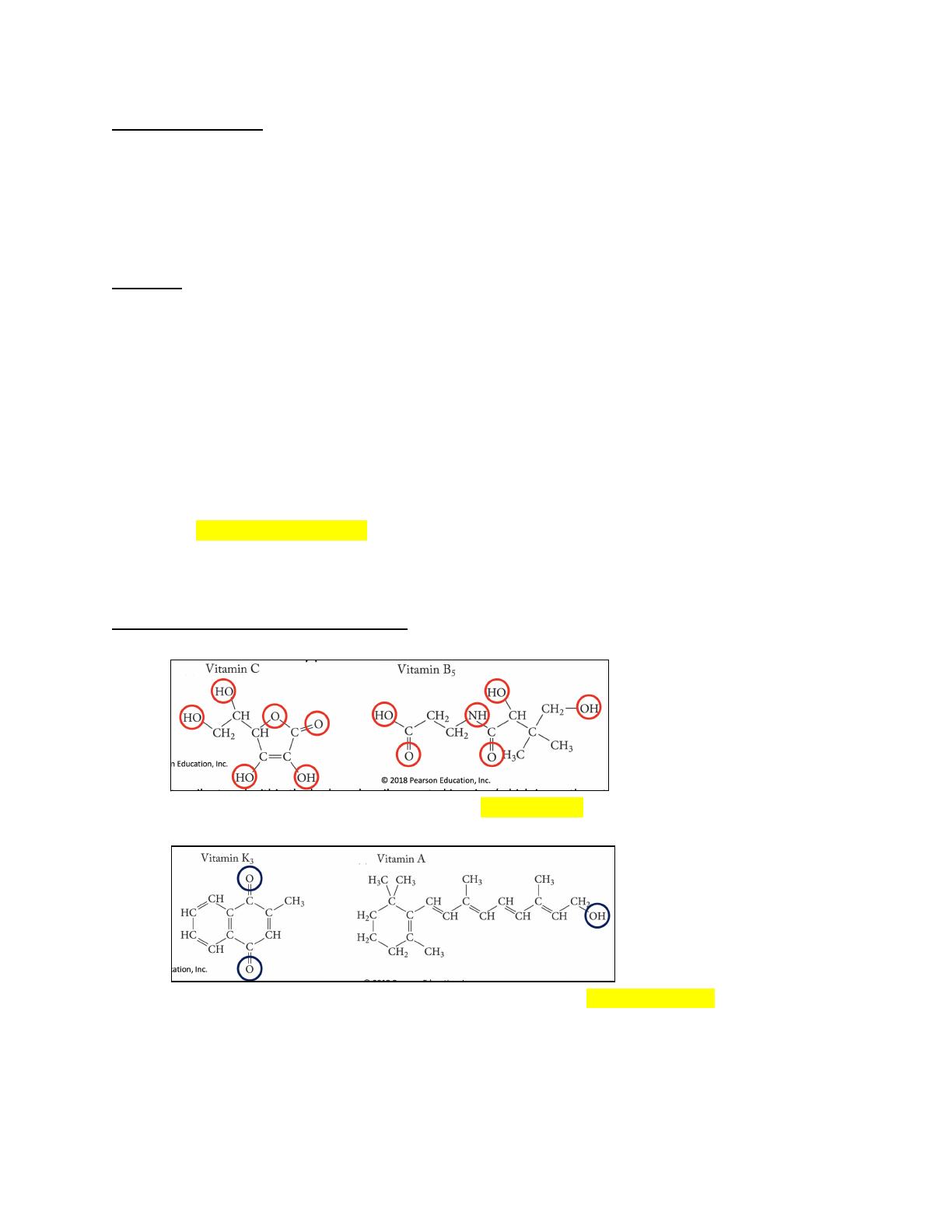
Water-Soluble and Fat-Soluble Vitamins
Some vitamins are relatively polar and are water-soluble
not easily stored within the body and easily excreted in urine (which is mostly water)
Other vitamins are relatively nonpolar and are fat-soluble
Easily stored within the fatty tissues of the body and not easily excreted
Solution Formation - Considerations
A solution can form between a solute and a solvent because of two main effects/factors
1. Occurrence of intermolecular forces (IMFs) between solute and solvent particles
a. The types of IMFs between solute and solvent should be similar to those experienced by
the particles in the pure solvent and in the pure solute
b. Example: water and ethanol vs. water and hexane (CH3CH2CH2CH2CH2CH3)
i. Water has hydrogen bonding. Ethanol has hydrogen bonding. INTERACTS
ii. Water has hydrogen bonding. Hexane has london dispersion. NO INTERACT
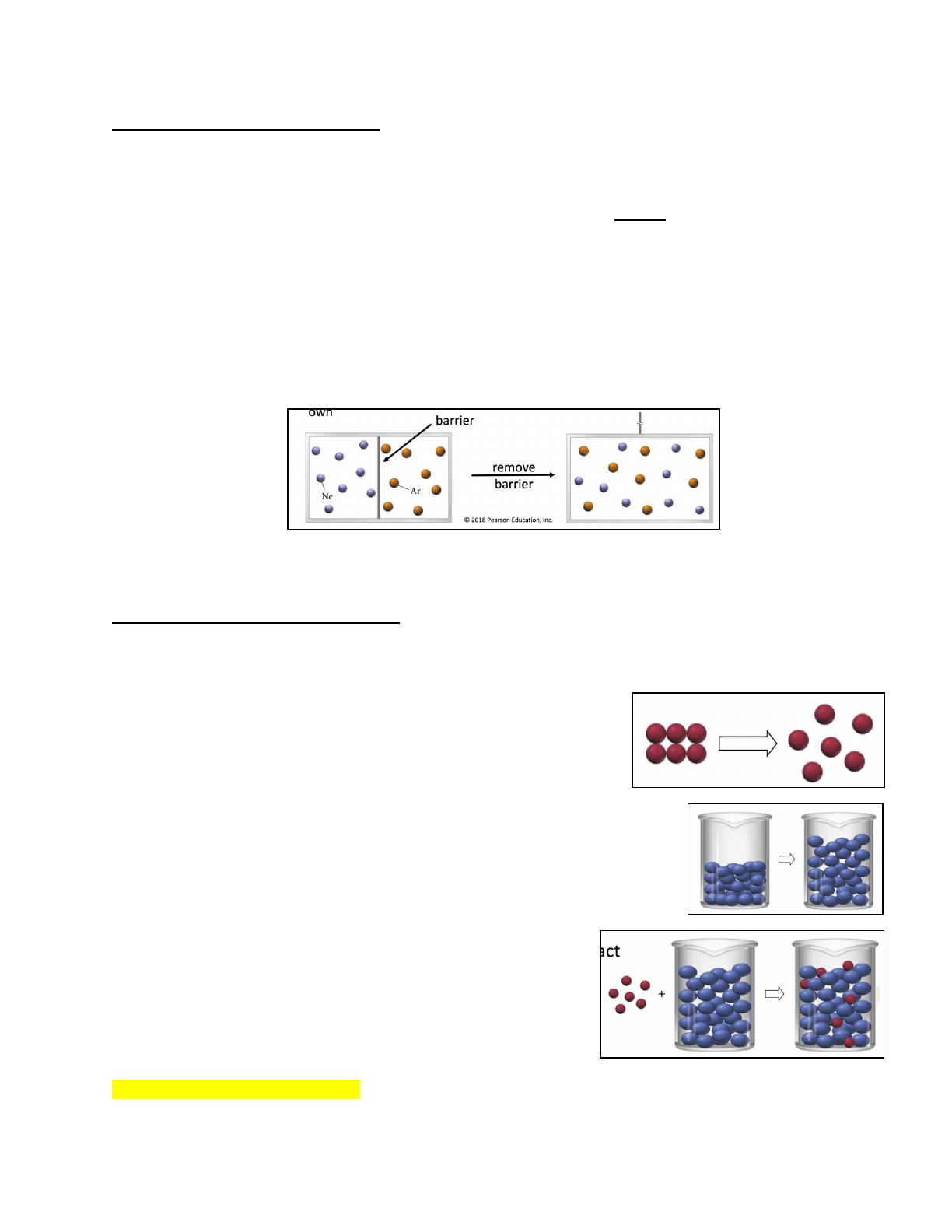
2. Increased entropy upon mixing
a. Entropy = measure of energy randomization or energy dispersal in a system
i. Anytime the energy of a system can be spread out, it will automatically do so on
its own
ii. Increased entropy is the driving force for many physical and chemical processes
The Energetics of a Solution Formation
The formation of a solution between a solute particle and a solvent particle can be thought of as
occurring in three distinct steps
1. Separate solute particles from each other by breaking
solute-solute interactions
a. IMFs must be overcome, input of energy required,
endothermic step
b. ΔH
solute
> 0
2. Separate solvent particles by breaking solvent-solvent interactions
a. IMFs must be overcome, input of energy required, endothermic
step
b. ΔH
solvent
> 0
3. Let solute and solvent particles interact with each other by
allowing solute-solvent interactions
a. IMFs occur, release of energy, exothermic step
b. ΔH
mix
< 0
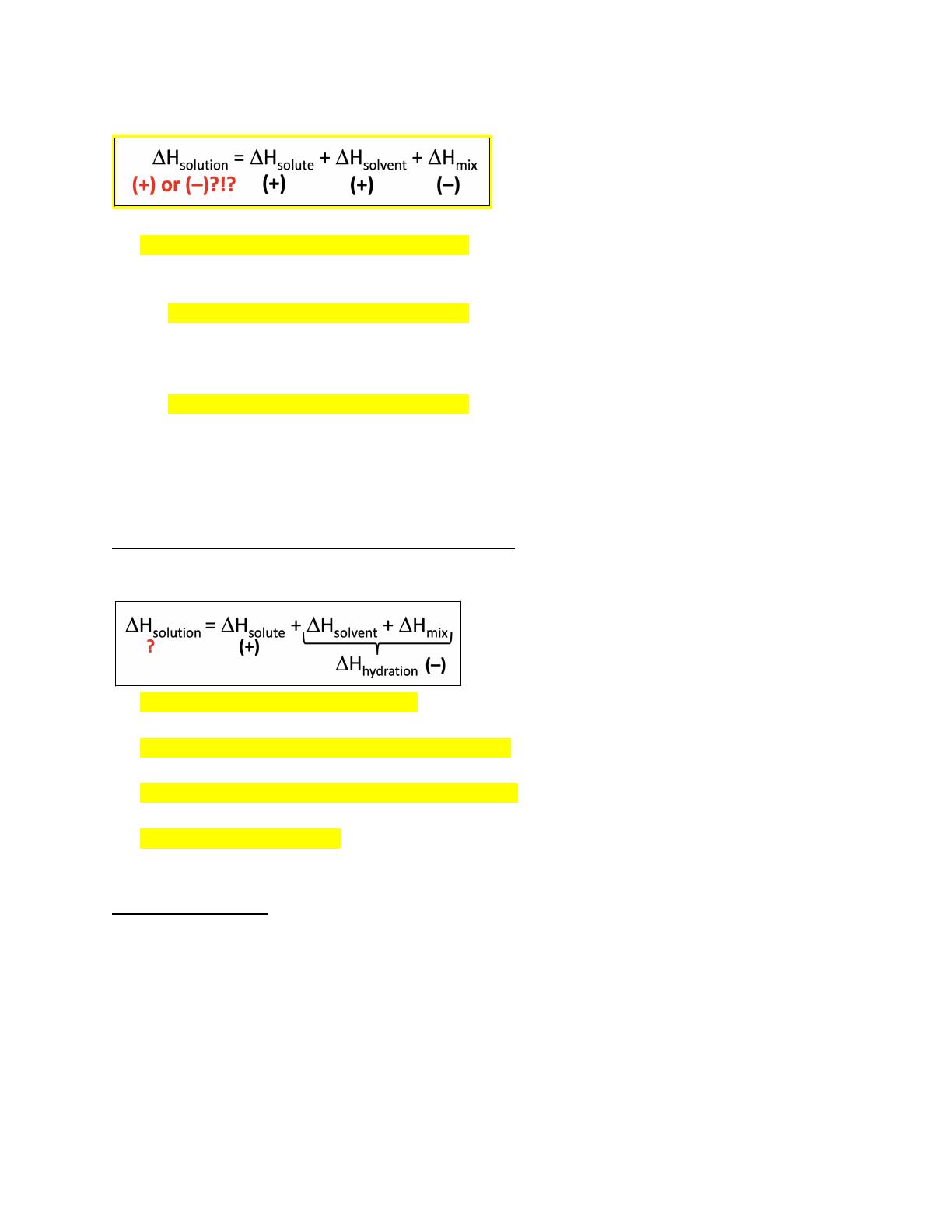
Enthalpy of solution (H
solution
) = energy change associated with
solution formation
ΔH
solution
= ΔH
solute
+ ΔH
solvent
+ ΔH
mix
If |ΔH
solute
+ ΔH
solvent
| ≈ |ΔH
mix
|: ΔH
solution
= 0
Solution will form as long as entropy increases
“Entropy is the driving force”
If |ΔH
solute
+ ΔH
solvent
| < |ΔH
mix
|: ΔH
solution
< 0 (exothermic, heat released)
Solution will form as long as entropy increases
Solution will become warm/hot to the touch
Both enthalpy and entropy are driving forces
If |ΔH
solute
+ ΔH
solvent
| > |ΔH
mix
|: ΔH
solution
> 0 (endothermic, heat absorbed)
Solution may form depending to relative magnitude
If solution does form it will become cool/cold to the touch
If solution does form, entropy is the driving force
The Energetics of Aqueous Solutions with Ionic Solutes
Aqueous = solvent is water
For ionic solutes: ΔH
solute
= -ΔH
lattice
(ie. lattice energy)
If |ΔH
solute
| ≈ |ΔH
hydration
|: ΔH
solution
≈ 0
Solution will form as long as entropy increases
If |ΔH
solute
| < |ΔH
hydration
|: ΔH
solution
< 0 (exothermic)
Solution will form as long as entropy increases
If |ΔH
solute
| > |ΔH
hydration
|: ΔH
solution
> 0 (endothermic)
Solution may form (if entropy increases enough to offset the endothermicity)
If |ΔH
solute
| >> |ΔH
hydration
|: solution will NOT form
Solution Equilibrium
Saturated solution = a solution in which NO additional solute can dissolve
The dissolved solute is in dynamic equilibrium with the solid/undissolved solute.
Example: saturated NaCl(aq)
Dissolution: NaCl (s) → Na (aq) + Cl (aq)
Recrystalization: Na + Cl → NaCl
At equilibrium, the rate of dissolution = the rate of crystallization
NaCl + H
2
O → Na + Cl
Unsaturated solution = a solution in which more solute can dissolve
/ 10
End of Document
116
You May Also Like

FAQs of GC Lecture Solutions for Chapter 13 Chemistry Concepts

What is the definition of a solution in chemistry?
A solution in chemistry is defined as a homogeneous mixture composed of a solute dissolved in a solvent. The solvent is the major component, while the solute is the minor component. Solutions can exist in various states, including gaseous, liquid, or solid forms, and they exhibit uniform composition throughout the sample.
How do intermolecular forces affect solubility?
Intermolecular forces play a crucial role in determining solubility. The principle of 'like dissolves like' indicates that polar solutes tend to dissolve in polar solvents, while nonpolar solutes dissolve in nonpolar solvents. The compatibility of intermolecular forces between the solute and solvent particles influences whether a solution will form.
What are the steps involved in the energetics of solution formation?
The energetics of solution formation can be understood in three distinct steps: first, solute particles are separated from each other, requiring energy input and making it an endothermic process. Second, solvent particles are separated, which also requires energy. Finally, solute and solvent particles interact, releasing energy in an exothermic process. The overall energy change, or enthalpy of solution, is determined by the balance of these steps.
What is the significance of entropy in solution formation?
Entropy is a measure of energy dispersal in a system and is a driving force for many physical and chemical processes, including solution formation. A solution will form if the overall entropy increases, even if the enthalpy change is positive. This means that the tendency for energy to spread out can lead to the formation of a solution, regardless of whether heat is absorbed or released.
What are the differences between water-soluble and fat-soluble vitamins?
Water-soluble vitamins are generally polar and not easily stored in the body; they are excreted in urine, which is primarily water. In contrast, fat-soluble vitamins are relatively nonpolar, allowing them to be stored in the body's fatty tissues and not easily excreted. This difference in solubility affects how these vitamins are absorbed, utilized, and stored in the body.
How does lattice energy affect the solubility of ionic compounds?
Lattice energy is the energy required to separate ionic compounds into their constituent ions. For ionic solutes, the enthalpy change associated with solution formation is influenced by lattice energy and hydration energy. If the lattice energy is comparable to the hydration energy, the solution will form as long as entropy increases, indicating that both energy factors are critical in determining solubility.
What is the role of temperature in the solubility of substances?
Temperature can significantly affect the solubility of substances. Generally, for most solid solutes, solubility increases with temperature, allowing more solute to dissolve in the solvent. However, for some gases, solubility decreases with increasing temperature, as warmer conditions can lead to gas escaping from the solution. Understanding these temperature effects is crucial for predicting solubility behavior in various chemical processes.

Related of GC Lecture Solutions for Chapter 13 Chemistry Concepts