Plant Reproduction Science Year 9 GZ

Plant Reproduction Science Year 9 GZ

Plant reproduction is a critical topic in Year 9 science, focusing on the life cycles of flowering plants, also known as angiosperms. This resource explores key concepts such as pollination, fertilization, and seed dispersal, highlighting the roles of various pollinators like insects and birds. It also discusses the adaptations of New Zealand plants and their relationships with native species, such as the tūī bird. Students will gain insights into the structure of flowers and seeds, as well as the conditions necessary for germination. This material is designed for Year 9 students studying plant biology and ecology.

Key Points

  • Explains the life cycle of flowering plants, including pollination and fertilization.
  • Describes the structure and function of flower parts in plant reproduction.
  • Covers the role of pollinators like insects and birds in the pollination process.
  • Discusses seed dispersal methods and their significance for plant survival.
249
/ 12
42 | Page GZ Science Resources
Flowering Plants
Plants that produce flowers are known as Flowering Plants (angiosperms). The flowers are the reproductive
structures where fertilisation occurs, and seeds are produced. Flowering plants include many of our common
New Zealand such as kōwhai, harakeke (flax) and pōhutakawa, as well as flowering grasses like toetoe. Many of
our New Zealand flowering plants have been discovered by Māori to be useful for medicine, food, clothing and
housing.
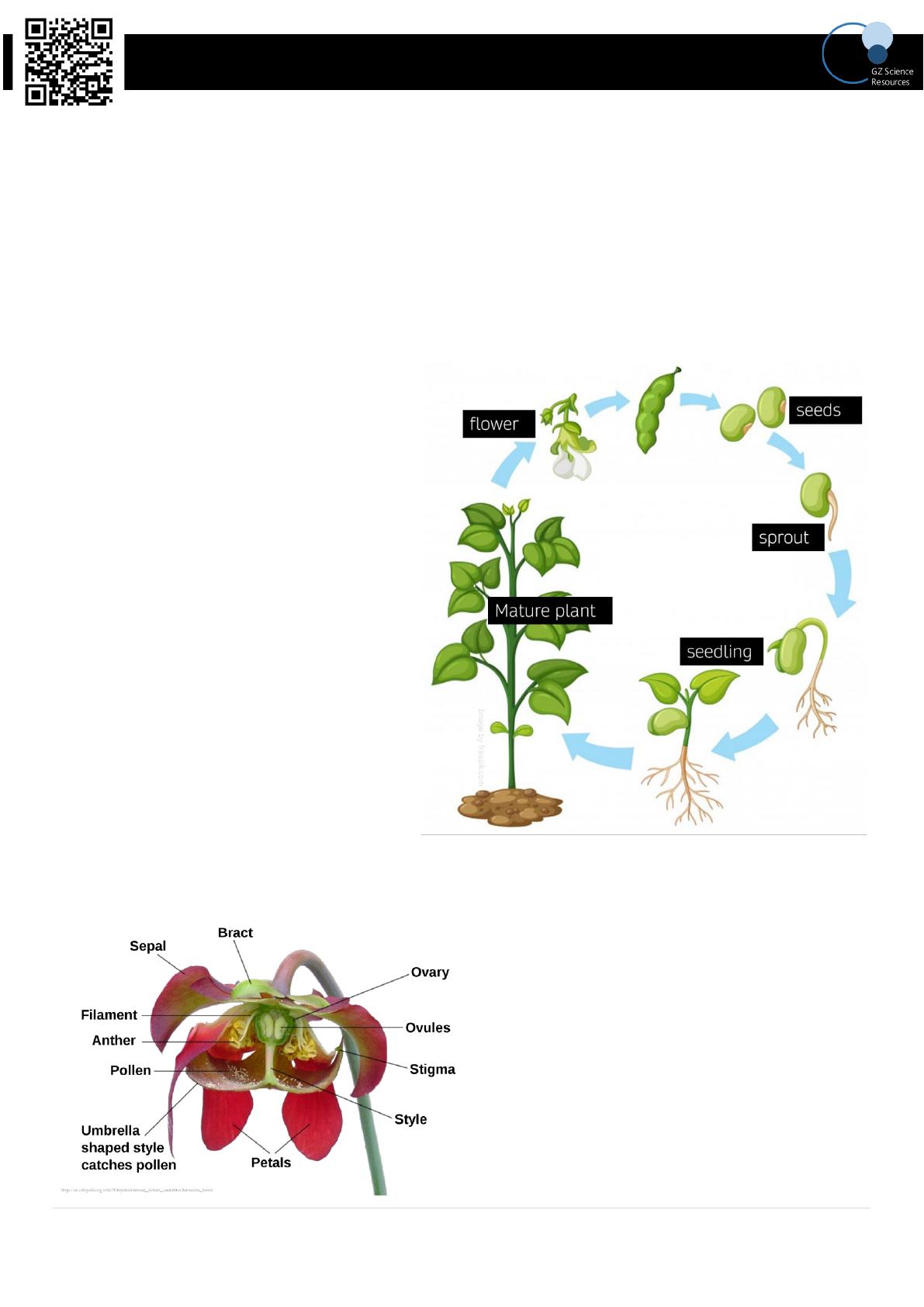
Flowering Plant life cycle
The structure of a flower
Plant Reproduction
All flowering plants develop flowers that
produce male pollen and female ovule. The
number and structure of these depend on
the species of plant.
The reproductive cycle involves the transfer
of pollen to the female part of the flower
(
pollination
), the joining of the pollen and
ovule to make a seed (
fertilisation
) and the
spreading of seeds to grow a new plant
(
seed dispersal
)
Insect and bird - pollinated flowers have visible,
often colourful petals that surround the flower's
sexual reproduction parts. The petals can
"advertise" for specific
pollinators
through their
shape, size, colour and sometimes smell. The
flowers are surrounded by sepals, which are
small and usually green structures that protect
the flower as its developing.
43 | Page GZ Science Resources
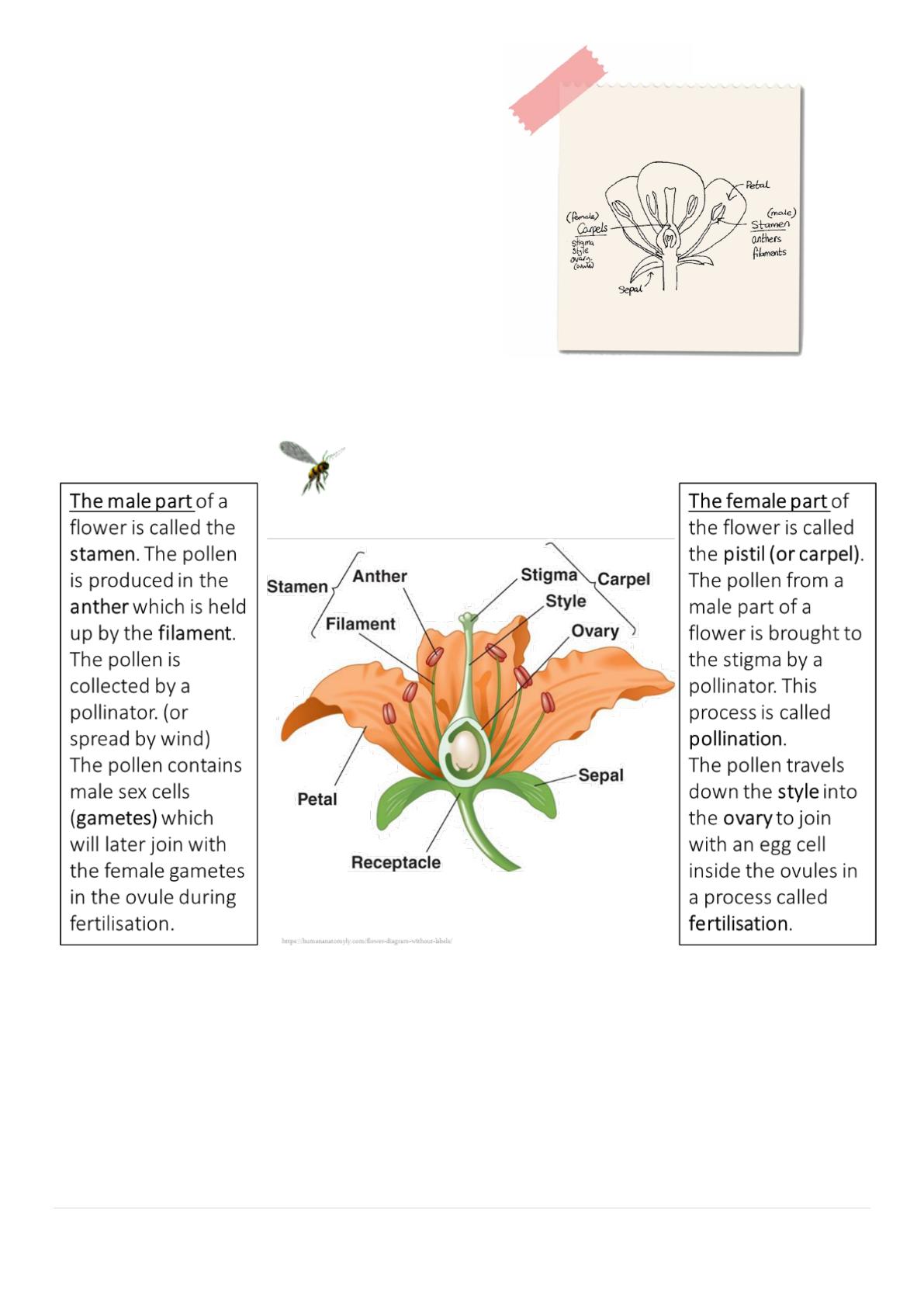
The reproductive parts of an insect-pollinated flower
Pollination
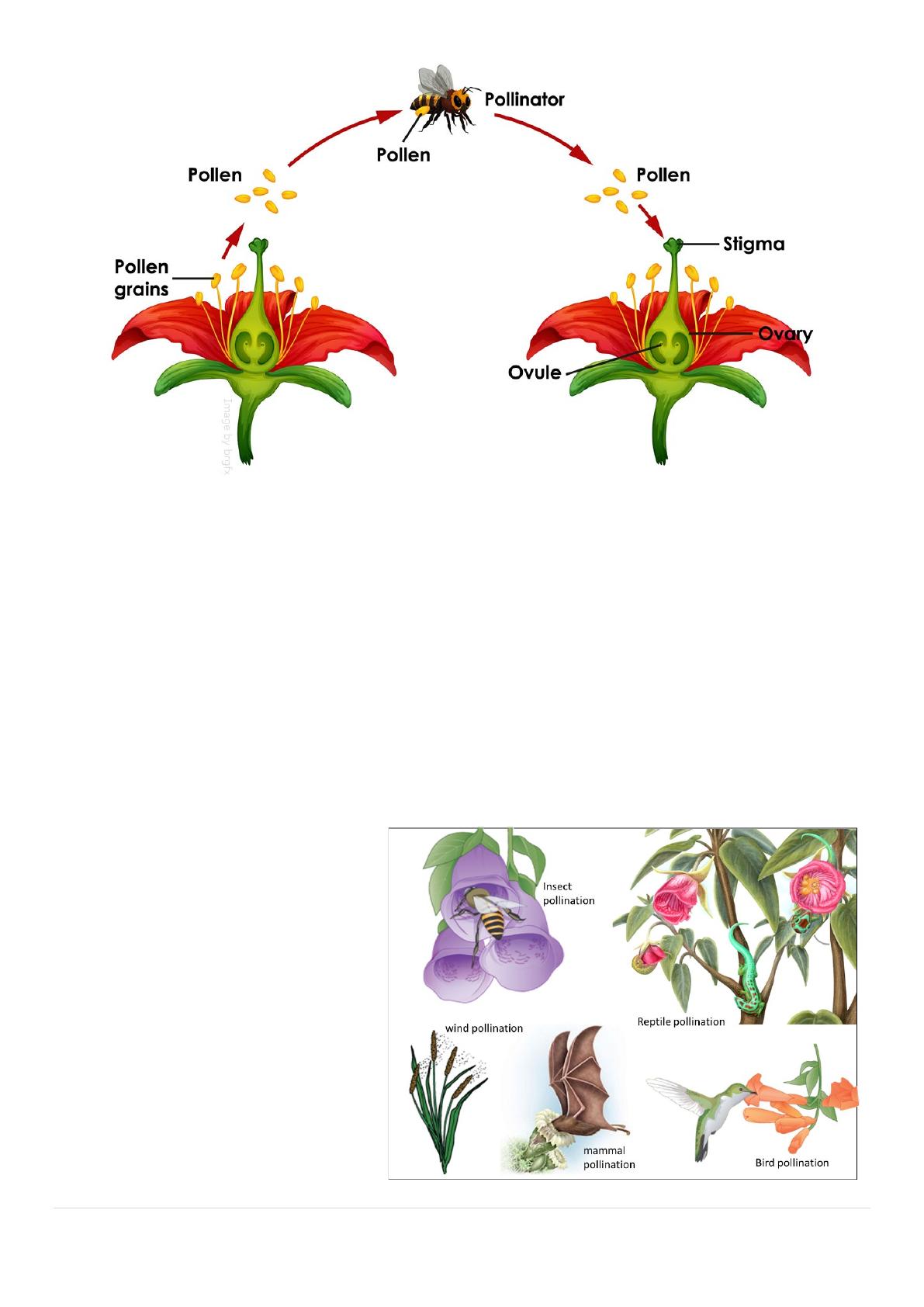
Pollination is the transfer of pollen from the male part of the flower to the female (stigma) part of another flower.
Flowers can be wind-pollinated or animal-pollinated. Animals that assist in pollinating a flower are known as
pollinators.
Insect-pollinated flowers often contain nectar, a sweet sugar produced by the plant, to attract an insect. As the
insect reaches into the flower for the nectar, it may be brushed with pollen from the anther. If the insect moves
to another flower, it may brush the pollen against the stigma and therefore pollinate the flower. Flowers ripen
their male and female parts of the flower at different times to prevent
self-pollination.
Drawing and labelling a flower
The main parts of a typical flower that are
pollinated by an animal such as a bird or insect,
is shown beside in a cross-section drawing. Many
flowers often have many anther/filaments
surrounding one central stigma/style. When
labelling, one of each is required.
Reminders for Biological drawing:
Clean single lines
Label all parts
Do not cross over lines
44 | Page GZ Science Resources
1. The male parts of the flower are the anther and filament
2. The female parts of the flower are the stigma, style and ovary
3. Male gametes are found in Pollen Produced in the Anther
4. Pollen needs to be moved to the female part called the Stigma of the same species of plant to reproduce
5. This process is called Pollination
6. Pollination can be helped by Wind or Animal
7. An example of wind pollination is grass plants
8. A wind pollinated flower is most likely to look like - small, green, unscented
9. An example of animal pollination is a rose plant pollinated by insects
10. An animal pollinated flower is most likely to look like colourful, with large petals, perhaps with a scent
Different ways pollen may be transferred.
The pollen must be light enough to either
be moved by wind or be attached to a
pollinator and still enable it to fly. The ovule,
once fertilised, will become the seed. The
number of ovules
will determine the
maximum possible seeds each flower will
produce, as either fruit, nuts or pods.
Pollen grains are tiny, and they are light
enough to be carried by the wind or on the
bodies of flying and crawling animals. Plants
and their flowers have adapted to transfer
their pollen from one flower to another in
many ways that include using wind, insects,
birds, mammals and reptiles.
/ 12
End of Document
249
You May Also Like

FAQs of Plant Reproduction Science Year 9 GZ

What is the process of pollination in flowering plants?
Pollination involves the transfer of pollen from the male part of a flower to the female stigma of another flower. This can occur through wind or animal pollinators, such as insects and birds. Insect-pollinated flowers often produce nectar to attract these pollinators. The timing of pollen and stigma maturation is crucial to prevent self-pollination, ensuring genetic diversity.
What adaptations do New Zealand plants have for pollination?
New Zealand plants like NZ Flax and kōwhai have evolved specific adaptations to attract the tūī, a nectar-feeding bird. These adaptations include flower shapes that match the bird's bill, allowing for efficient nectar access while facilitating pollen transfer. The bright colors and lack of scent in some flowers cater to the visual preferences of the tūī, enhancing pollination success.
How does fertilization occur in flowering plants?
Fertilization in flowering plants begins when pollen lands on the stigma of a compatible flower. The pollen grain then forms a tube that grows down the style to reach the ovule. Male gametes from the pollen enter the ovule to fertilize the egg, resulting in the formation of a zygote. This zygote will develop into a seed, completing the reproductive cycle.
What are the different methods of seed dispersal?
Seed dispersal is essential for preventing competition between parent plants and their offspring. Various methods include animal dispersal, where animals eat fruit and excrete seeds elsewhere, and wind dispersal, where lightweight seeds are carried away by air currents. Other methods include water dispersal, where seeds float to new locations, and mechanical expulsion, where seeds are forcefully ejected from the parent plant.
What conditions are necessary for seed germination?
For seeds to germinate, they require specific conditions such as water, oxygen, and warmth. Water activates enzymes that initiate growth, while oxygen is necessary for cellular respiration. Some seeds may also need additional factors like light or fire to break dormancy. Understanding these conditions helps in agricultural practices and conservation efforts.
What is the significance of the flower structure in plant reproduction?
The structure of a flower is crucial for successful reproduction, as it houses the reproductive organs. The male parts, including the anther and filament, produce pollen, while the female parts, such as the stigma, style, and ovary, facilitate fertilization. The arrangement and characteristics of these parts can attract specific pollinators, enhancing the chances of successful pollination and seed production.
How do flowering plants adapt to different pollination strategies?
Flowering plants exhibit various adaptations to optimize their pollination strategies. Insect-pollinated flowers often have bright colors and scents to attract pollinators, while wind-pollinated flowers tend to be small and inconspicuous. These adaptations ensure that pollen is effectively transferred, whether through animal assistance or by utilizing wind currents, thus maximizing reproductive success.

Related of Plant Reproduction Science Year 9 GZ