The Rock Cycle Year 10 Science Resource

The Rock Cycle Year 10 Science Resource

The Rock Cycle Year 10 resource explores the three main types of rocks: igneous, sedimentary, and metamorphic. It details their formation processes, including volcanic and plutonic origins for igneous rocks, and the role of sedimentation in sedimentary rock development. Metamorphic rocks are examined in terms of their parent rock sources and the heat and pressure involved in their transformation. This educational material is ideal for Year 10 science students studying geology and the rock cycle. It includes diagrams, key concepts, and practical applications of rock classification.

Key Points

  • Explains the formation of igneous rocks through volcanic and plutonic processes.
  • Describes sedimentary rock formation from water flow and organic materials.
  • Covers metamorphic rock transformation due to heat and pressure.
  • Includes diagrams illustrating the rock cycle and types of rocks.
261
/ 11
177 | Page GZ Science Resources
The three main types of rock
Main groups of Rocks
The Rock Cycle
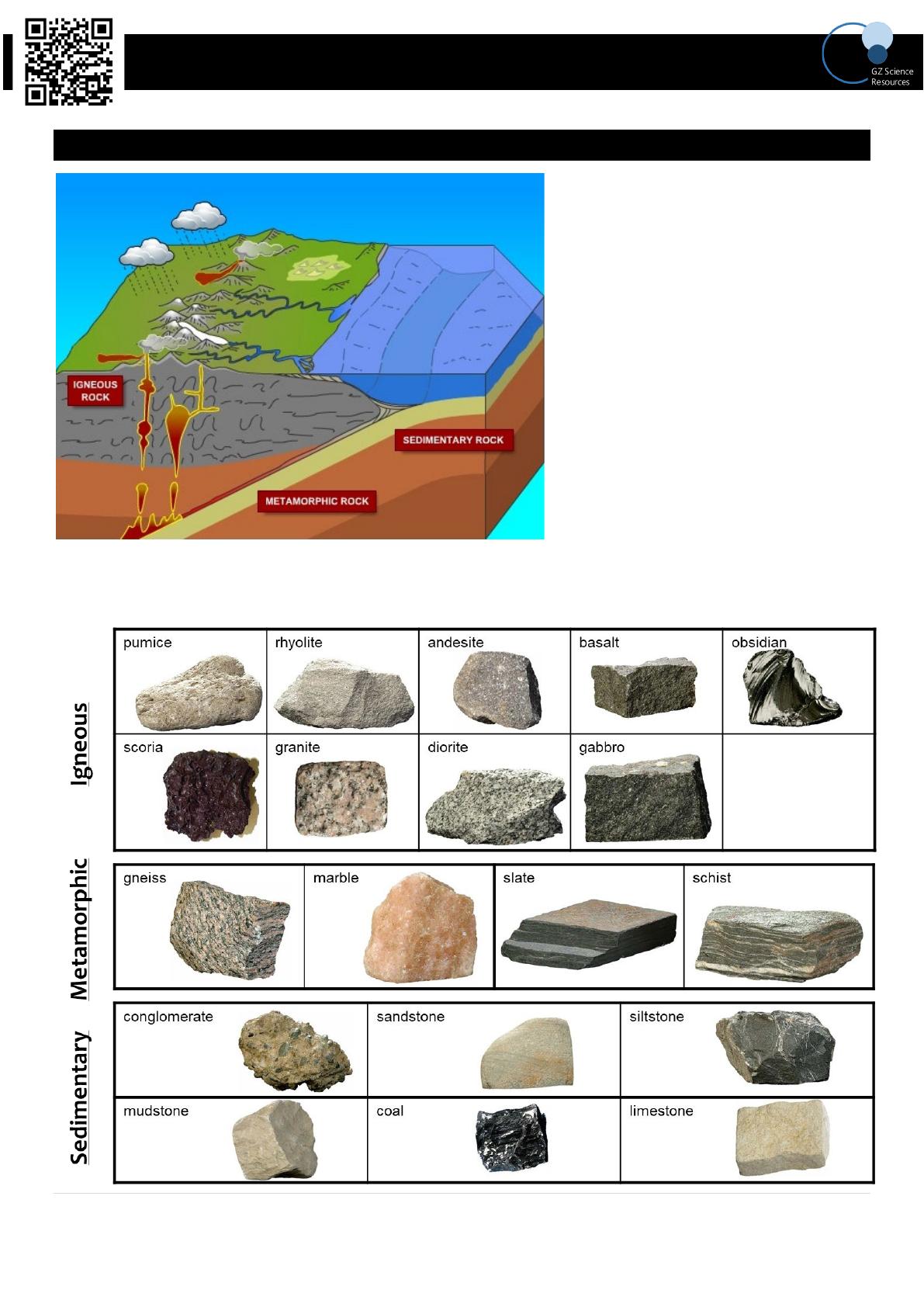
The Earth’s crust contains three main
types of rock: Igneous rock, formed
from cooled magma either below or
above the Earth’s surface, Sedimentary
rock, that has formed from smaller rock
particles that bind together, and
Metamorphic rock, that originated from
other sources but has been changed by
the heat and pressure underground.
Rocks can be further distinguished by
the type and composition of minerals
and rock particles, and the method by
which they have been formed.
178 | Page GZ Science Resources
Igneous rock formation
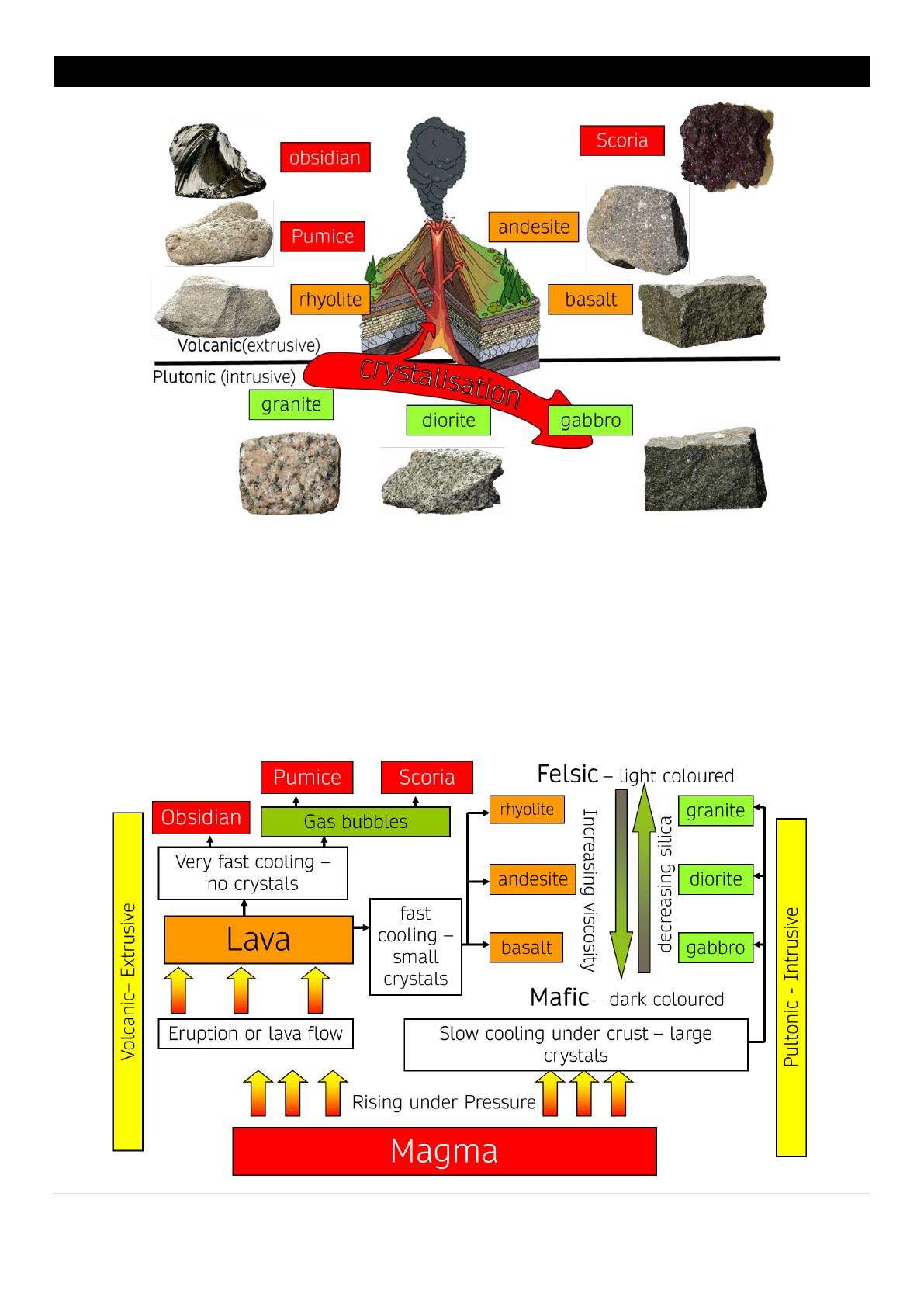
Volcanic (or Extrusive) igneous rocks form when molten rock reaches the Earth’s surface and cools. Air and
moisture cool the lava rapidly. The quick cooling doesn’t allow the formation of large crystals, so most volcanic
rocks have small crystals or none at all. In some volcanic rocks, like pumice and scoria, air and other gases are
trapped in lava as it cools. We can see holes remaining in the rock where the bubbles of gas were located.
In Plutonic (Intrusive) igneous rocks, the molten rock cools before it reaches the surface. Molten rock that is still
underground is called magma. Magma originates from the melting of the Earth’s crust and upper mantle. This
melting occurs about a depth of 60 to 200 km. because the plutonic rock has more time to cool, it develops
large crystals in its structure.
179 | Page GZ Science Resources
Sedimentary rock formation
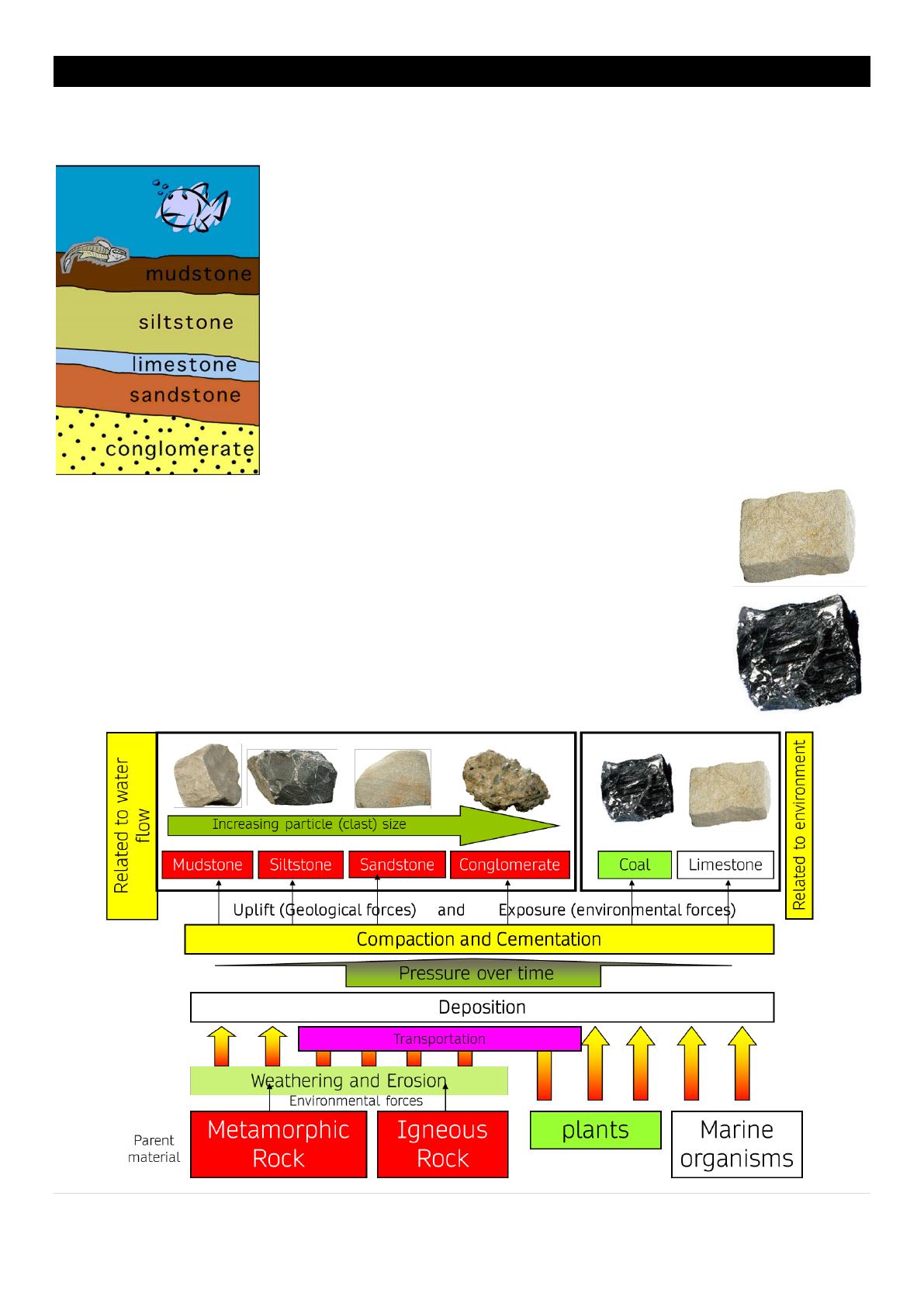
Sedimentary rock can be further divided into those types that have been formed due to water flow and those
formed from once living organic particles – related to the environment.
Mudstone is a fine-grained rock whose original particles were clays or muds. Mud
rocks, such as mudstone and shale (that show layers) comprise some 65% of all
sedimentary rocks. Mudstone may show cracks or fissures, like a sun-baked clay
deposit.
Siltstone
is a sedimentary rock which has a composition intermediate in grain size
between the coarser sandstones and the finer mudstones.
Sandstone
is composed mainly of sand-size grains. Sandstone may be any colour.
Because of the hardness of the individual grains, uniformity of grain size, sandstone
is an excellent material for building and paving
A
conglomerate
is a rock consisting of individual stones that have become
cemented together. Conglomerates consist of rounded fragments.
Limestone composed largely of calcium carbonate. The primary source of limestone is most
commonly marine organisms. These organisms secrete shells that are deposited on ocean
floors. This layer of sediments is covered by further sediments, which over time with heat
and pressure is changed into limestone. Limestone is revealed when Earth movements uplift
the rock.
Coal
is a fossil fuel formed in swamps where plant remains decay slowly without oxygen. It
is composed primarily of carbon. It is the largest single source of fuel for the generation of
electricity world-wide, as well as the largest source of carbon dioxide emissions. Coal is
extracted from the ground by coal mining either underground mining or open cast mines.
/ 11
End of Document
261
You May Also Like

FAQs of The Rock Cycle Year 10 Science Resource

What are the three main types of rocks in the rock cycle?
The three main types of rocks in the rock cycle are igneous, sedimentary, and metamorphic. Igneous rocks form from cooled magma, either below or above the Earth's surface. Sedimentary rocks are created from the accumulation and compaction of mineral and organic particles. Metamorphic rocks originate from existing rocks that undergo transformation due to heat and pressure, altering their mineral composition and structure.
How do igneous rocks form?
Igneous rocks form through the cooling and solidification of magma or lava. Volcanic igneous rocks, also known as extrusive rocks, cool quickly at the Earth's surface, resulting in small crystals. In contrast, plutonic igneous rocks, or intrusive rocks, cool slowly underground, allowing for the formation of larger crystals. This distinction is crucial for understanding the characteristics and classification of igneous rocks.
What processes lead to the formation of sedimentary rocks?
Sedimentary rocks form through processes such as deposition, compaction, and cementation of sediments. These sediments can originate from weathered rock particles or organic materials, often accumulating in layers over time. The environment plays a significant role, with water flow being a primary factor in transporting and depositing these materials. Common types of sedimentary rocks include sandstone, limestone, and coal, each with distinct formation processes.
What is the significance of metamorphic rocks in the rock cycle?
Metamorphic rocks play a vital role in the rock cycle as they represent the transformation of existing rocks under extreme conditions. The process involves heat and pressure, which can change the mineral composition and texture of the parent rock. Understanding metamorphic rocks helps geologists interpret the geological history of an area, including past environmental conditions and tectonic activity. Common examples include schist, gneiss, and marble.
How does the rock cycle illustrate geological processes?
The rock cycle illustrates the dynamic processes that shape the Earth's crust over time. It shows how rocks can transform from one type to another through various geological processes such as melting, cooling, erosion, and sedimentation. This cycle emphasizes the interconnectedness of different rock types and the continuous nature of geological change. By studying the rock cycle, students gain insights into Earth's history and the processes that have shaped its surface.

Related of The Rock Cycle Year 10 Science Resource